
Spectacular Views of the Blue Ridge Mountains
At 3,200 feet, this may be one of the most scenic long-range views from a private back deck in North Georgia. Stretching nearly 160 degrees across the horizon, the year-round, unobstructed panorama reveals layer upon layer of Blue Ridge mountains fading into the distance—an outlook more often experienced from a Blue Ridge Parkway overlook than from a private home.
On a clear day, the view sweeps from Big Frog Mountain in Tennessee across the high ridges of North Carolina’s Nantahala National Forest—including Wayah Bald and Winding Stair Gap—then past Springer Mountain and Mount Yonah here in Georgia, before continuing to the rolling hills near Flowery Branch. It’s a front-row panorama that took our breath away the first time we saw it.
Built high along the eastern ridge of Burnt Mountain, Blue Ridge Horizon is more than a home. It’s our sanctuary, our creative canvas, and our front-row seat to the layered ridgelines and distant Appalachian peaks that stretch across the horizon.
The view unfolds without crowds, traffic, or guardrails, inviting you to simply sit and take it all in. In winter, when the leaves are down, we can spot a single house tucked below us; by summer, even that disappears into the trees. Beyond that quiet foreground, the towns people often assume we can see—Dawsonville, Dahlonega, Cleveland, Gainesville, and Flowery Branch—lie miles away in the distance.
On the clearest days, and only when the light is just right, a glint of gold from Dahlonega or a distant administrative building in Dawsonville may briefly catch the sun. At night, the lights of Gainesville and surrounding areas reveal themselves only as faint, twinkling lights—suggestions of civilization rather than sights. The view itself remains untouched: mountains, forest, sky, and silence. And that is precisely what makes this view so extraordinary: it is vast, uninterrupted, and overwhelmingly natural, with human presence reduced to the softest whisper after dark.
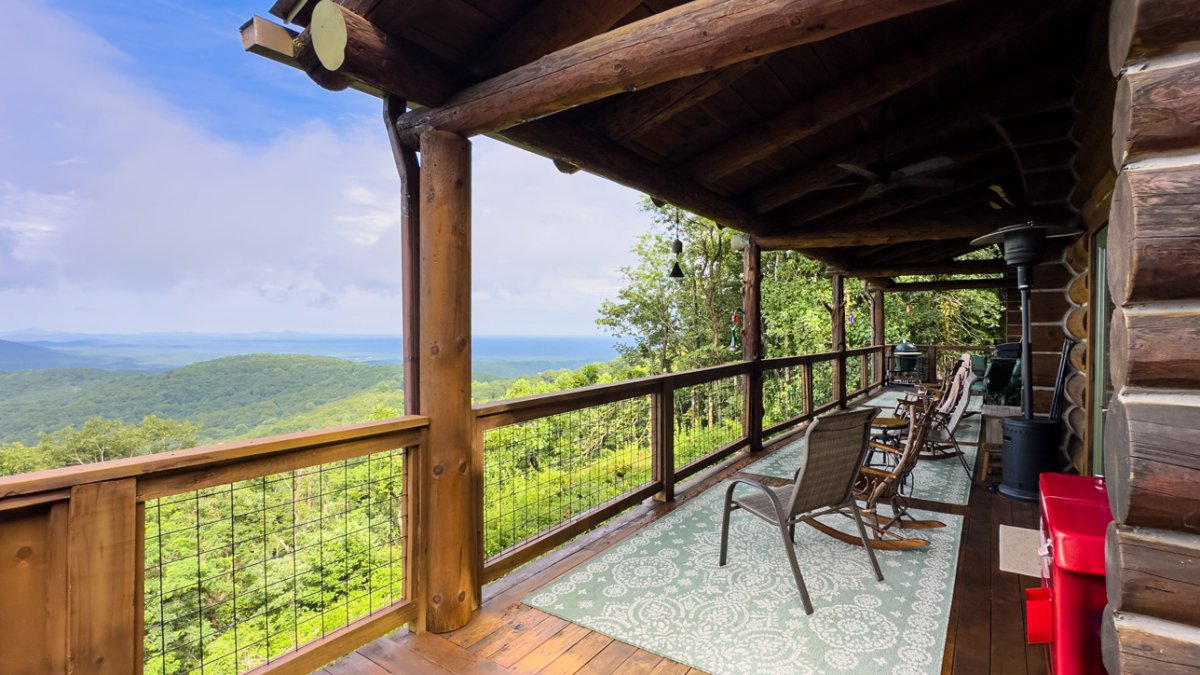
Each morning, the first light spills over the ridges, painting the valleys below with layers of gold and mist. By evening, the world grows quiet, the sky deepens to shades of rose and violet, and the only sounds are the whisper of the wind and the rustle of the forest.
This place was built for peace. And now, day by day, we’re shaping it into something more—a home that reflects the rhythm of the mountains, where each sunrise reminds us why we’re here, and each sunset feels like a promise kept.
Quiet Progress
Life on the ridge means always tending to the details—small acts of care that keep this cabin both sturdy and beautiful. We’re slowly caulking the natural cracks in the logs, resetting the decorative stonework around the porch columns, and refreshing the rock borders that define the garden beds from the lawn.
Some days it’s about smoothing the gravel driveway after a storm. Other days, it’s adding protection against coyotes, or updating the low-voltage outdoor lighting to keep the sky dark and the stars bright. None of these tasks feel like chores; they’re simply part of living closely with the land.
This cabin is a working home, not a museum. But with each quiet improvement—whether it’s something as simple as replacing a stone or as big as replacing the retaining walls—we’re shaping the kind of mountain retreat we’ve always dreamed of.
And we’re just getting started.
Each improvement brings us closer to the kind of mountain home we’ve always envisioned—comfortable, quietly modern, and deeply rooted in the land it stands on.

Horizon Life
- Halfway to Heaven
Alyson’s mom, Jean, fell in love with this home the moment she stepped inside. In the brief season she lived here, it became her favorite place—a home she affectionately called “Halfway to Heaven.” From her bedroom, where her baby grand piano sat in the morning light, she raised the blinds each day to a panoramic view of the Blue Ridge. It was a view that spoke to her spirit—quiet, steady, and filled with grace.
Upstairs, Alyson and I have claimed the loft. From our window, we can see all the way to Springer Mountain, where gentle souls begin their long trek toward Maine. While they set off on their journeys, we’re starting another day of work, grateful to watch life unfold from this ridge.
Down below, Andrew enjoys his own private retreat in the lower level, where even he has a window on the Blue Ridge horizon. From there, he can see all the way across the valley to the Lodge at Amicalola, six miles away, glowing in the evening light.
Outside, a winding path through the forest leads to a garden planted years ago by the original owners. It’s a quiet place, now asking for Jean and Alyson’s gentle touch to bring it back to its glory days. They’ve already begun. The pathways are cleared again. Alyson’s beloved “Little Gardener” statue—an heirloom from our last home and a replica of the one in the White House Rose Garden—now stands in a prominent spot here. Nearby, a beautiful bench rests beneath the trees, inviting us—and any neighbor who happens by—to sit for a while, breathing in the peace and beauty that surround us.
This cabin isn’t a museum or a showplace; it’s a living, breathing space that’s slowly becoming the home we’ve always dreamed of. Each day adds a new layer to the story, and every quiet moment on this ridge reminds us of why we’re here.
This is where our horizon begins.
- A Year on the Ridge
Spring
Spring arrives like a whisper that builds to a song. In the early mornings, fog rises from the valleys like curtains being pulled back on a stage. The stark gray hills slowly blush with color as the trees begin to awaken—first the soft, silvery greens of poplars and birch, then the deeper tones of oaks, maples, and hickories. Each type of tree emerges on its own schedule, turning the hillsides into a living patchwork quilt.
Down in the woods, the forest floor stirs—trillium, ferns, and wild violets push up through last autumn’s leaves. The air smells of wet earth and new beginnings. This is also when we begin to see wildlife returning to higher elevations. Mother bears with curious, tumbling cubs make their way across the ridges, foraging for tender leaves, small berries, and insects hidden beneath the underbrush. Squirrels, chipmunks, and even foxes begin reappearing, having spent the coldest months in the relative comfort of lower elevations. Life is on the move again.
Summer
Mornings come gently in summer—cool air, steaming coffee, and a sky painted in layers of peach, pink, and soft gold. About thirty minutes before sunrise, the show begins. By the time the sun crests the eastern ridgeline, hawks and kestrels are already in motion, gliding below us on warm updrafts, scanning the hillsides for breakfast.
Soon after, the fog burns off and is replaced by the soft, bluish haze that gives these mountains their name. The distant ridgelines take on layers like watercolors—each fold of the range bluer than the last.
Despite being deep in summer, the elevation keeps the temperatures moderate. Even on the hottest days, we rarely see the thermometer climb past 85 degrees. By mid-afternoon, the air is filled with the hum of bees working the mountain laurel, and you can often find us sitting in rocking chairs on the back deck, sipping sweet iced tea, soaking in the layered beauty that stretches for miles.
As the sun lowers, it’s time to fire up the grill. Summer nights are long and unhurried here.
Autumn
Then comes fall—bold and brilliant, a final crescendo before the hush of winter.
This is my favorite time of year. The sky is a deeper blue than any camera can capture. The air is so clear you can smell the woodsmoke, the drying leaves, the quiet shift in seasons. The forest ignites in color—burnt orange, crimson red, golden yellow—all spilling across the ridgelines in waves. It’s hard to stop staring.
The tourists come too, drawn by the beauty. On weekends, we hear their motorcycles echoing through the switchbacks below—jarring at first, but now just another seasonal rhythm. They’re chasing the same wonder we are, in their own way.
Evenings are especially beautiful in the fall. As twilight comes, the northern sky turns pink, then amber, and finally fades into a quiet darkness edged by a hint of winter.
Winter
And when winter settles in, everything slows. The stillness is complete. The sky sharpens, the stars blaze. The world feels hushed and holy.
It’s beautiful up here—but make no mistake, winter on Burnt Mountain is not for the faint of heart. The cold cuts deep, and the wind can howl for days. But our little cabin is solid and warm, and the fires we build in the wood stoves take the edge off everything.
Winter sunrises are stunning—often ruby-red, with streaks of gold and flame orange stretching across the sky. The trees stand bare, silhouetted against the morning light. Most of the animals and birds have retreated to the lower elevations, where food is easier to find. Up here, there is quiet, and more quiet.
At night, we step outside and look up. The cold, dry air makes the stars look impossibly close. The dark skies of Burnt Mountain stretch out like velvet, and sometimes it feels like if you reached just a little farther, you could pluck a star from the heavens and hold it in your hand.
Yes, life on the ridge is beautiful. Every season brings its own kind of wonder. - For Friends Who Visit
When friends visit, we tell them: bring your sense of wonder and a sweater. Cell signal fades, but the quiet is strong. The road climbs steeply, but the view is worth every curve. Bring groceries—Jasper is 20 minutes away—and plan for late nights on the deck under a sky that’ll make you believe again. The dogs will greet you like long-lost kin, and the coffee tastes better at 3,140 feet.
- Starlight & Silence
Evenings here feel like stepping into another world. As the last light slips behind the ridges, the forest grows still and the stars emerge—bright, untamed, and close enough to touch. Coyotes sometimes call from the distance, while the low-voltage lights guide our way without drowning the night sky. It’s a place where silence speaks louder than noise, and every breath feels like it belongs to the mountain.
Life is good.
Life is great at 3,140 feet.
But the best moments?
Always better with friends—come see for yourself.

Reflections
Life on the ridge isn’t just about the horizon we see, but the moments we notice along the way. This is where we share glimpses of cabin life—quiet mornings, changing seasons, starlit skies, and the little discoveries that make this mountain feel like home. These aren’t “projects,” but pieces of our story: how we live, what we see, and the beauty we’re lucky enough to experience each day.
The View from Our Deck
Drag to explore the view. Pinch or use + / − to zoom. Select Expand for fullscreen.
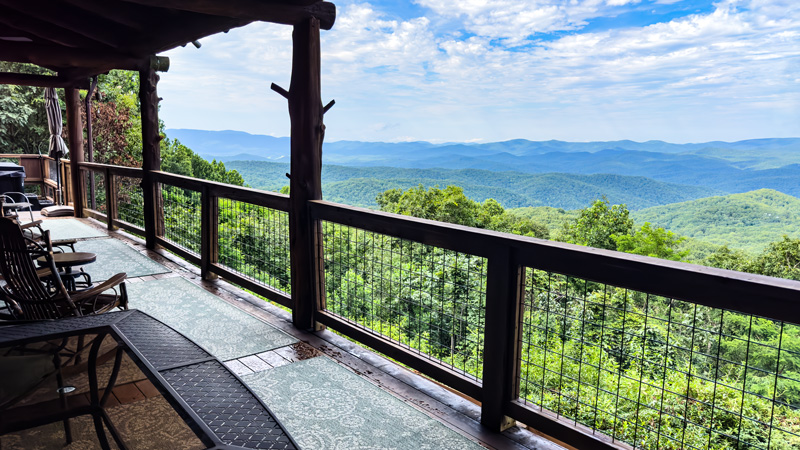
Looking toward Amicalola Falls State Park and Lodge.
The panoramic mountain vistas that inspire people to travel hundreds of miles and spend days exploring the Blue Ridge Parkway are part of our everyday life. Here, there are no crowds, no overlooks, and no rush to move on—just a quiet deck, a pair of rocking chairs, and one of North Georgia’s most extraordinary long-range views. From the rugged Blue Ridge Mountains stretching into Tennessee and North Carolina, the landscape gradually softens into the rolling foothills and distant farmland of Northeast Georgia—a transition that is every bit as captivating as the mountains themselves.
Every image in this gallery was taken right here. As the seasons turn, so do the skies—shifting from soft pastels to fiery reds to deep Appalachian blues—each moment offering a new perspective on the land we’re fortunate to call home.
It’s hard to believe that such quiet beauty exists just beyond the gridlock and noise of Atlanta. And because nearly everything you see lies within Georgia State lands or U.S. Forest Service property, this view is protected—preserved for generations to come.
Click any photo to enlarge or launch a full slideshow—and see why we never tire of looking out.
-

Blue Ridge Sunrises | Burnt Mountain, Georgia 001 2025 09 01 blue ridge cloud inversion sunrise
-

Blue Ridge Sunrises | Burnt Mountain, Georgia 002 2026 01 25 blue ridge ice covered winter mountains
-

Blue Ridge Sunrises | Burnt Mountain, Georgia 003 2026 01 02 crimson blue ridge winter dawn
-

Blue Ridge Sunrises | Burnt Mountain, Georgia 004 2026 05 20 pastel blue ridge mountain layers
-

Blue Ridge Sunrises | Burnt Mountain, Georgia 005 2026 04 26 blue ridge valley mist sunrise
-

Blue Ridge Sunrises | Burnt Mountain, Georgia 006 2026 05 13 spring sunrise over blue ridge forest
-

Blue Ridge Sunrises | Burnt Mountain, Georgia 007 2026 07 09 pink dawn over blue ridge fog
-

Blue Ridge Sunrises | Burnt Mountain, Georgia 008 2026 03 23 scarlet sun over blue ridge layers
-

Blue Ridge Sunrises | Burnt Mountain, Georgia 009 2026 02 03 frosted blue ridge sunrise clouds
-

Blue Ridge Sunrises | Burnt Mountain, Georgia 012 2026 03 18 purple clouds over blue ridge dawn
-

Blue Ridge Sunrises | Burnt Mountain, Georgia 011 2025 07 31 golden summer sunrise over blue ridge
-

Blue Ridge Sunrises | Burnt Mountain, Georgia 013 2025 12 19 storm clouds breaking over blue ridge
-

Blue Ridge Sunrises | Burnt Mountain, Georgia 014 2025 08 14 pink and blue summer mountain dawn
-

Blue Ridge Sunrises | Burnt Mountain, Georgia 015 2026 06 24 golden sunrise and sky trails over blue ridge
-

Blue Ridge Sunrises | Burnt Mountain, Georgia 016 2026 04 16 spring morning light over blue ridge
-

Blue Ridge Sunrises | Burnt Mountain, Georgia 017 2025 09 26 sea of clouds over blue ridge mountains
-

Blue Ridge Sunrises | Burnt Mountain, Georgia 018 2025 12 04 crimson horizon over blue ridge
-

Blue Ridge Sunrises | Burnt Mountain, Georgia 019 2026 04 02 cloud framed sunrise over blue ridge
-

Blue Ridge Sunrises | Burnt Mountain, Georgia 020 2025 07 29 orange clouds over layered blue ridge
-

Blue Ridge Sunrises | Burnt Mountain, Georgia 021 2026 01 28 sweeping winter clouds at blue ridge sunrise
-

Blue Ridge Sunrises | Burnt Mountain, Georgia 022 2026 04 25 blue storm sky over spring mountains
-

Blue Ridge Sunrises | Burnt Mountain, Georgia 023 2025 04 19 red sun rising over blue ridge
-

Blue Ridge Sunrises | Burnt Mountain, Georgia 024 2026 02 17 pastel winter sunrise over blue ridge
-

Blue Ridge Sunrises | Burnt Mountain, Georgia 025 2026 06 14 blue ridge sunrise from cabin hot tub
-

Blue Ridge Sunrises | Burnt Mountain, Georgia 026 2026 03 28 fiery sunrise over blue ridge peaks
-

Blue Ridge Sunrises | Burnt Mountain, Georgia 027 2025 08 16 summer haze over blue ridge mountains
-

Blue Ridge Sunrises | Burnt Mountain, Georgia 028 2026 02 18 golden winter sun over blue ridge valleys
-

Blue Ridge Sunrises | Burnt Mountain, Georgia 029 2025 04 26 spring mist and dawn light in blue ridge
-

Blue Ridge Sunrises | Burnt Mountain, Georgia 030 2026 05 29 golden clouds over summer blue ridge
-

Blue Ridge Sunrises | Burnt Mountain, Georgia 031 2025 12 18 red winter horizon and blue ridge layers
-
Blue Ridge Sunrises | Burnt Mountain, Georgia 032 2026 07 03 wispy clouds at blue ridge sunrise
-

Blue Ridge Sunrises | Burnt Mountain, Georgia 033 2026 01 21 winter sunrise and sky trails over blue ridge
-
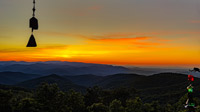
Blue Ridge Sunrises | Burnt Mountain, Georgia 034 2026 06 05 cabin wind chimes at blue ridge dawn
-

Blue Ridge Sunrises | Burnt Mountain, Georgia 035 2026 04 08 gilded sunrise over blue ridge mountains
-

Blue Ridge Sunrises | Burnt Mountain, Georgia 036 2026 03 09 sunrise above blue ridge cloud bank
-

Blue Ridge Sunrises | Burnt Mountain, Georgia 038 2026 04 03 hummingbird silhouette at mountain sunrise
-

Blue Ridge Sunrises | Burnt Mountain, Georgia 039 2026 07 19 blue ridge cabin deck sunrise view
-

Blue Ridge Sunrises | Burnt Mountain, Georgia 010 2025 11 27 golden morning light over layered ridges
-

Blue Ridge Sunrises | Burnt Mountain, Georgia 037 2026 07 10 stormy dawn from blue ridge cabin deck
-

Blue Ridge Sunrises | Burnt Mountain, Georgia 040 2026 07 22 atmospheric orange sunrise blue ridge mountains
-

Blue Ridge Sunrises | Burnt Mountain, Georgia 041 2026 08 08 stormy sunrise over frosty mountain
-

Blue Ridge Sunrises | Burnt Mountain, Georgia 042 2026 08 12 front row seat to the blue ridge sunrise
-

Blue Ridge Sunrises | Burnt Mountain, Georgia 043 2026 09 06 golden sunrise over the blue ridge mountains
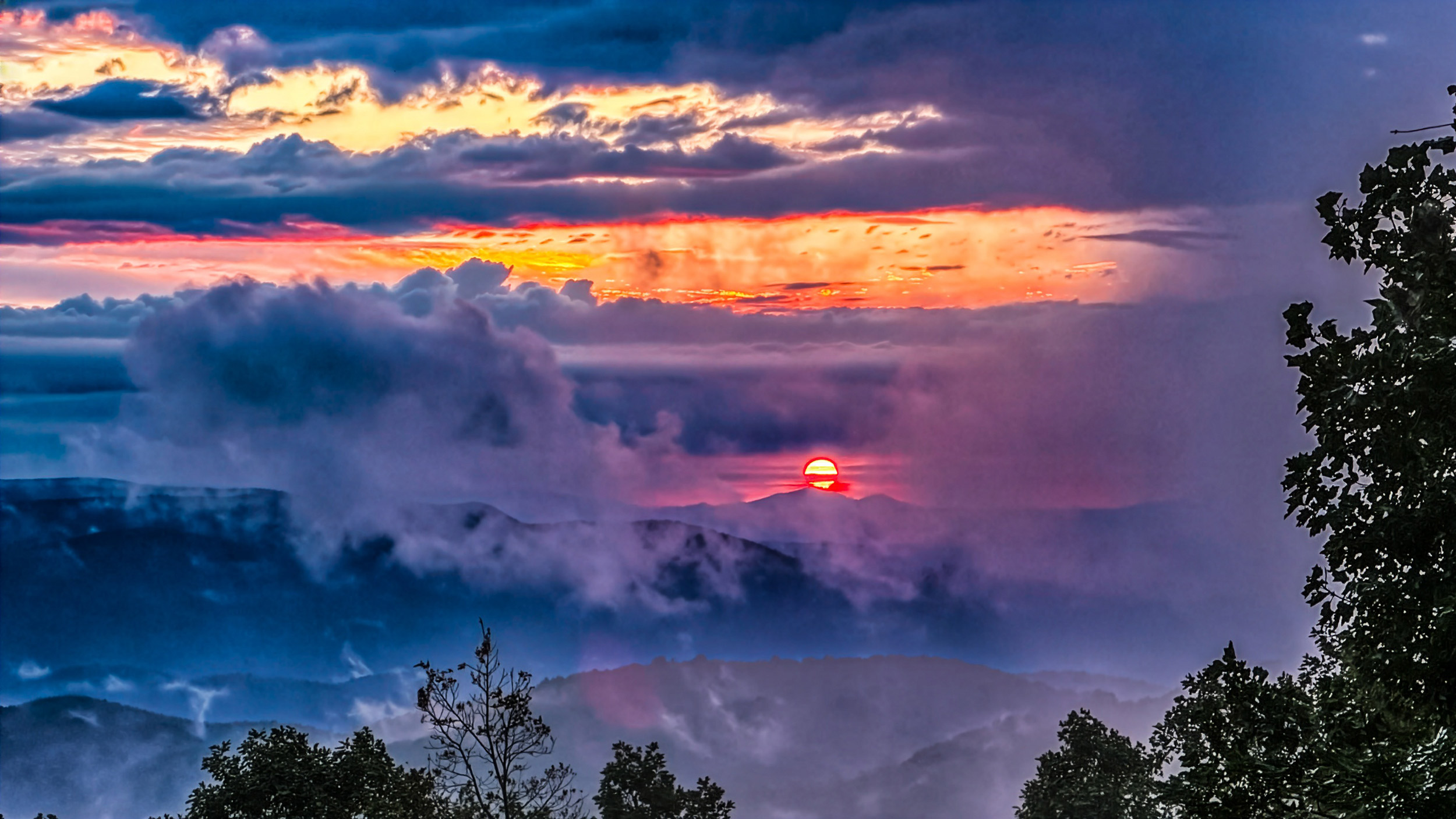
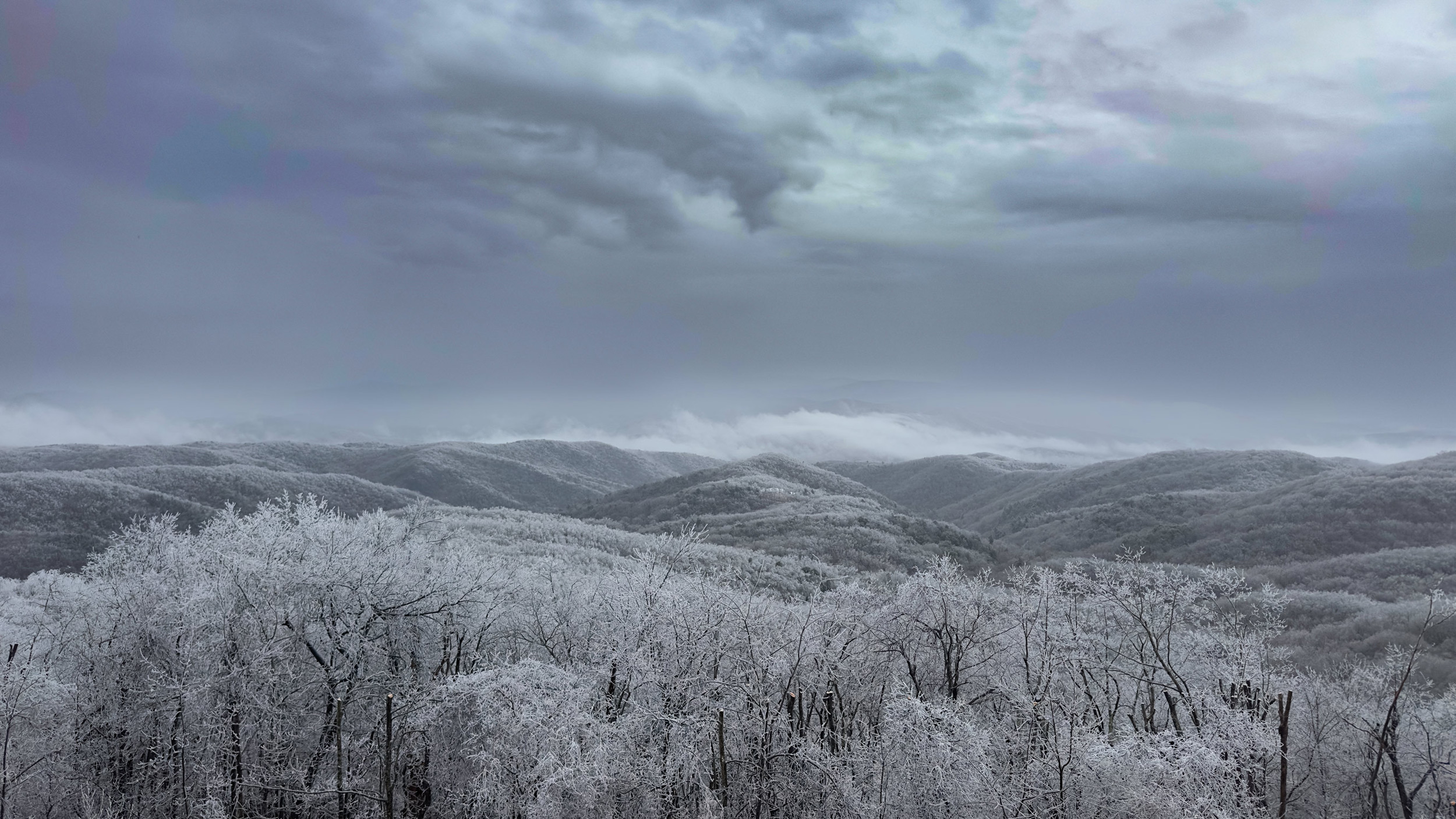
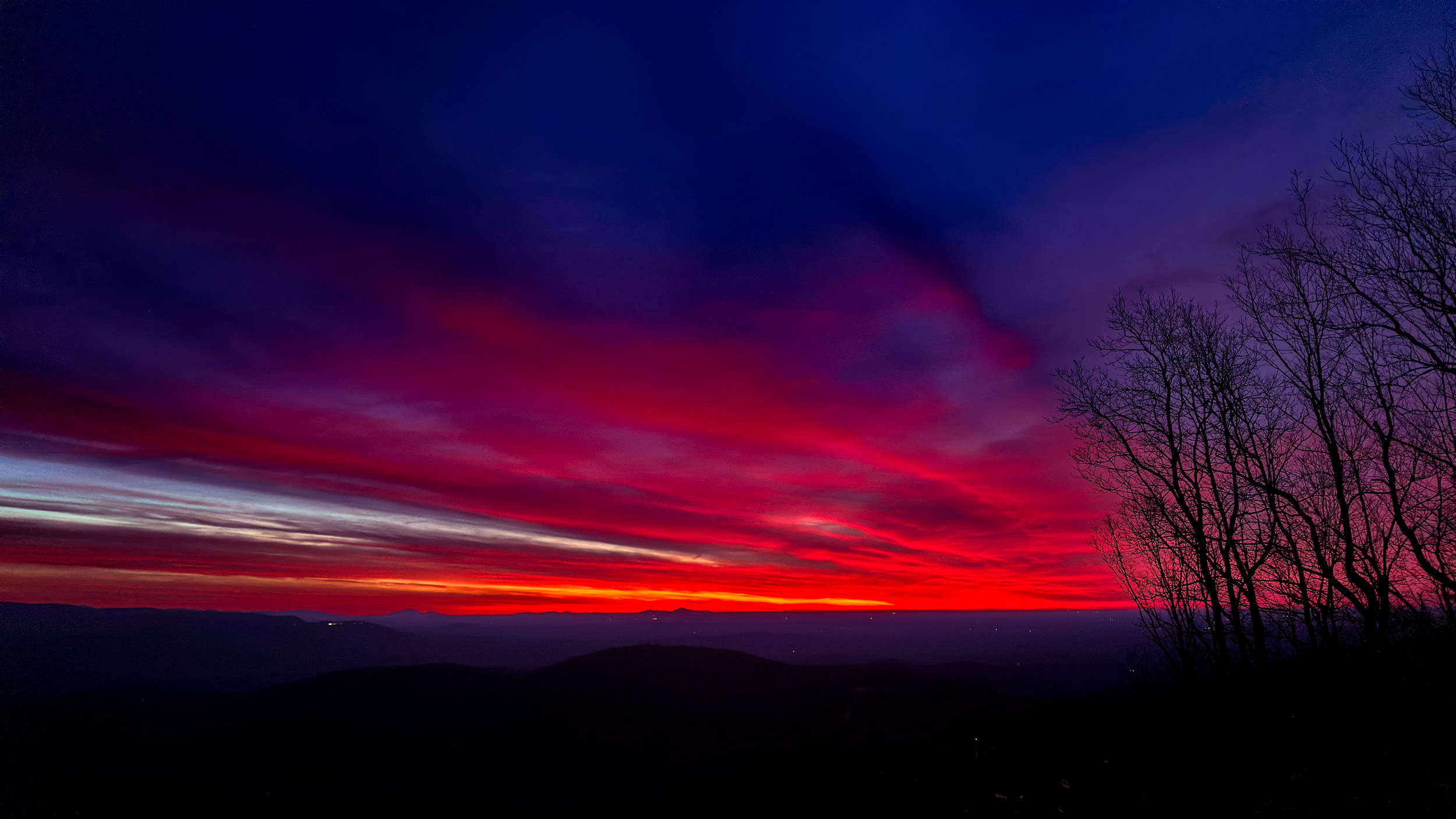
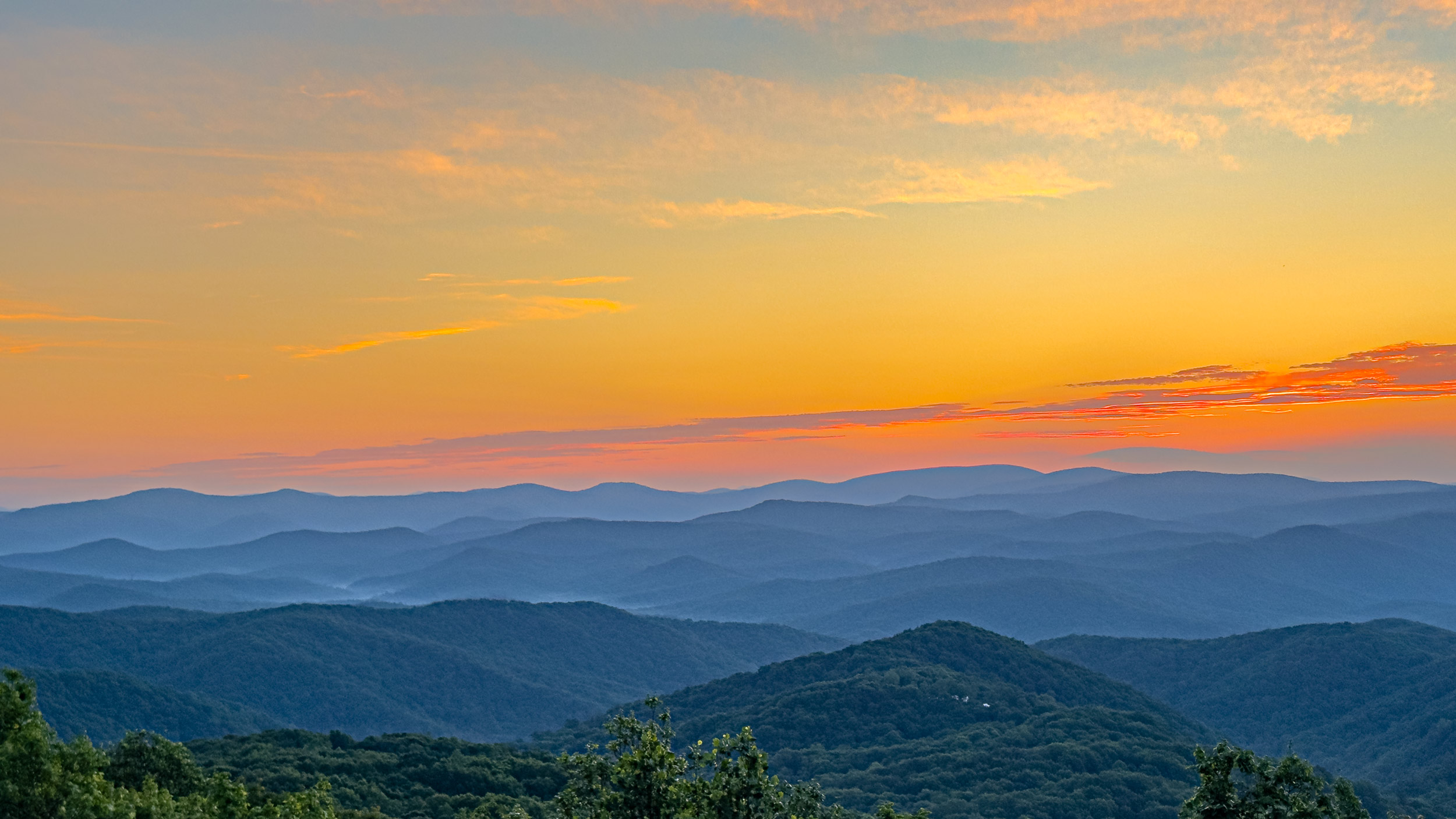
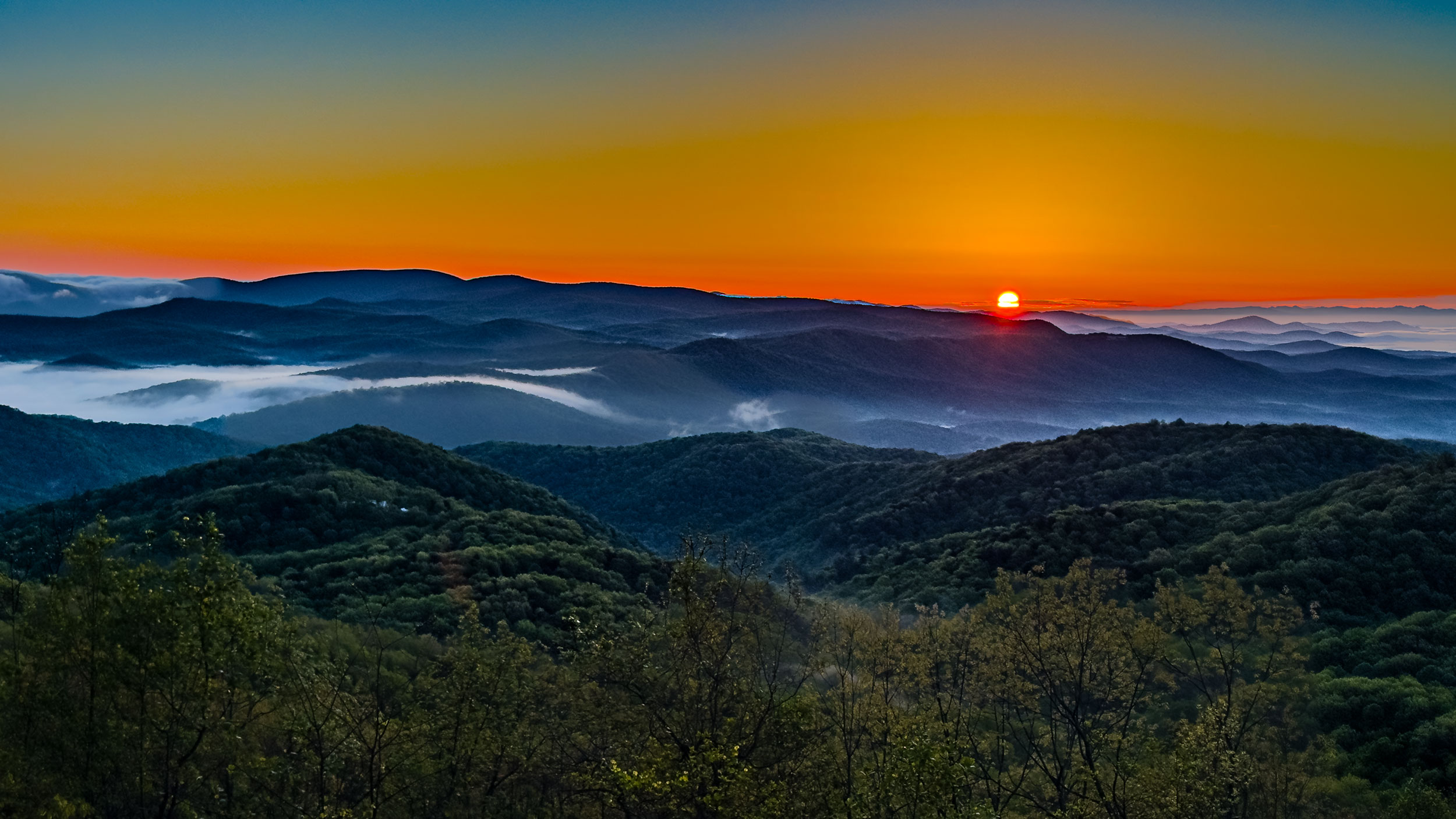
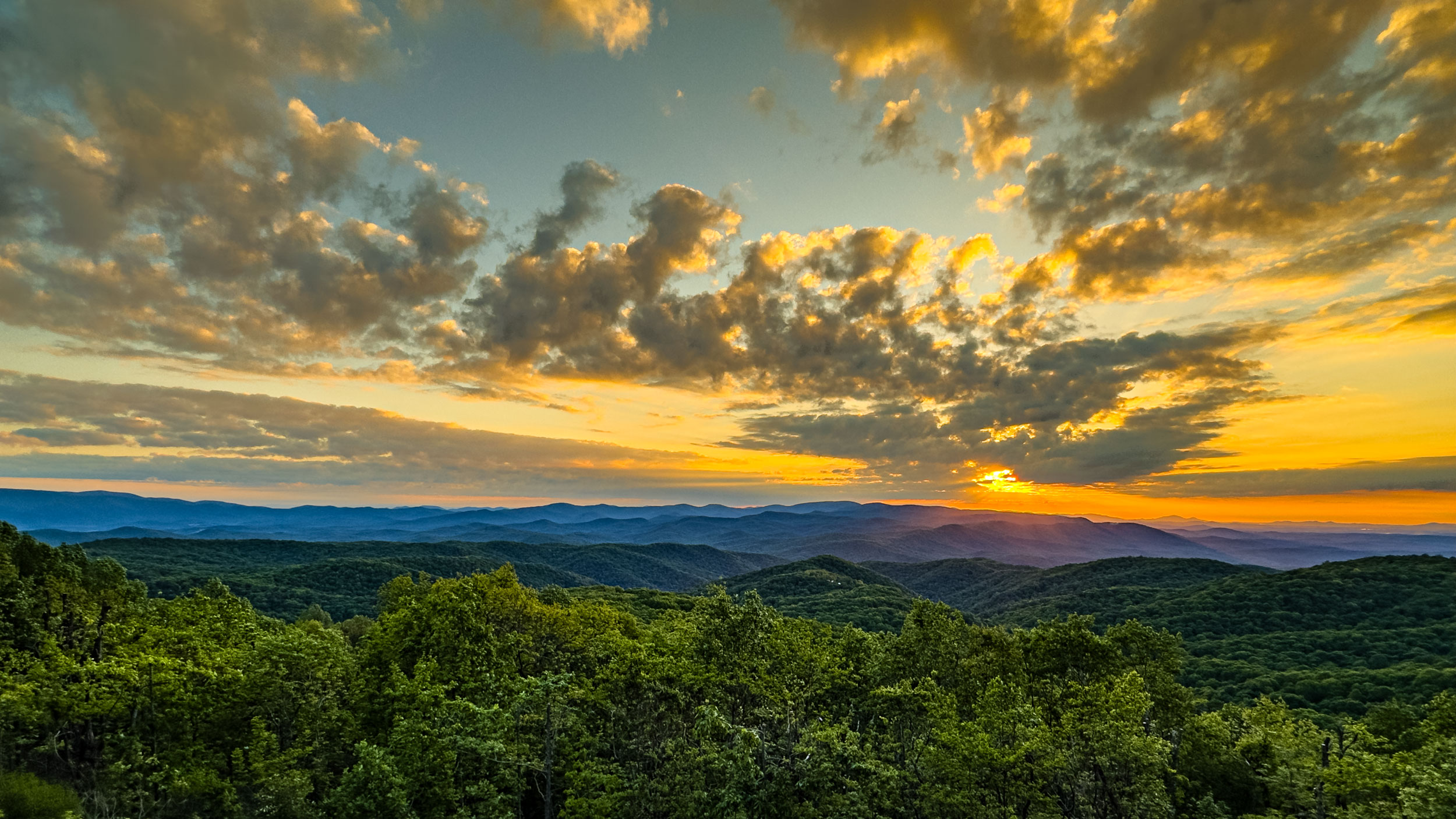
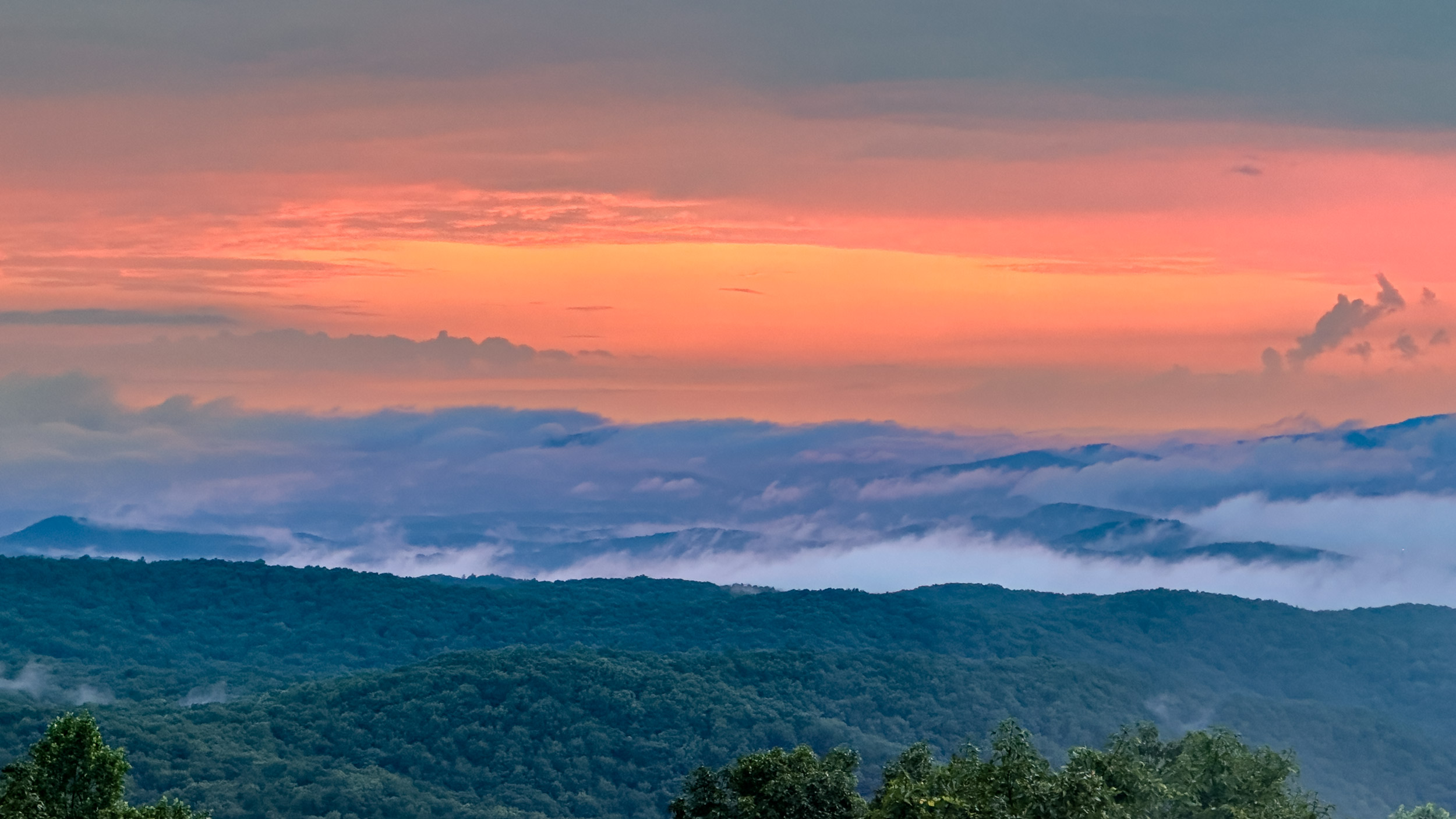
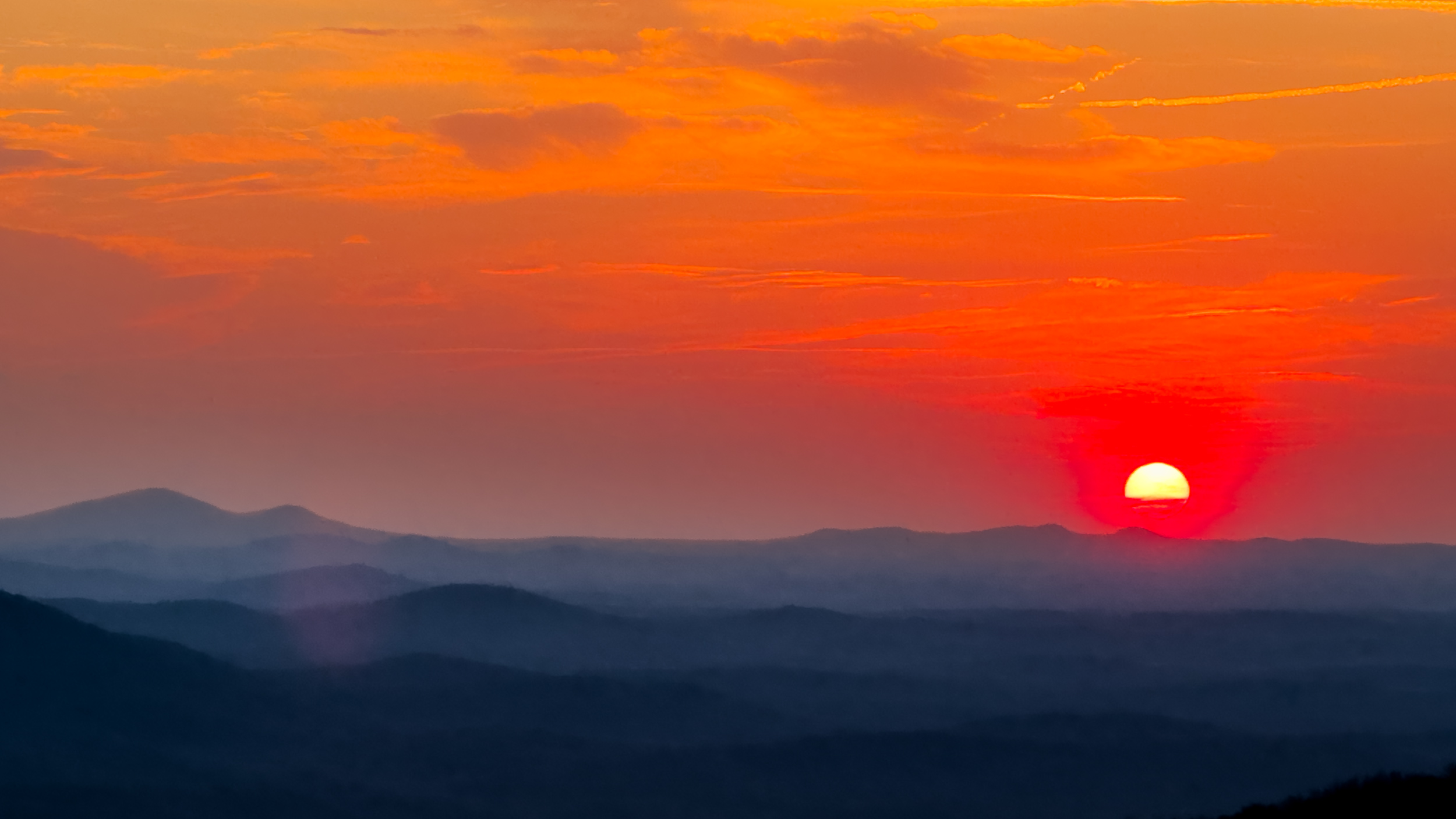
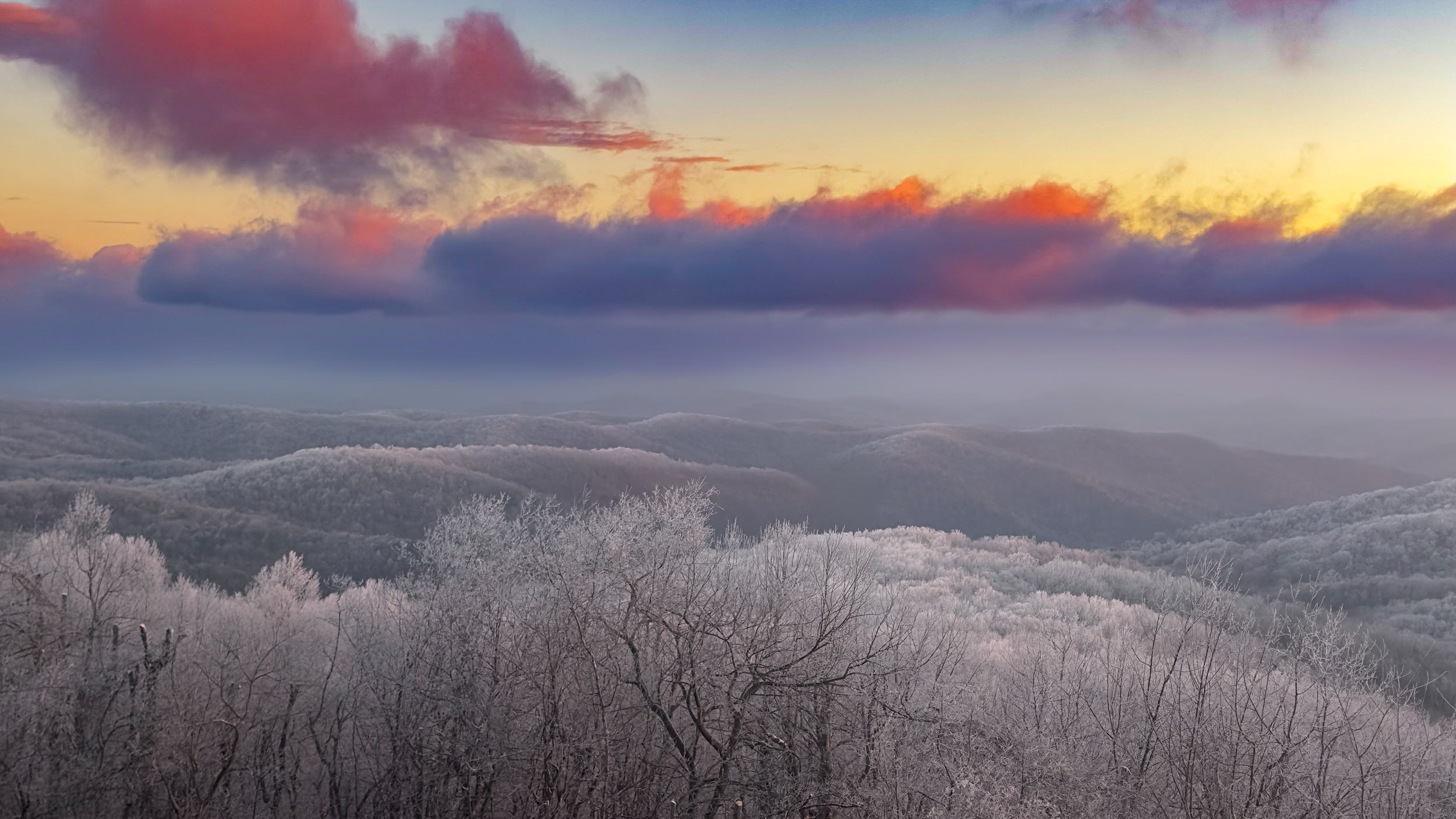
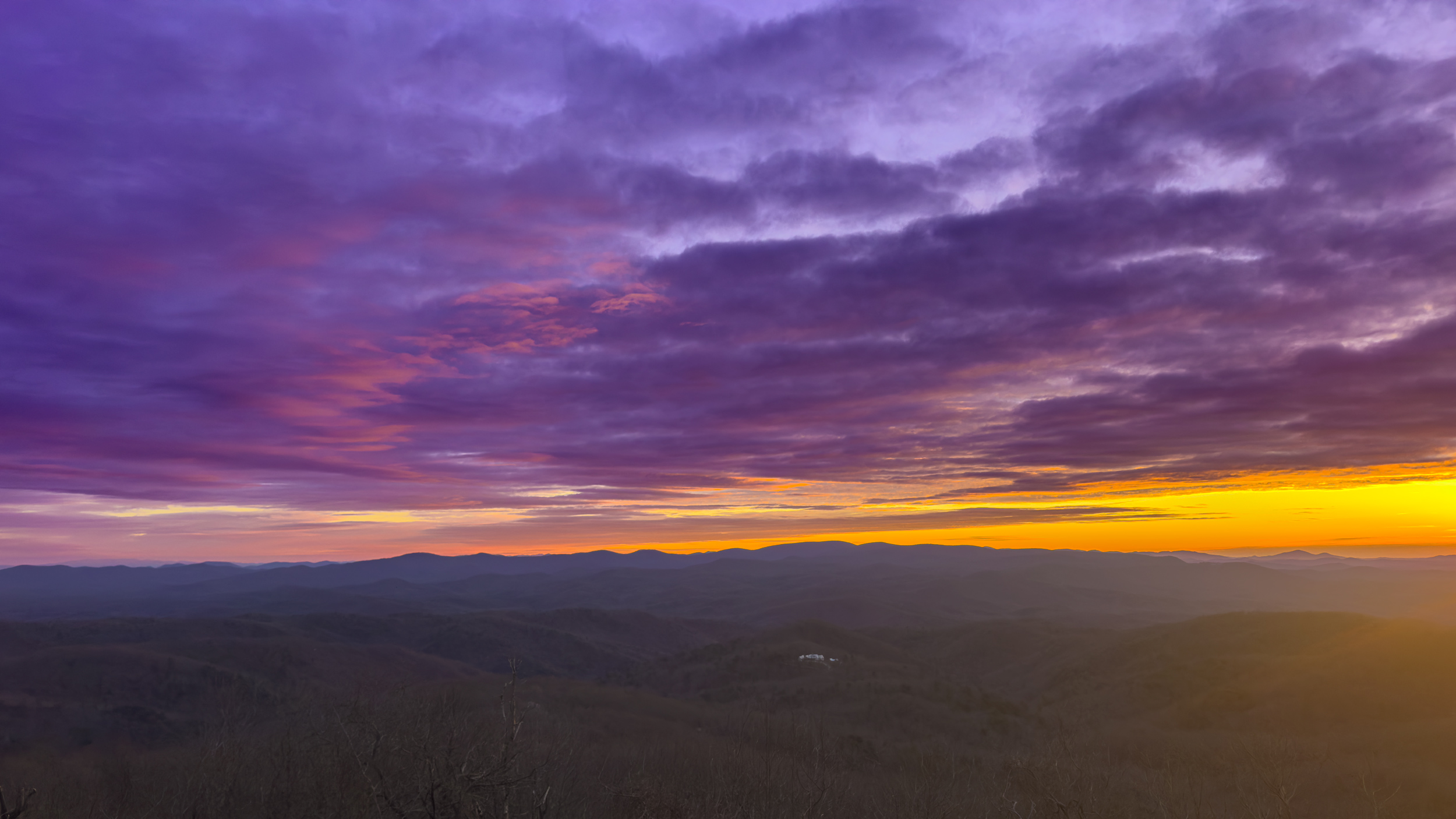
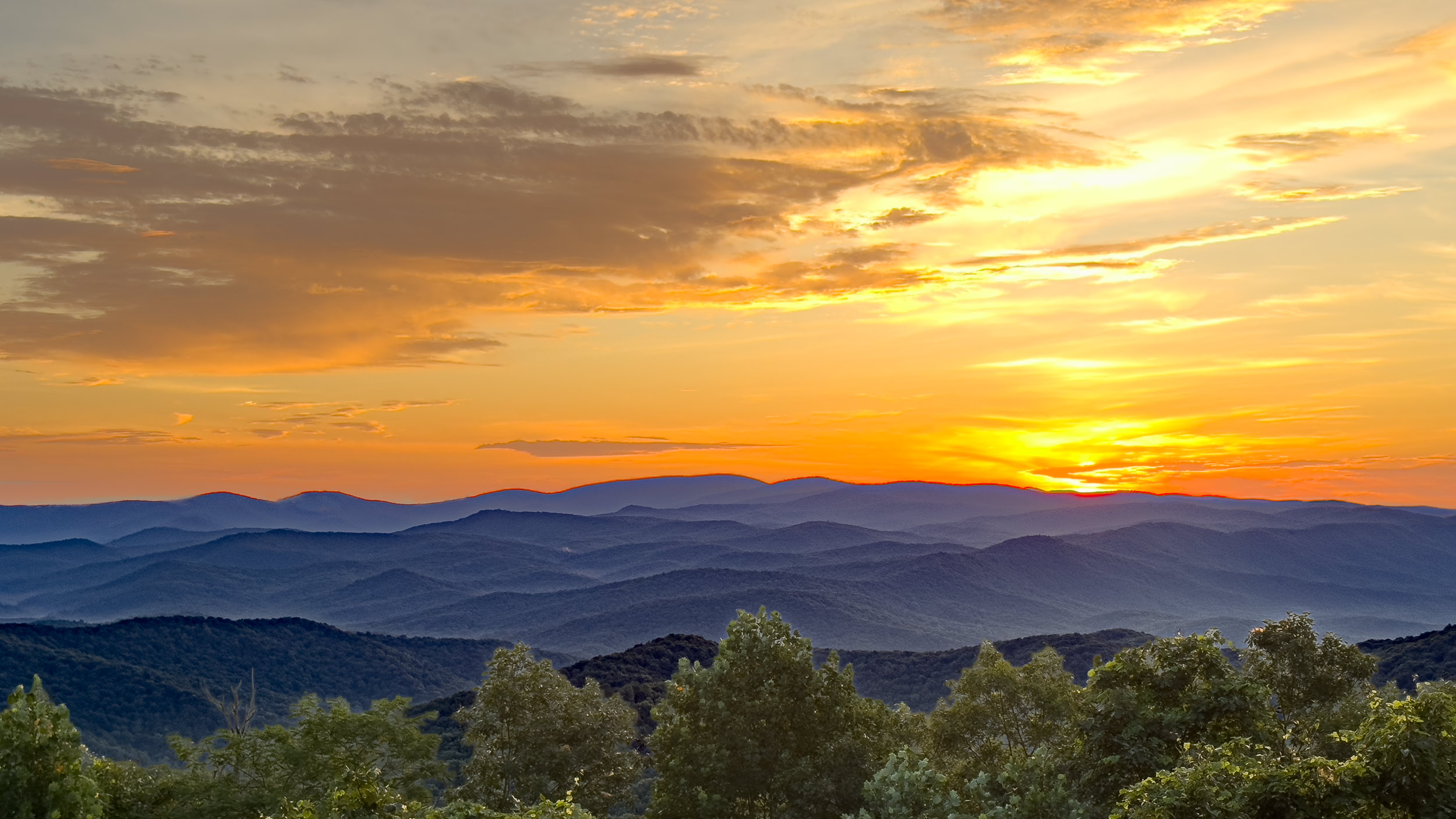
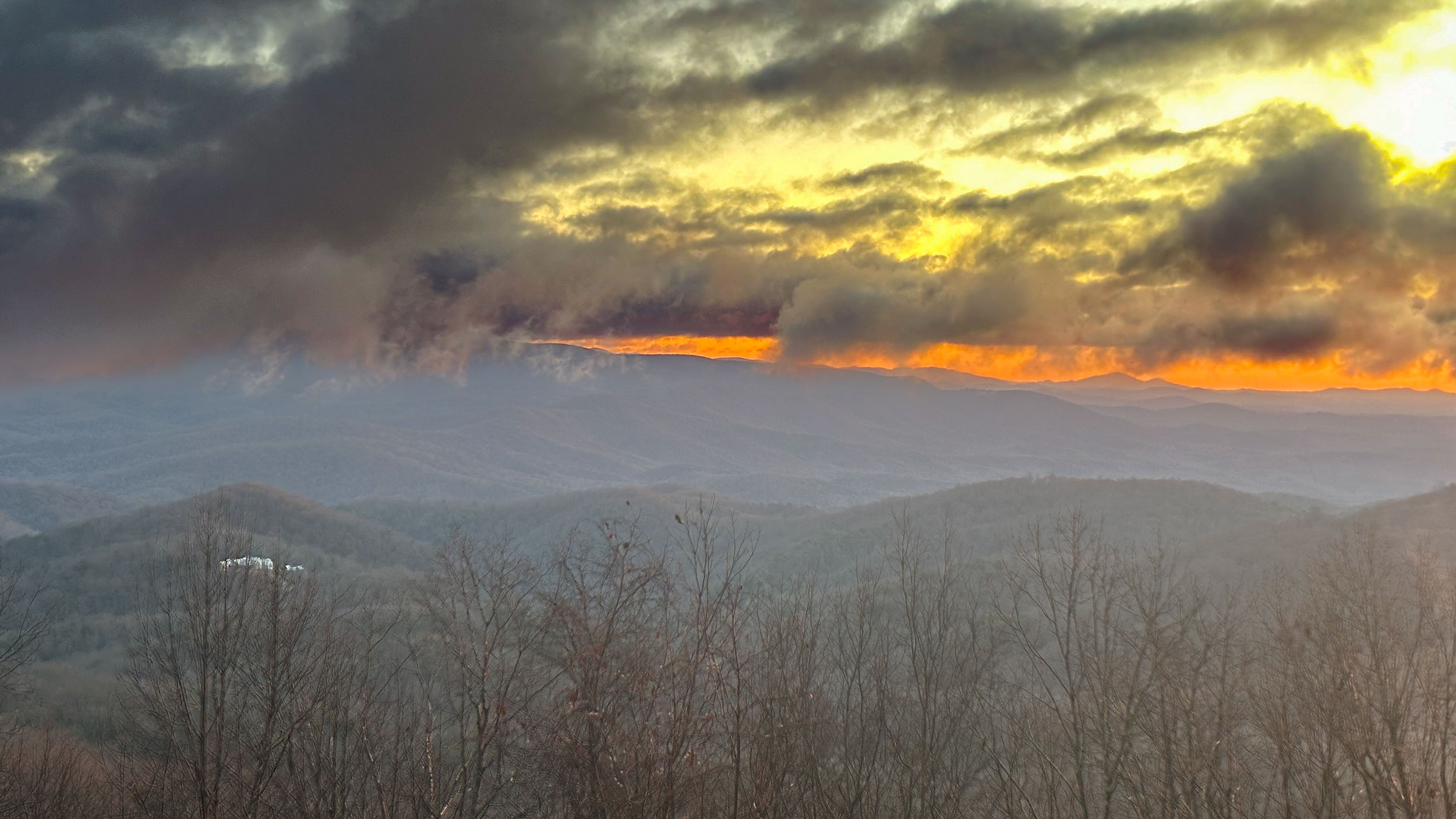
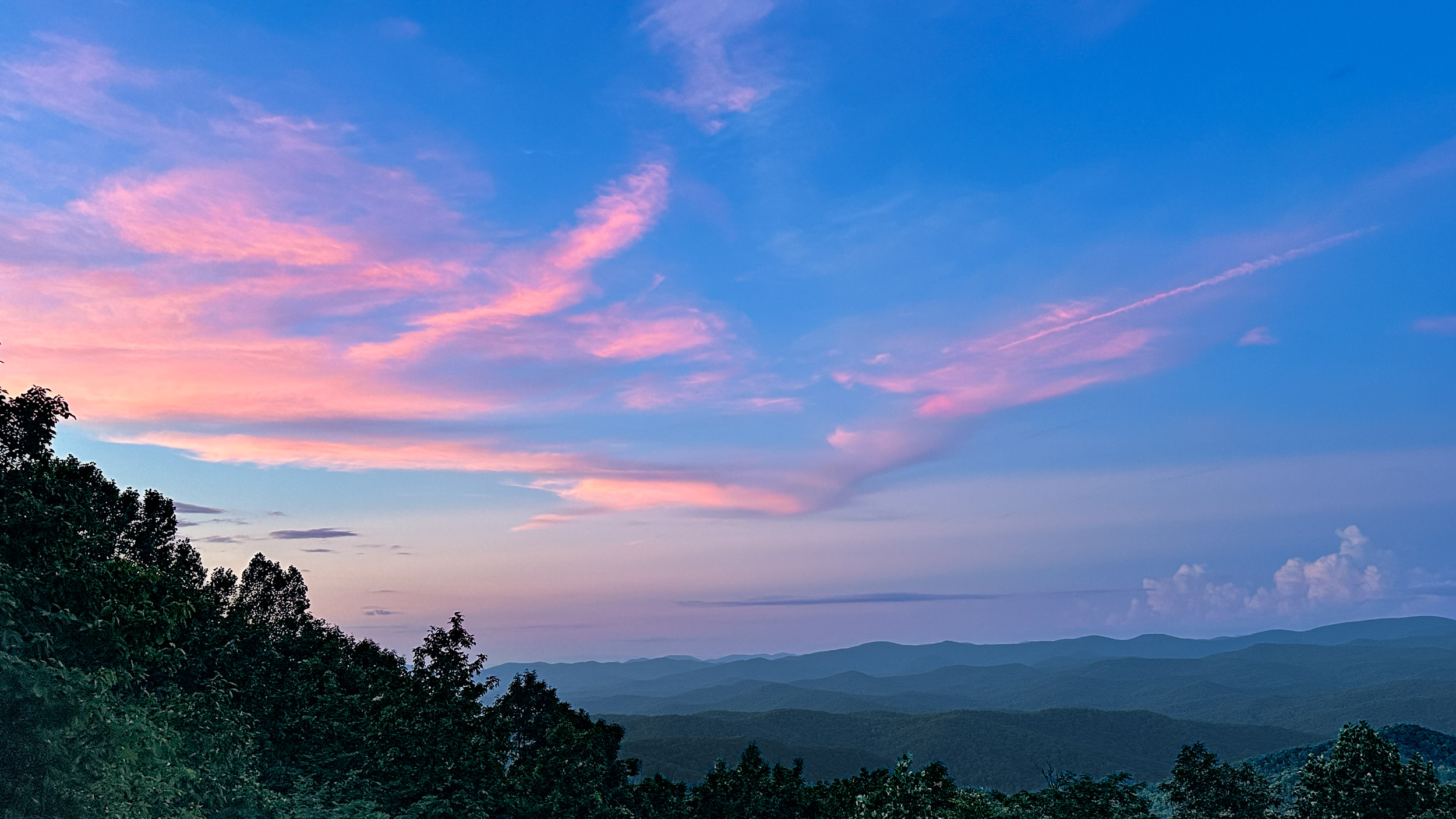
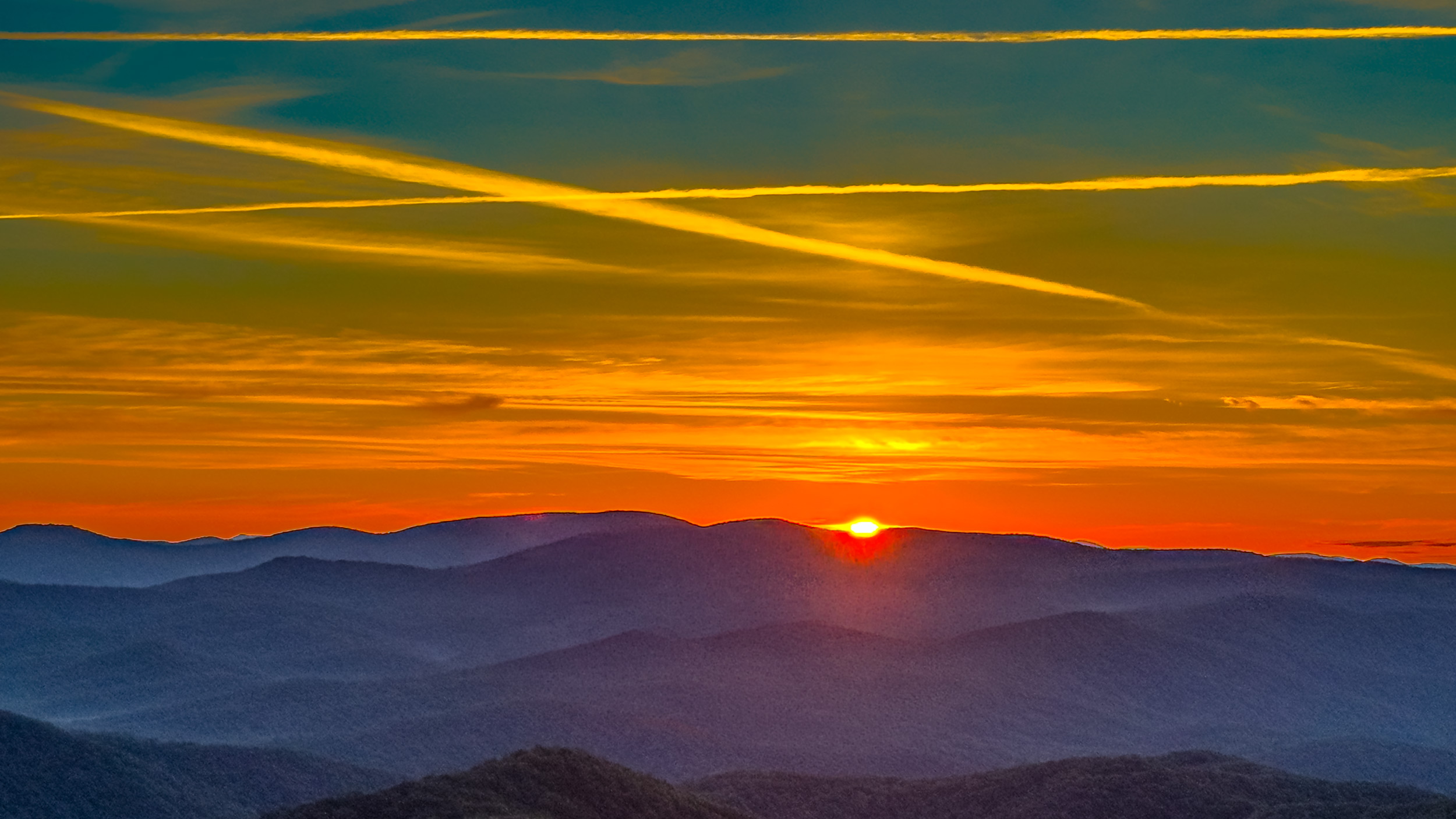
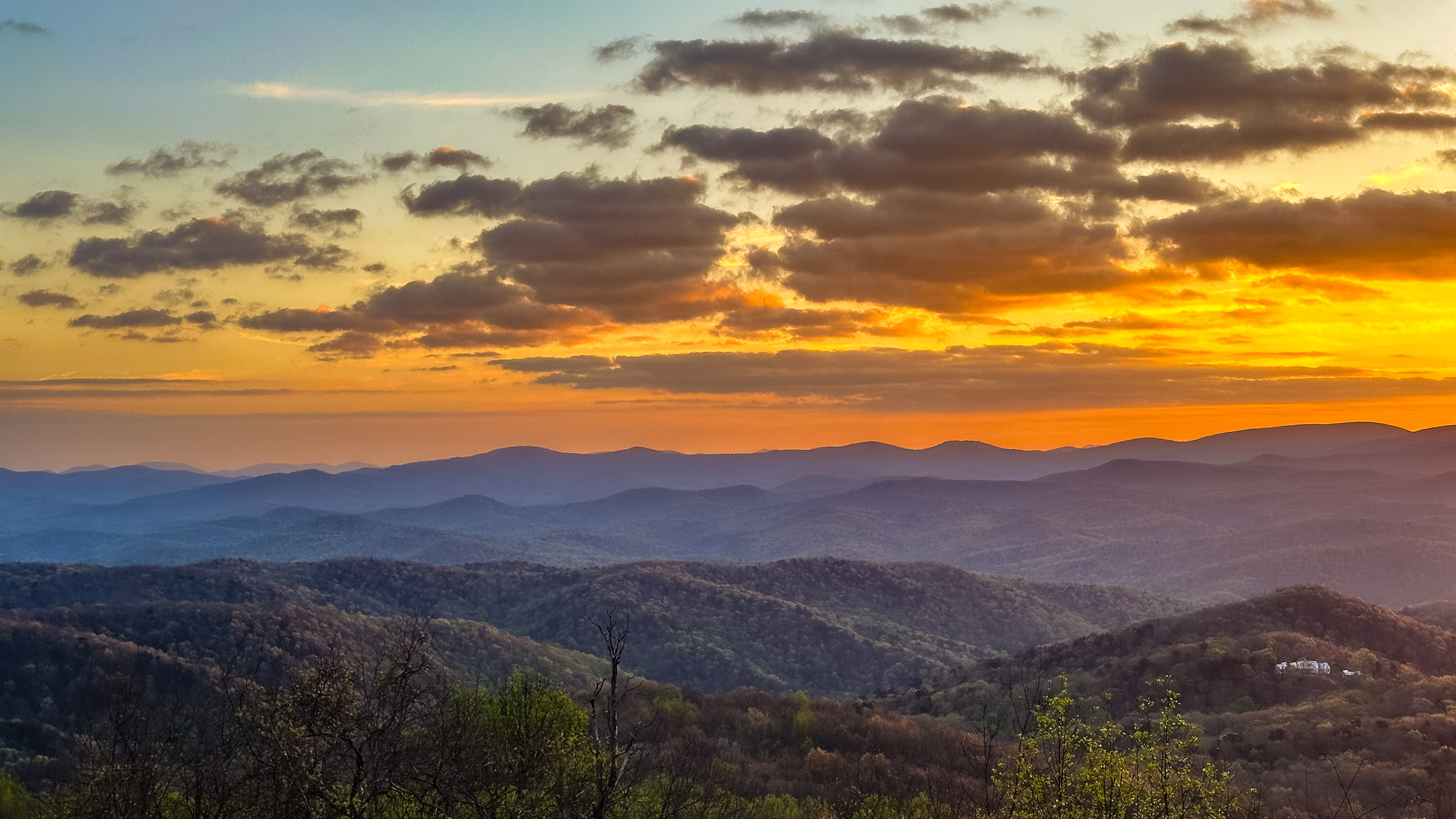
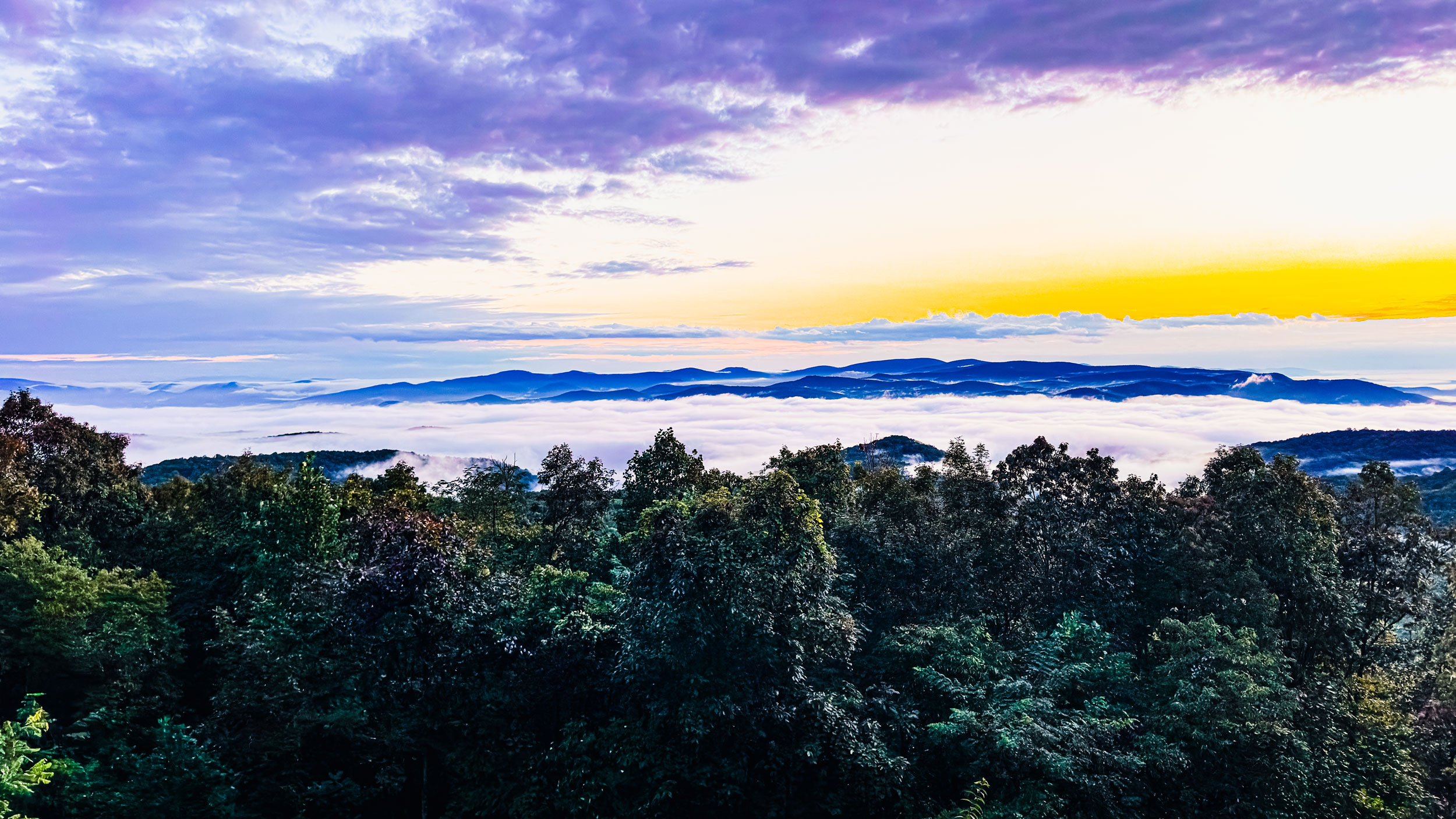
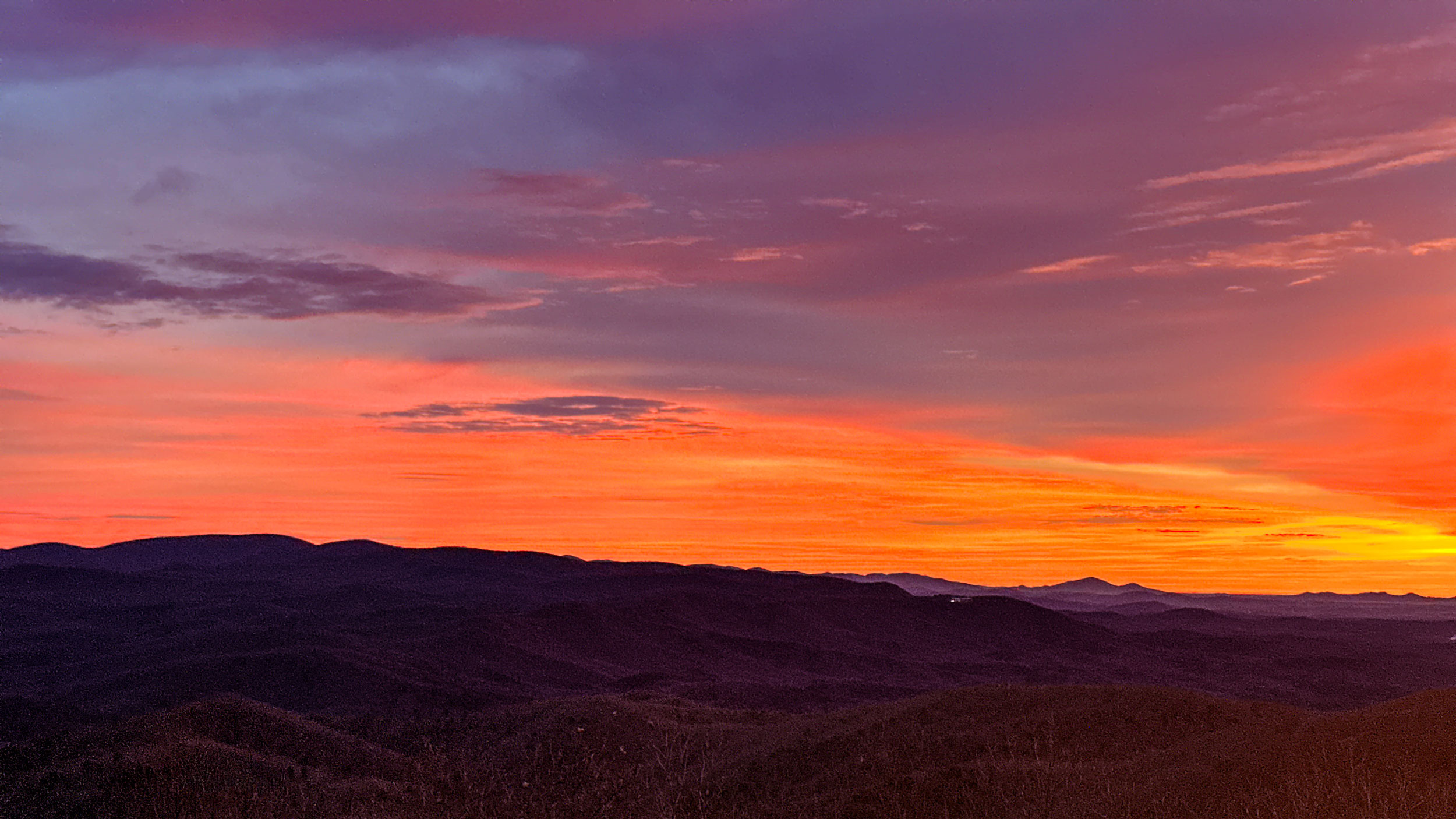
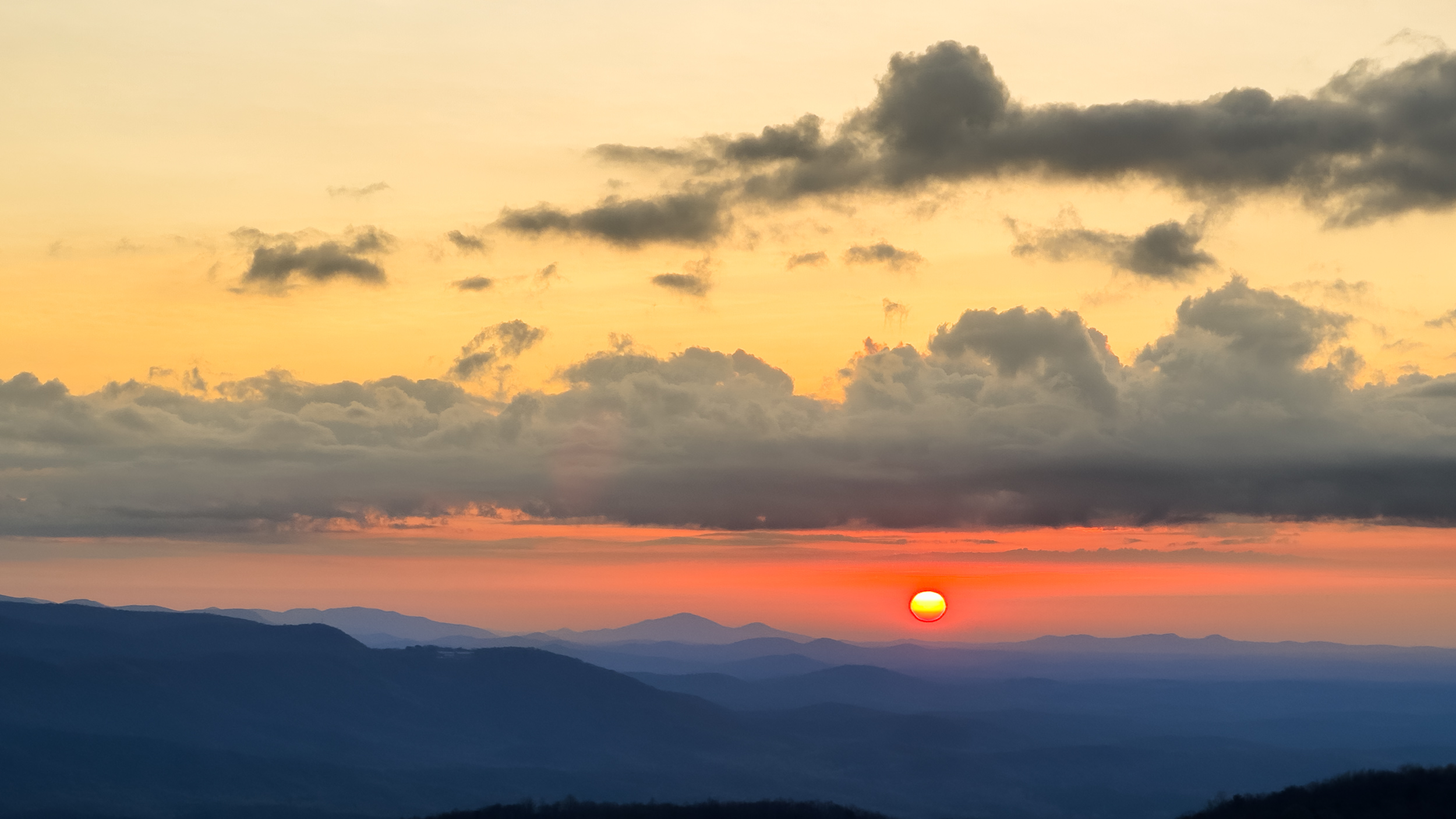
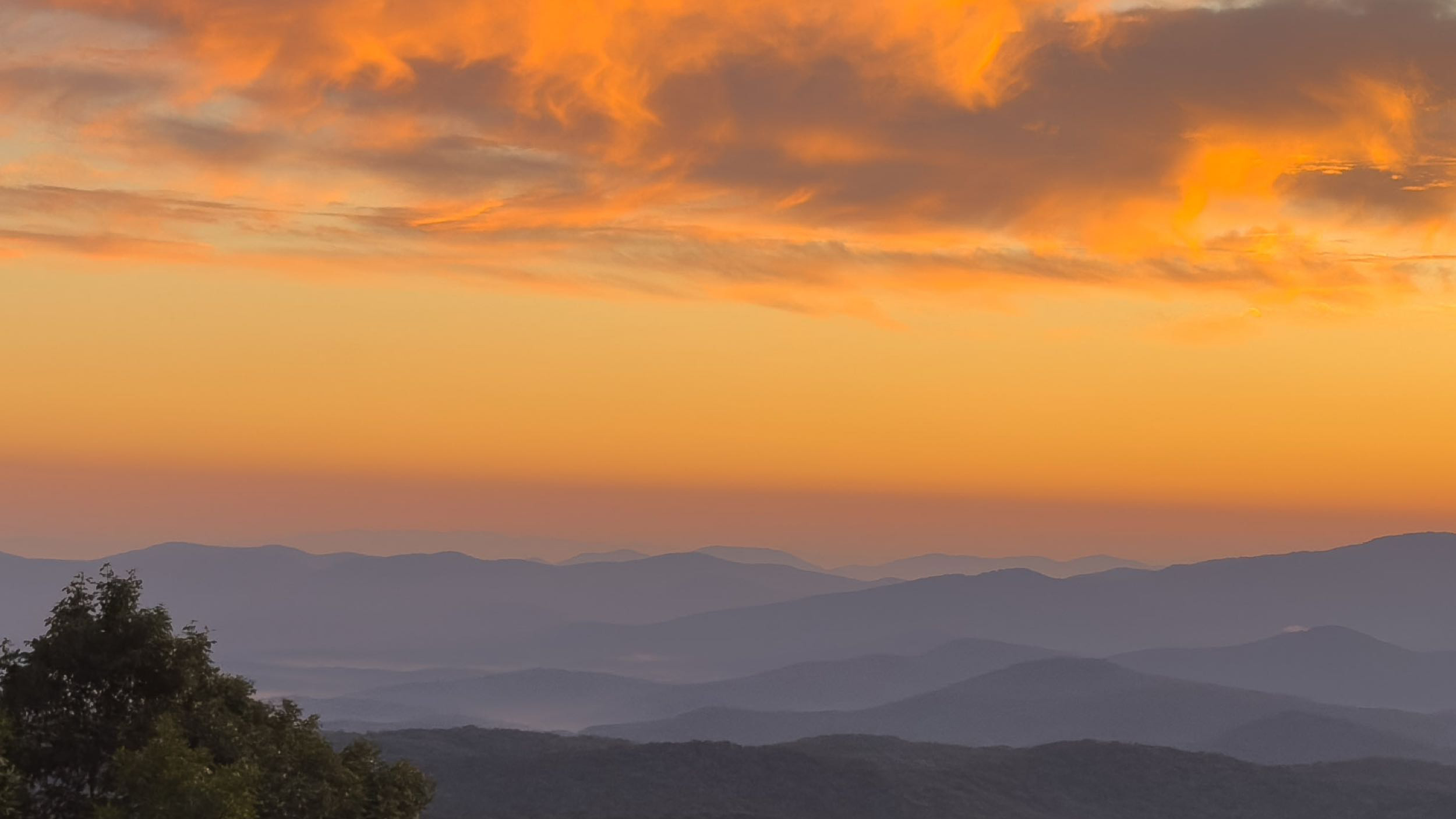
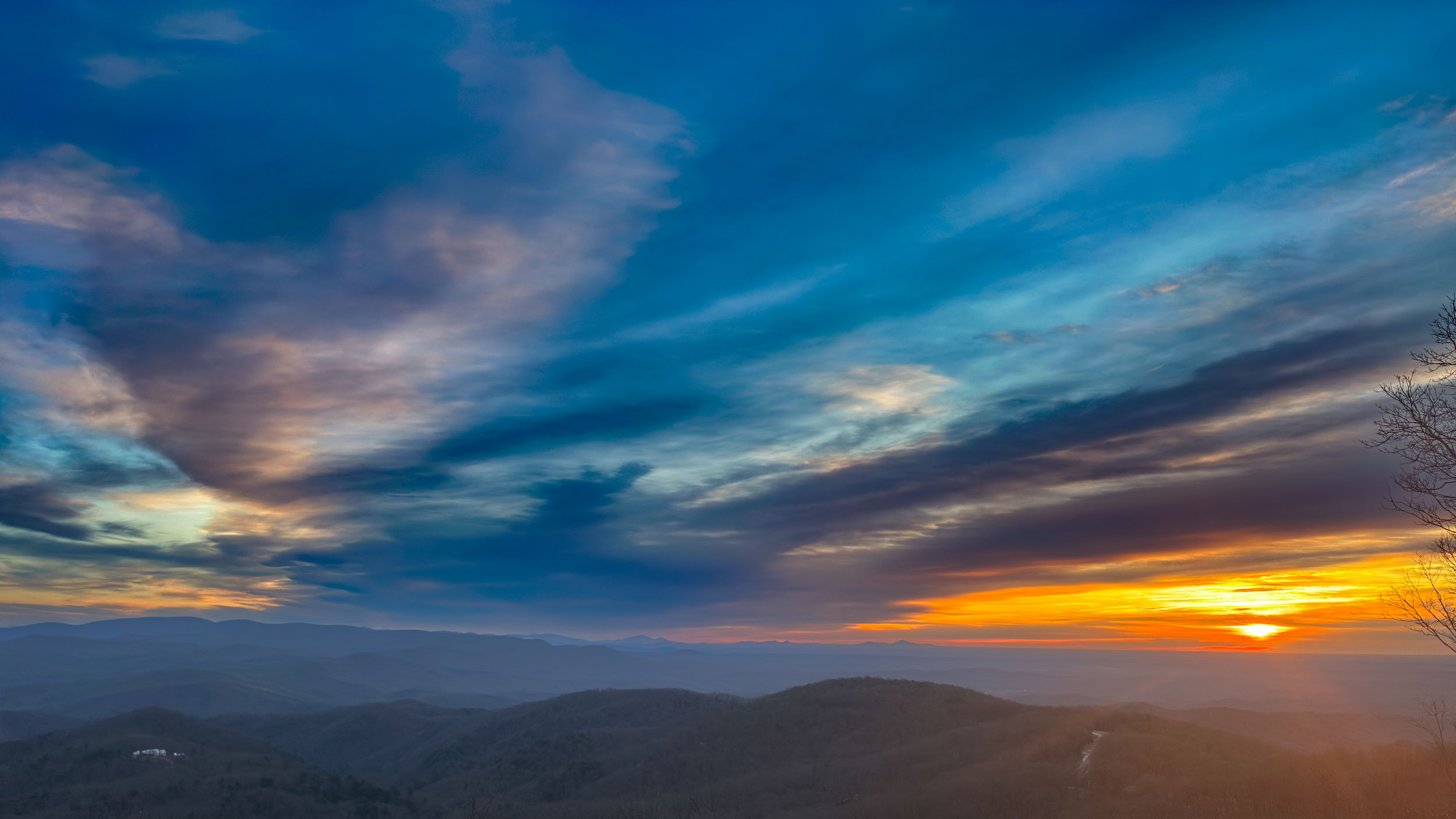
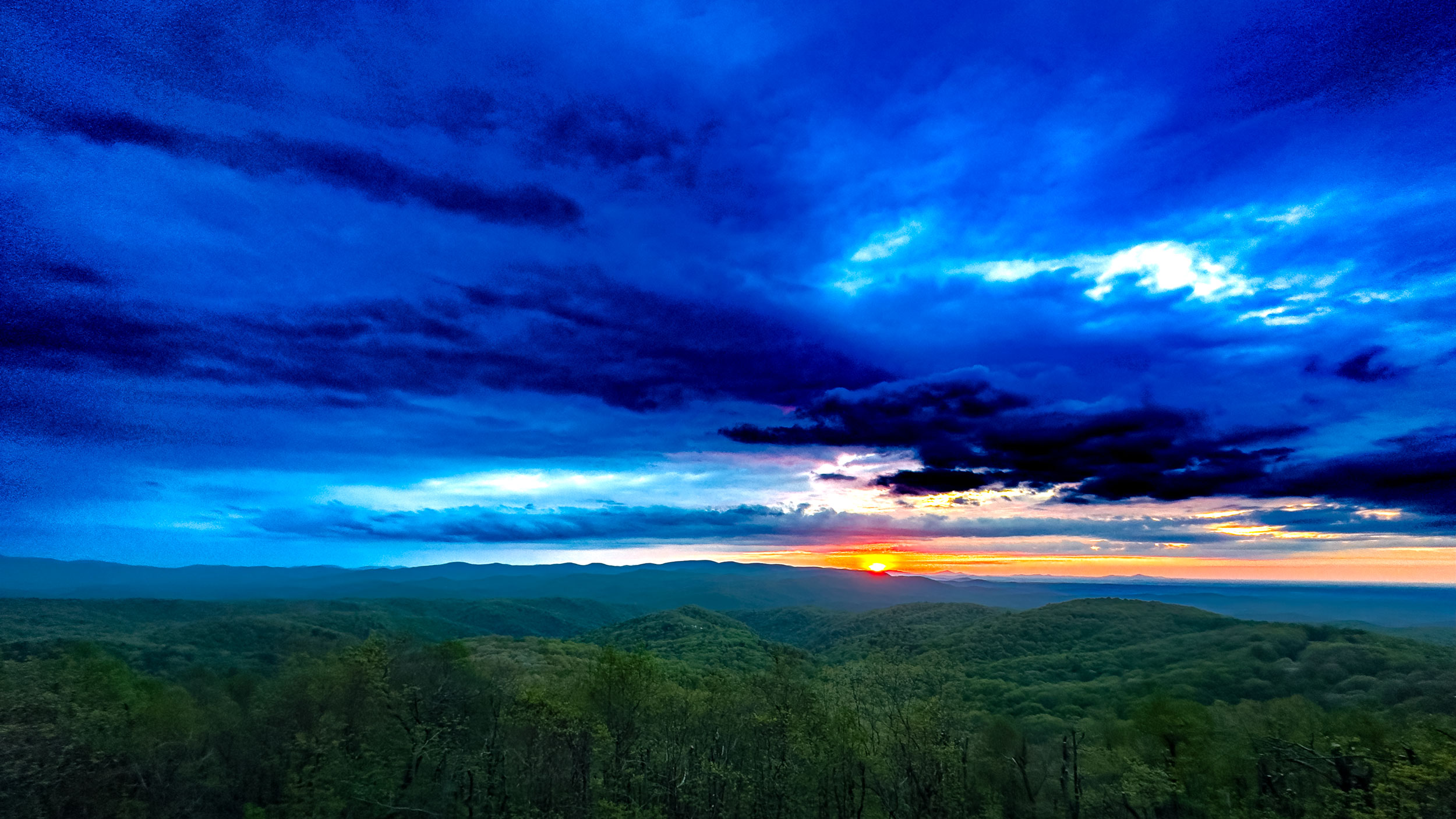
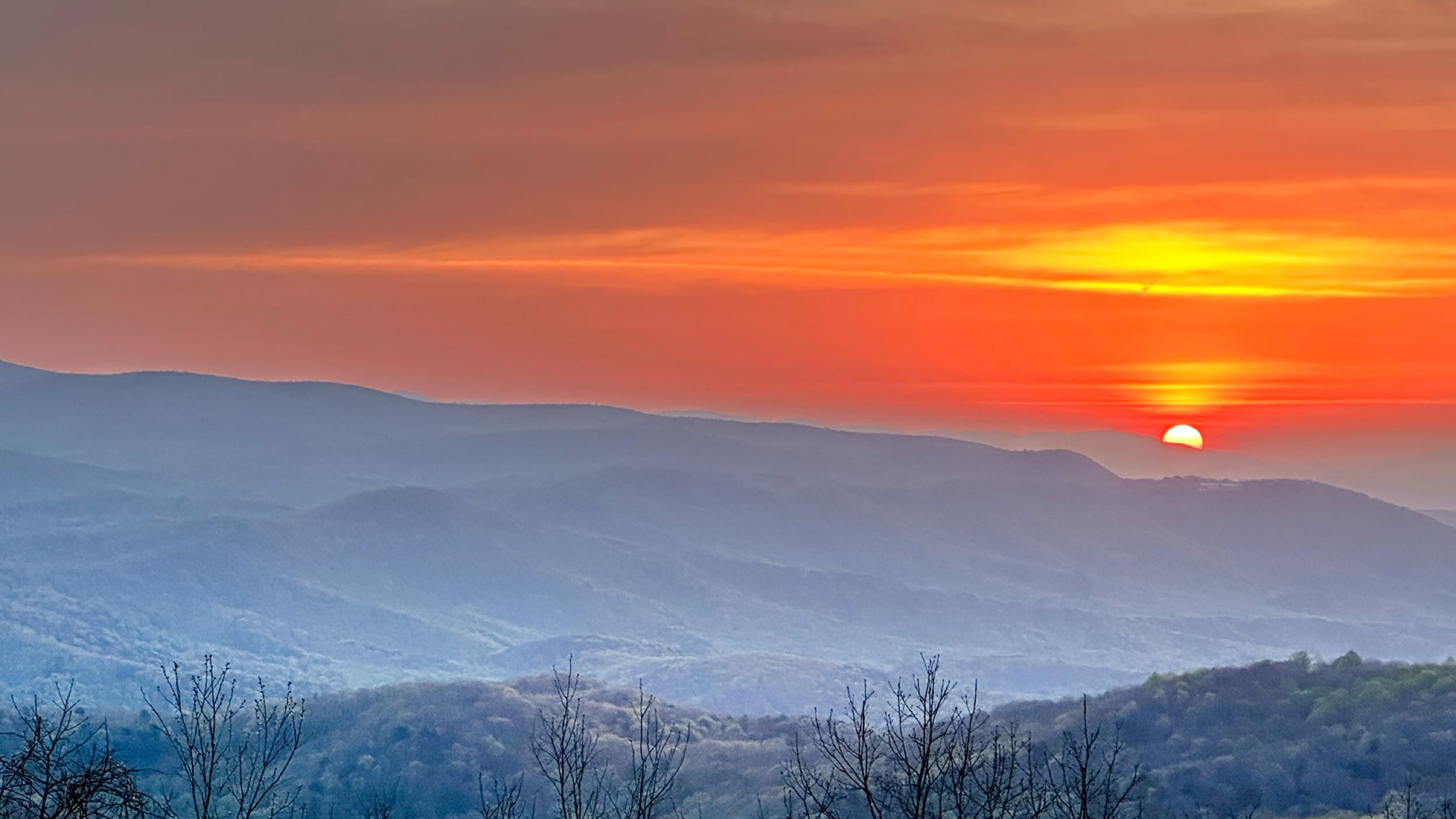
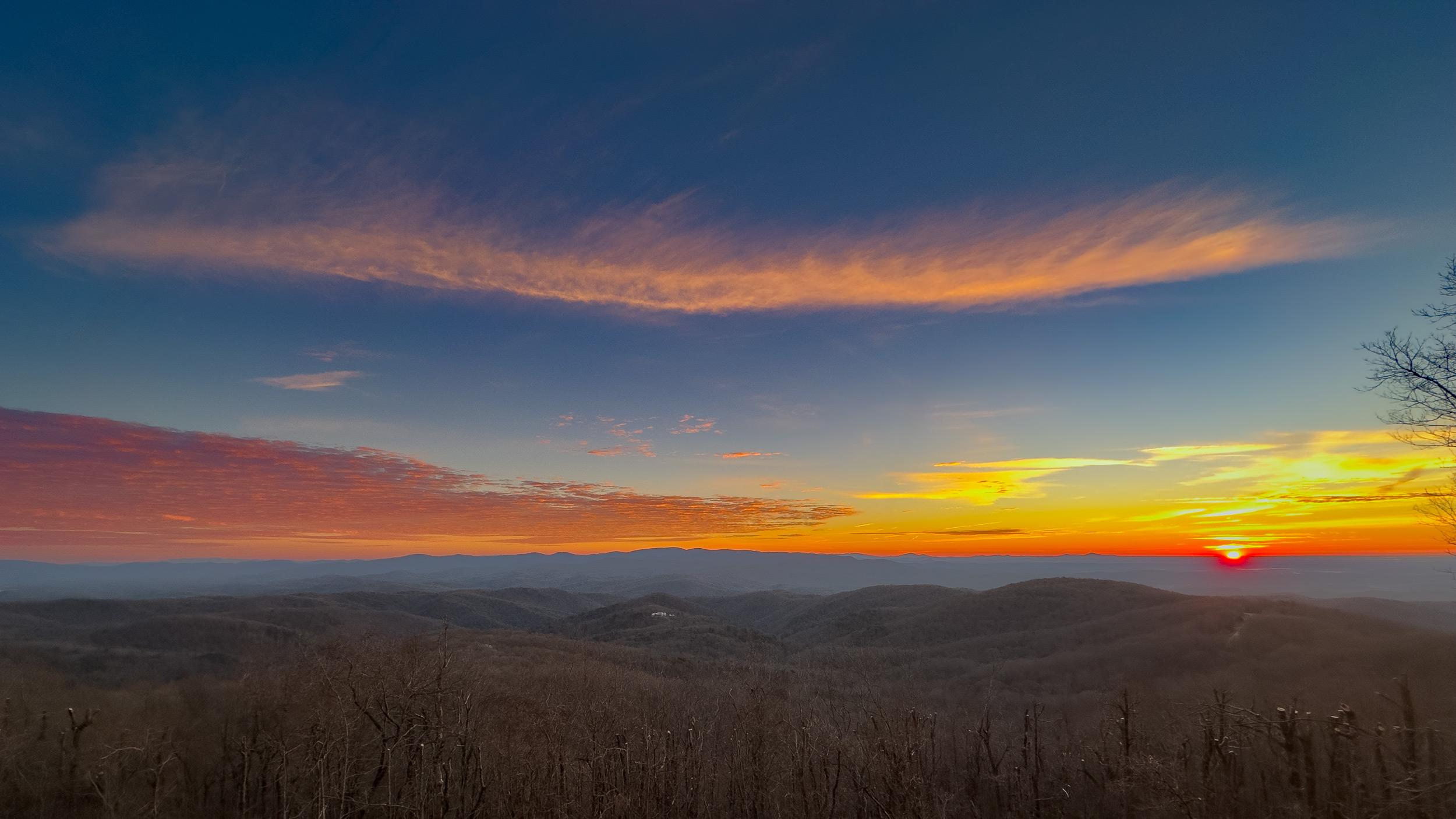
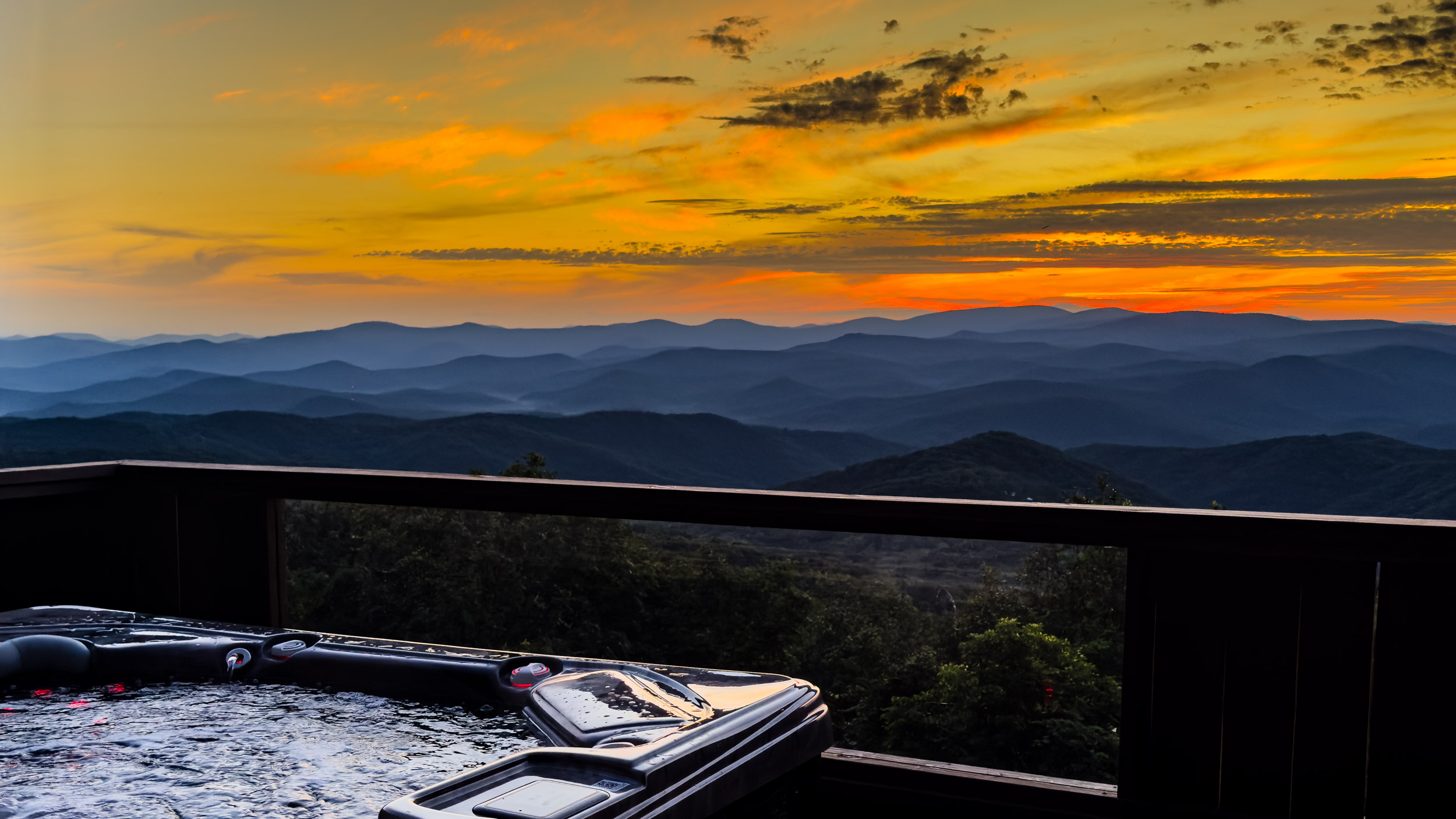
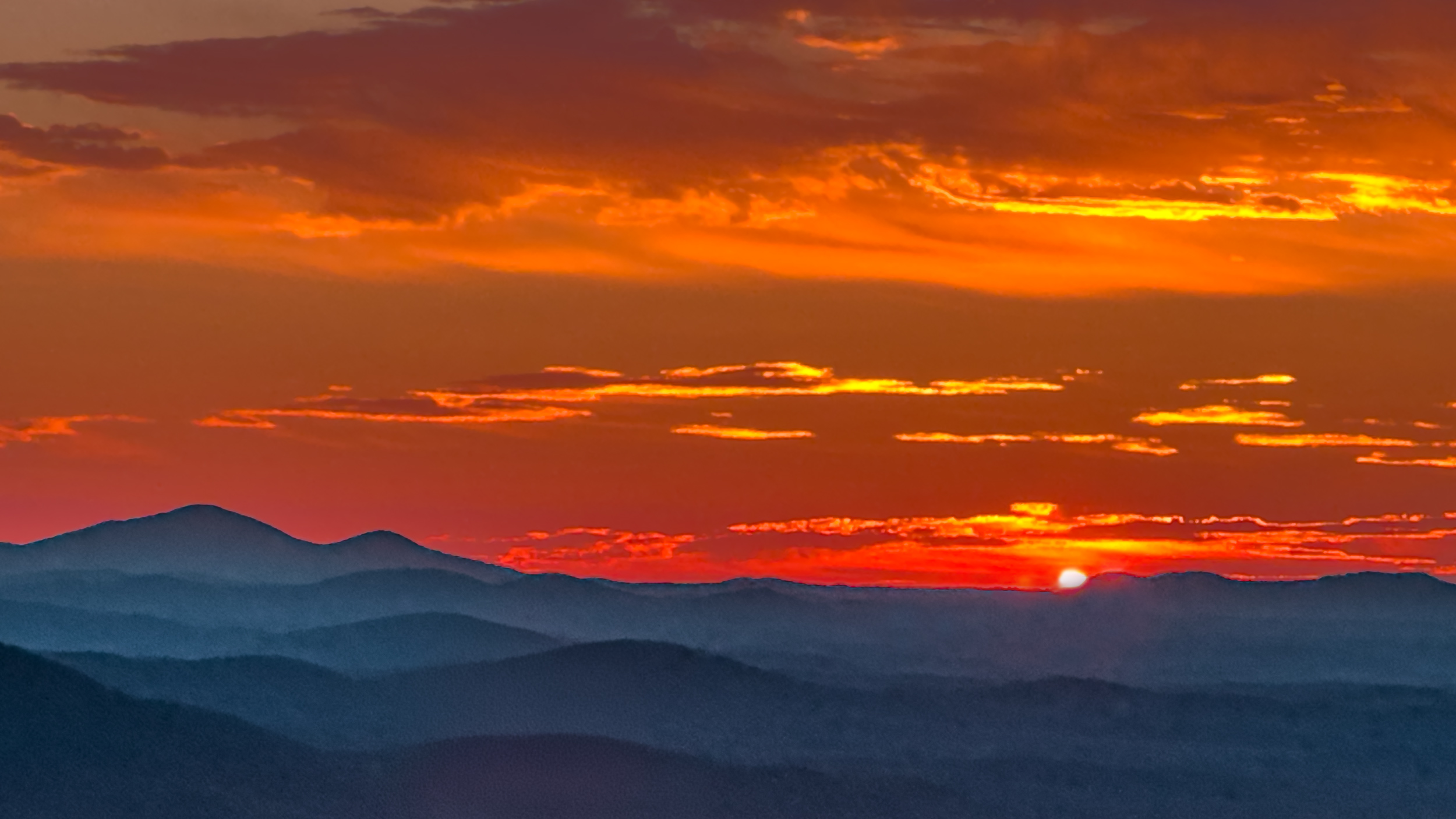
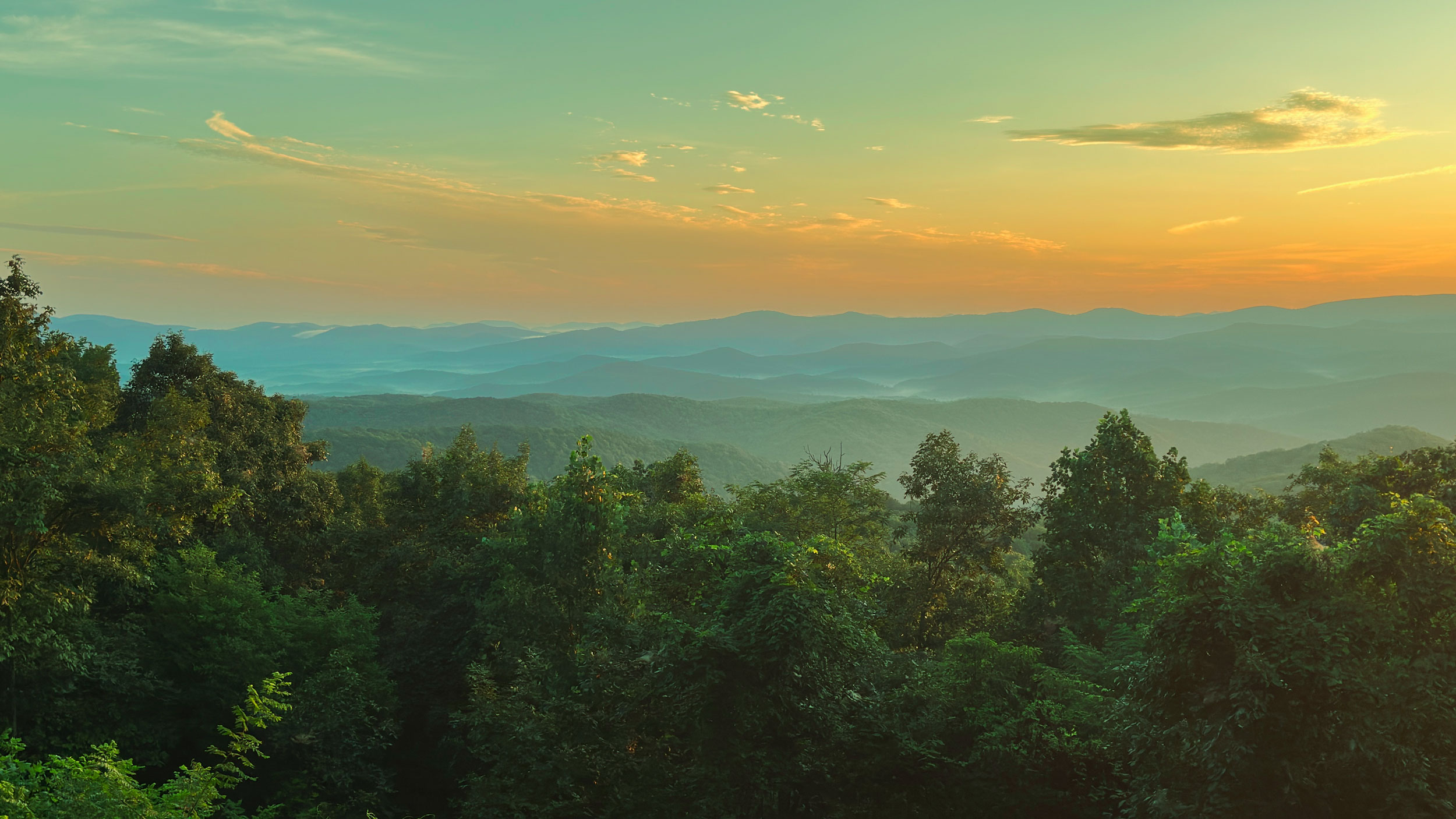
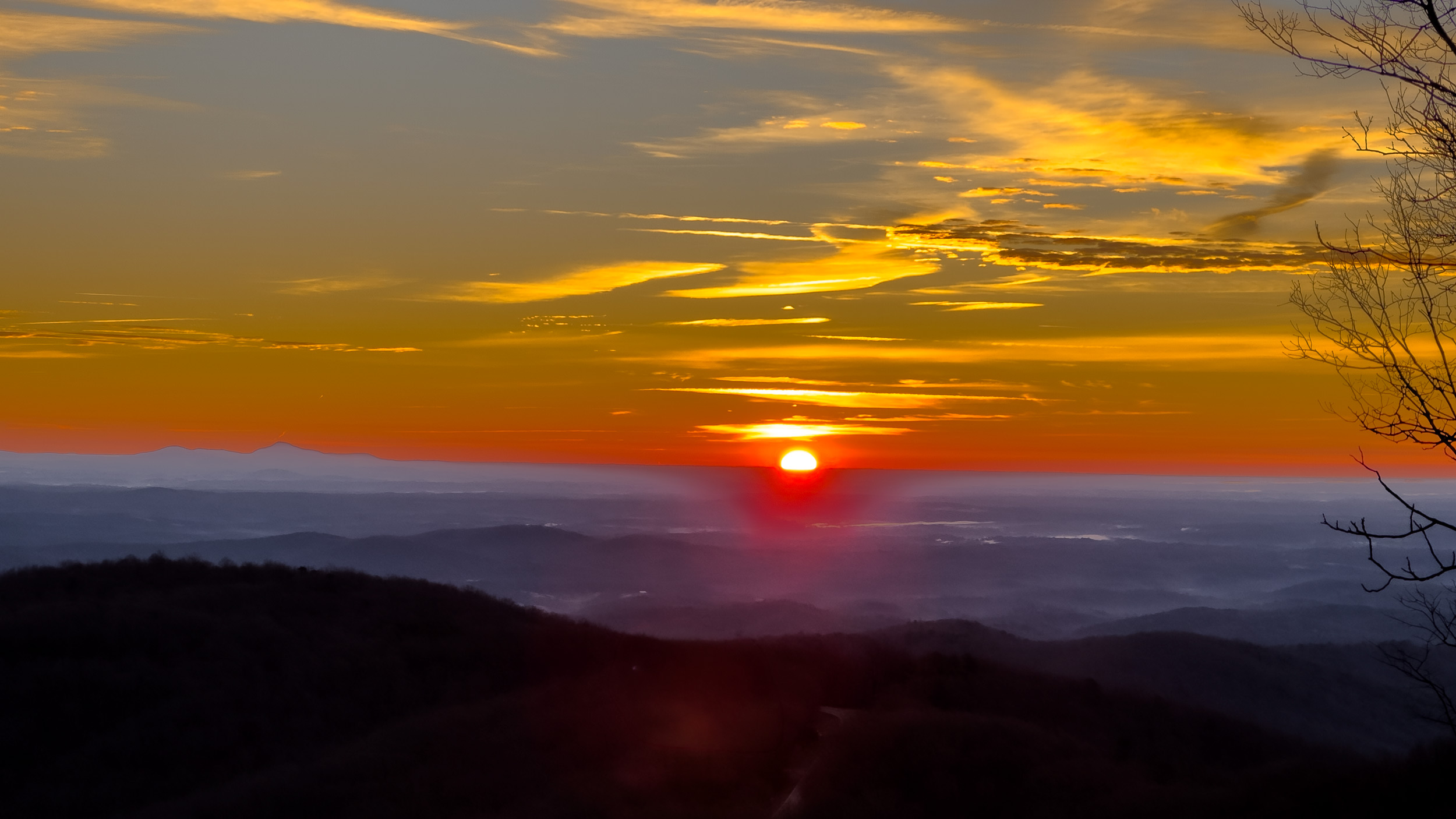
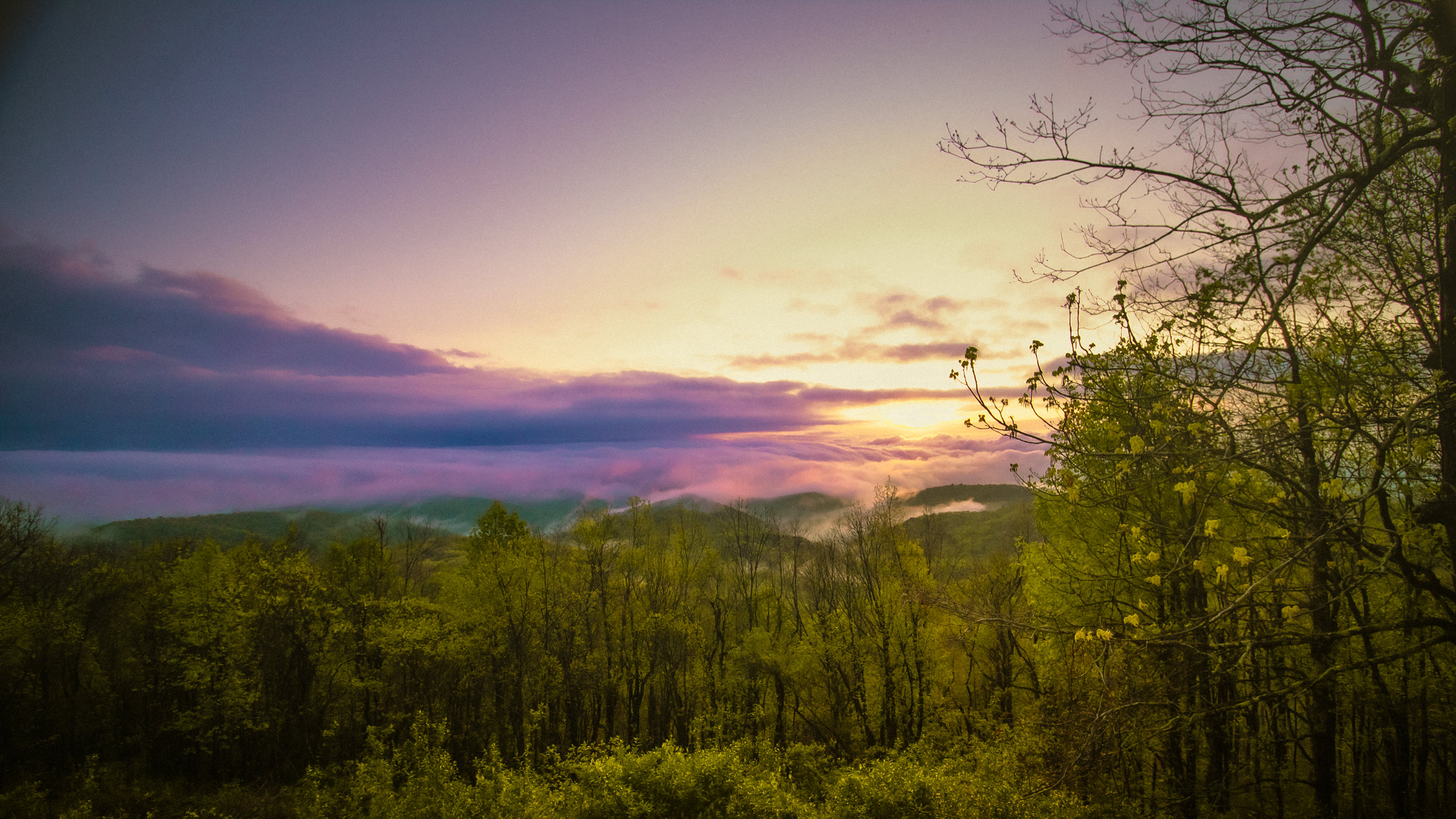
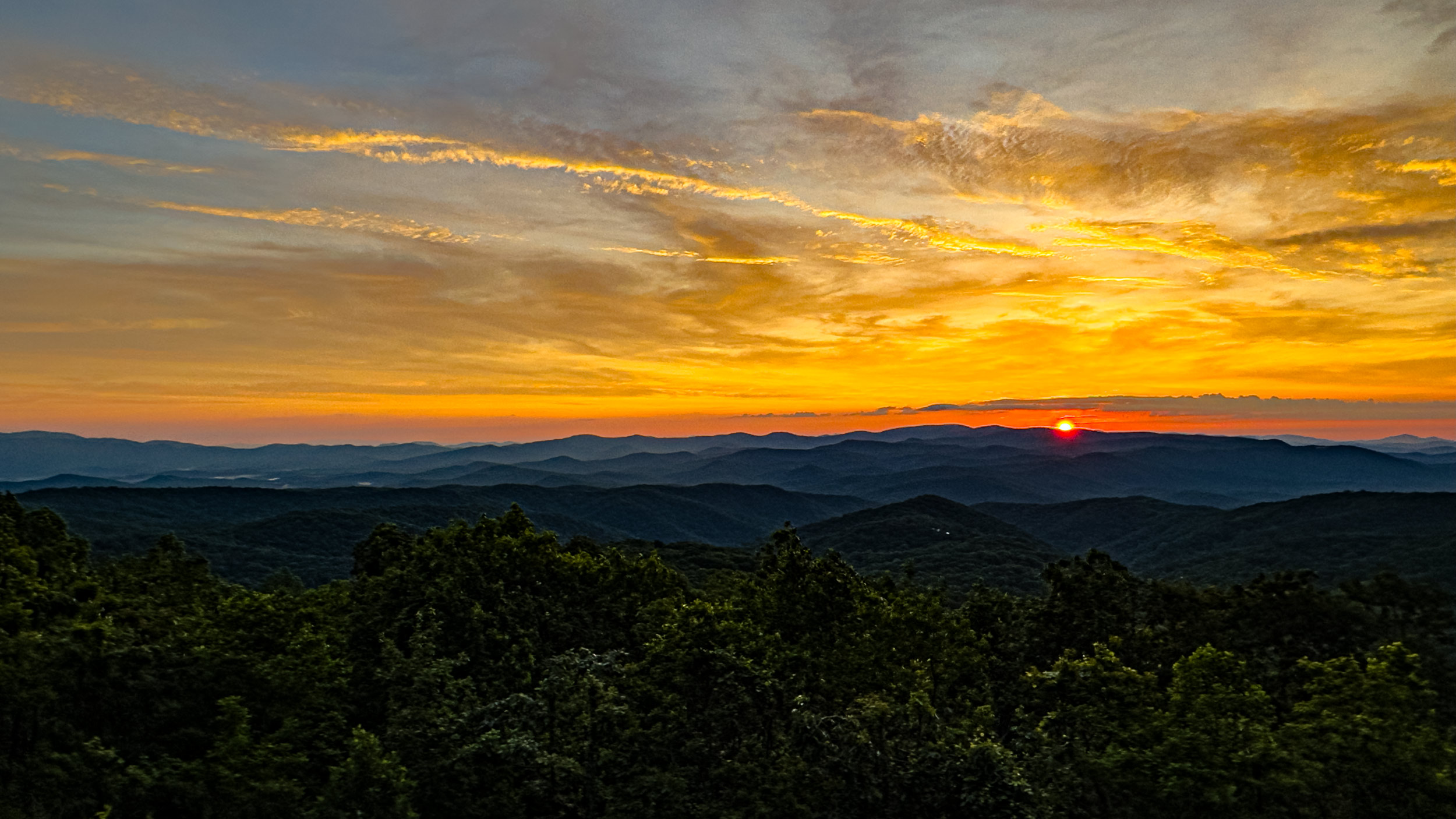
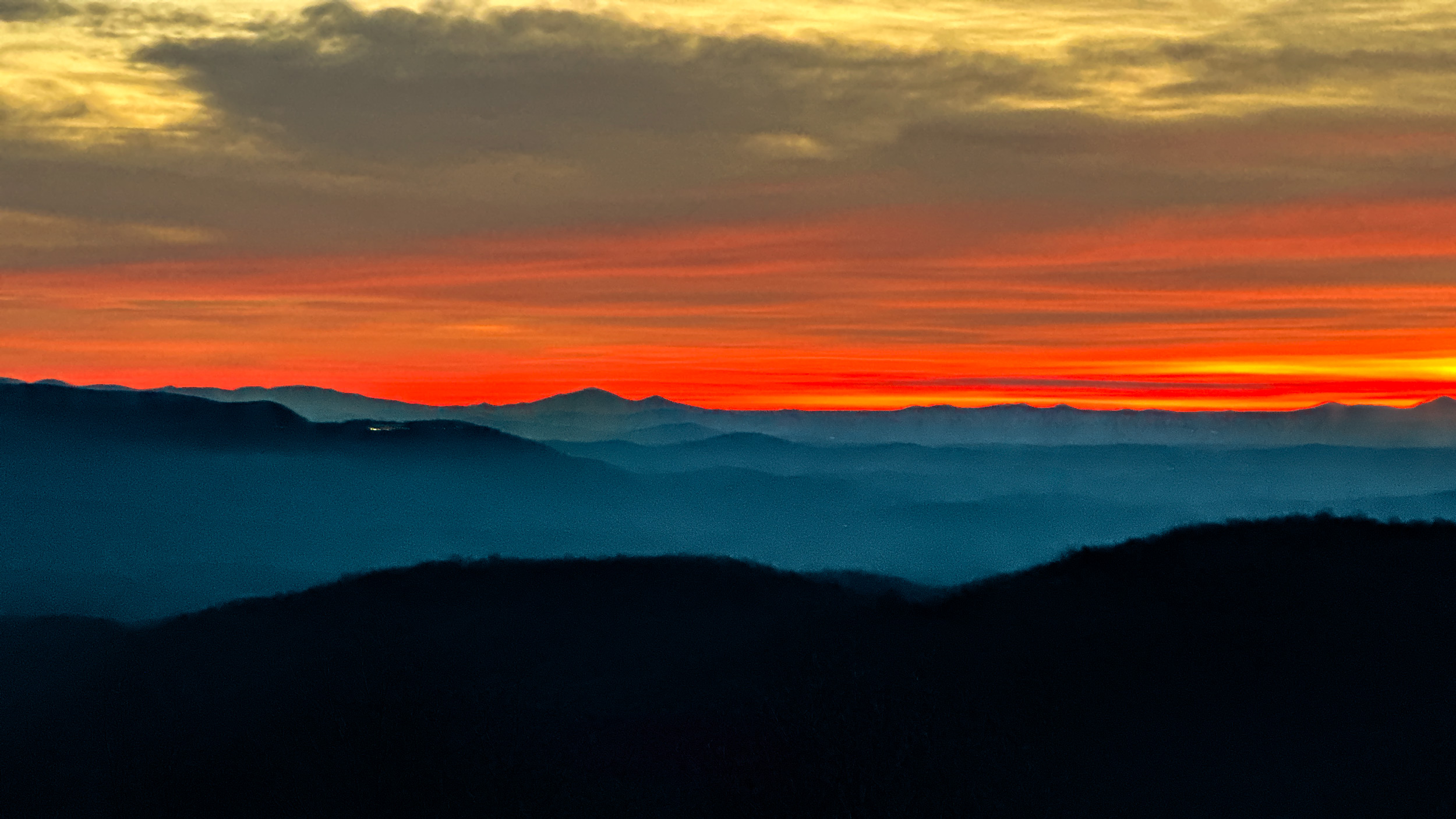
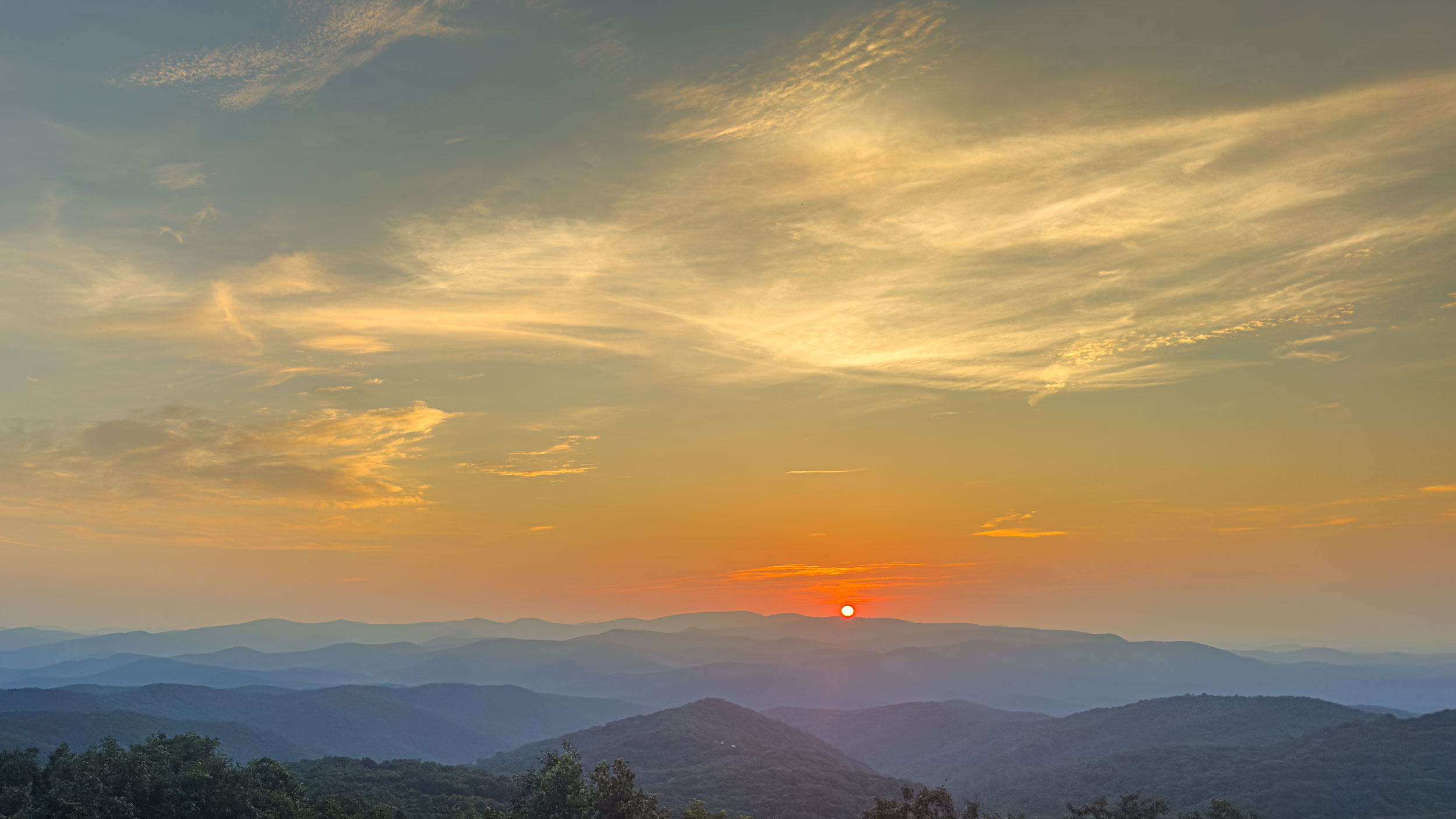
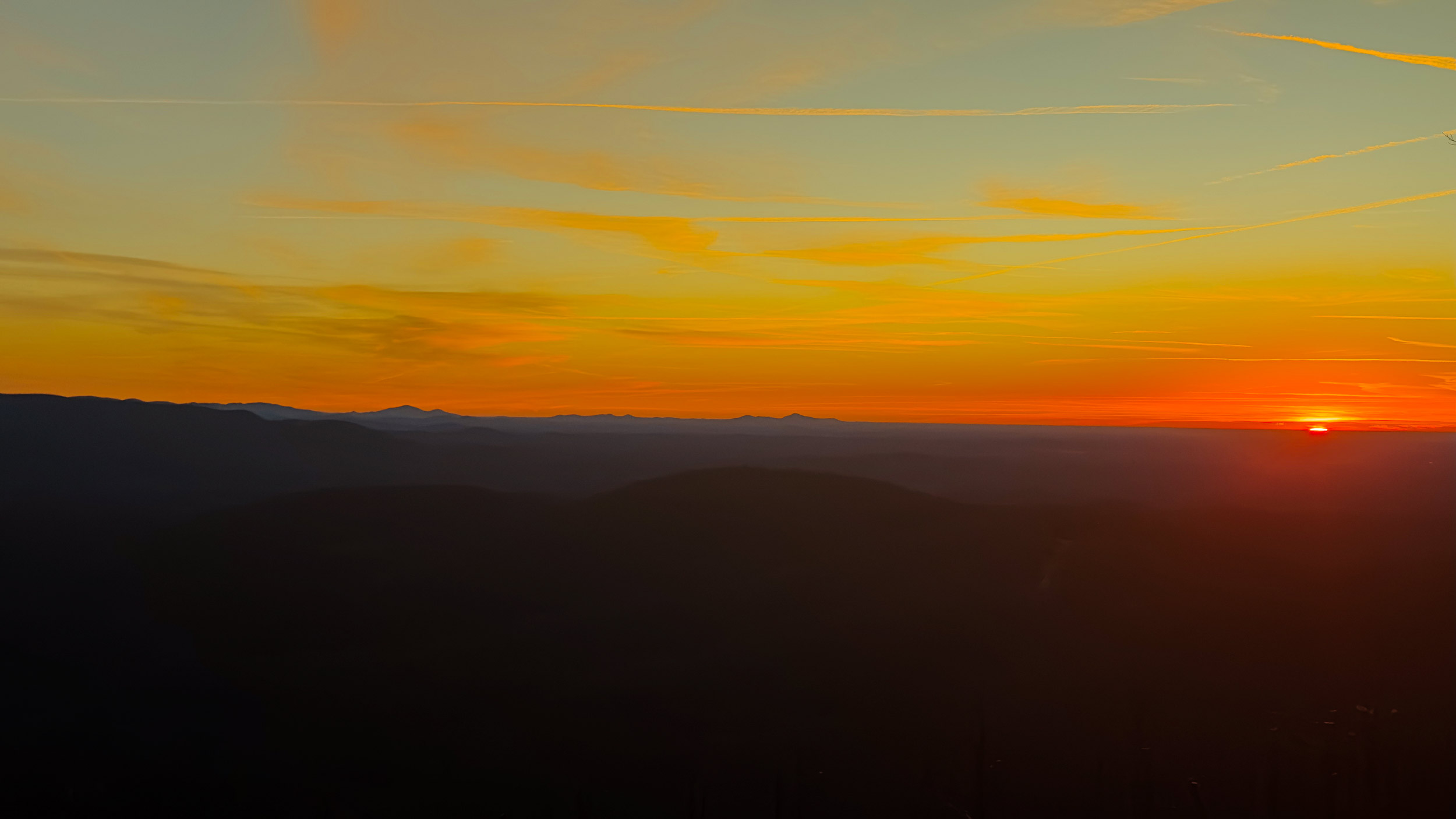
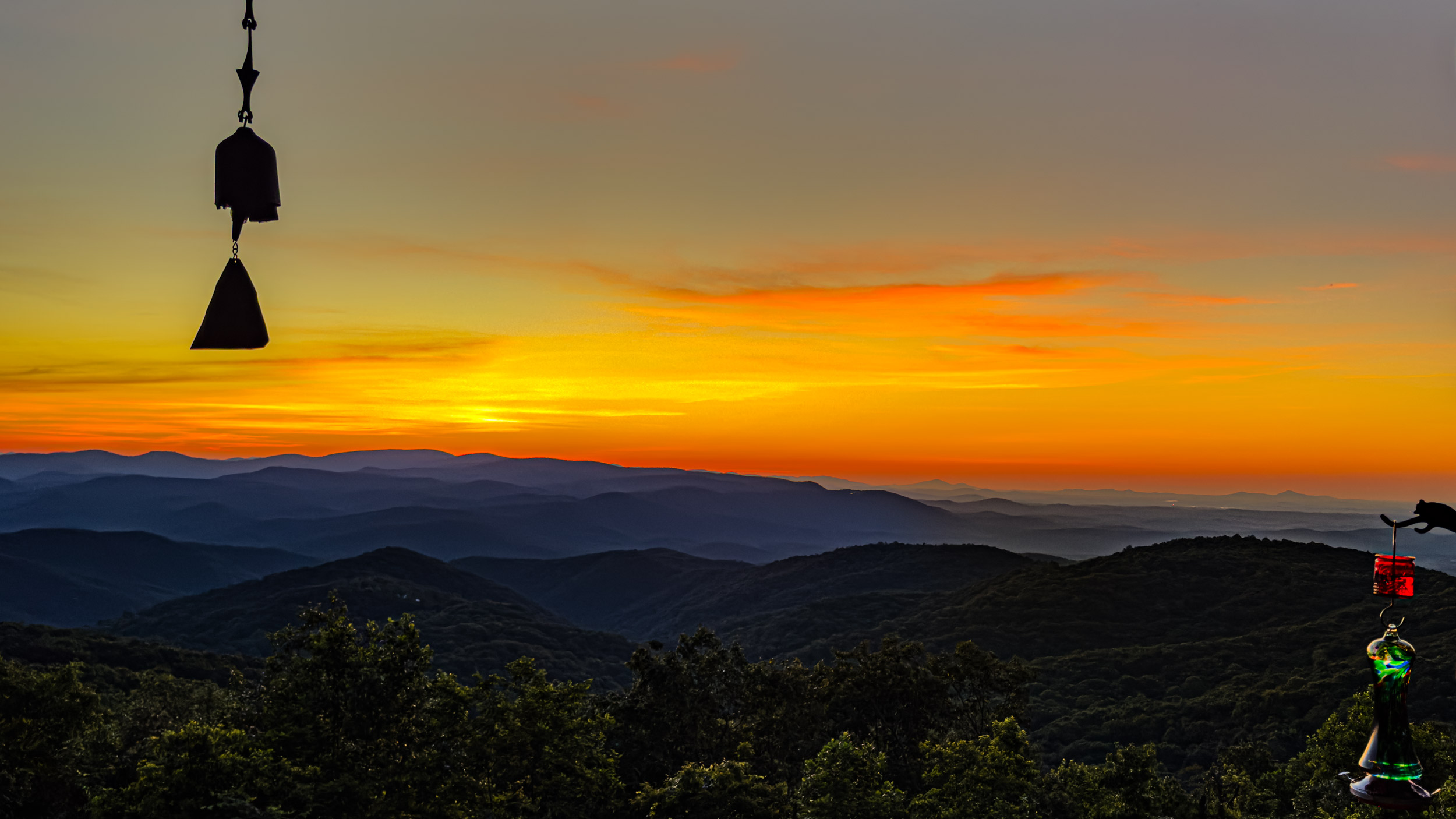
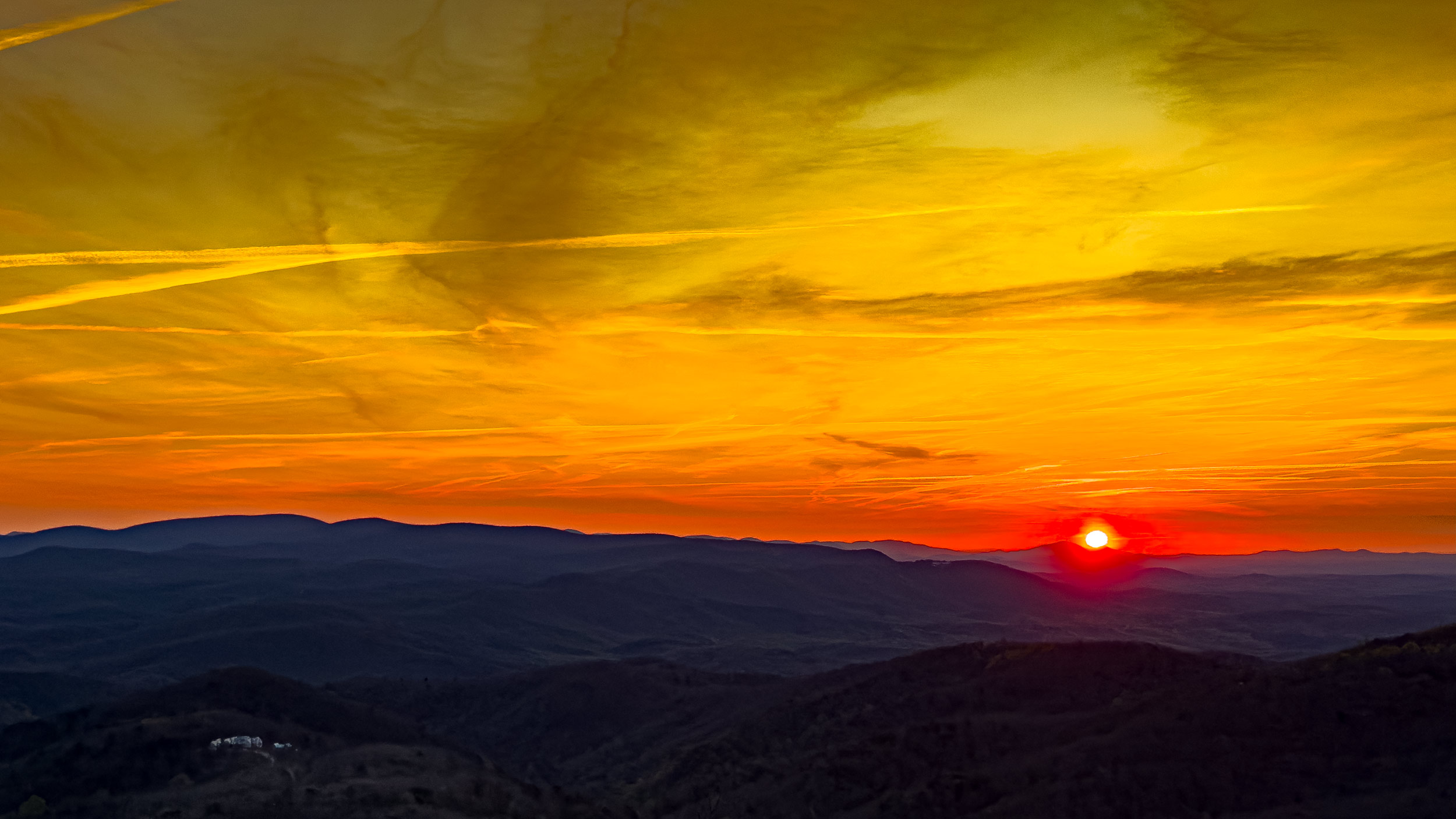
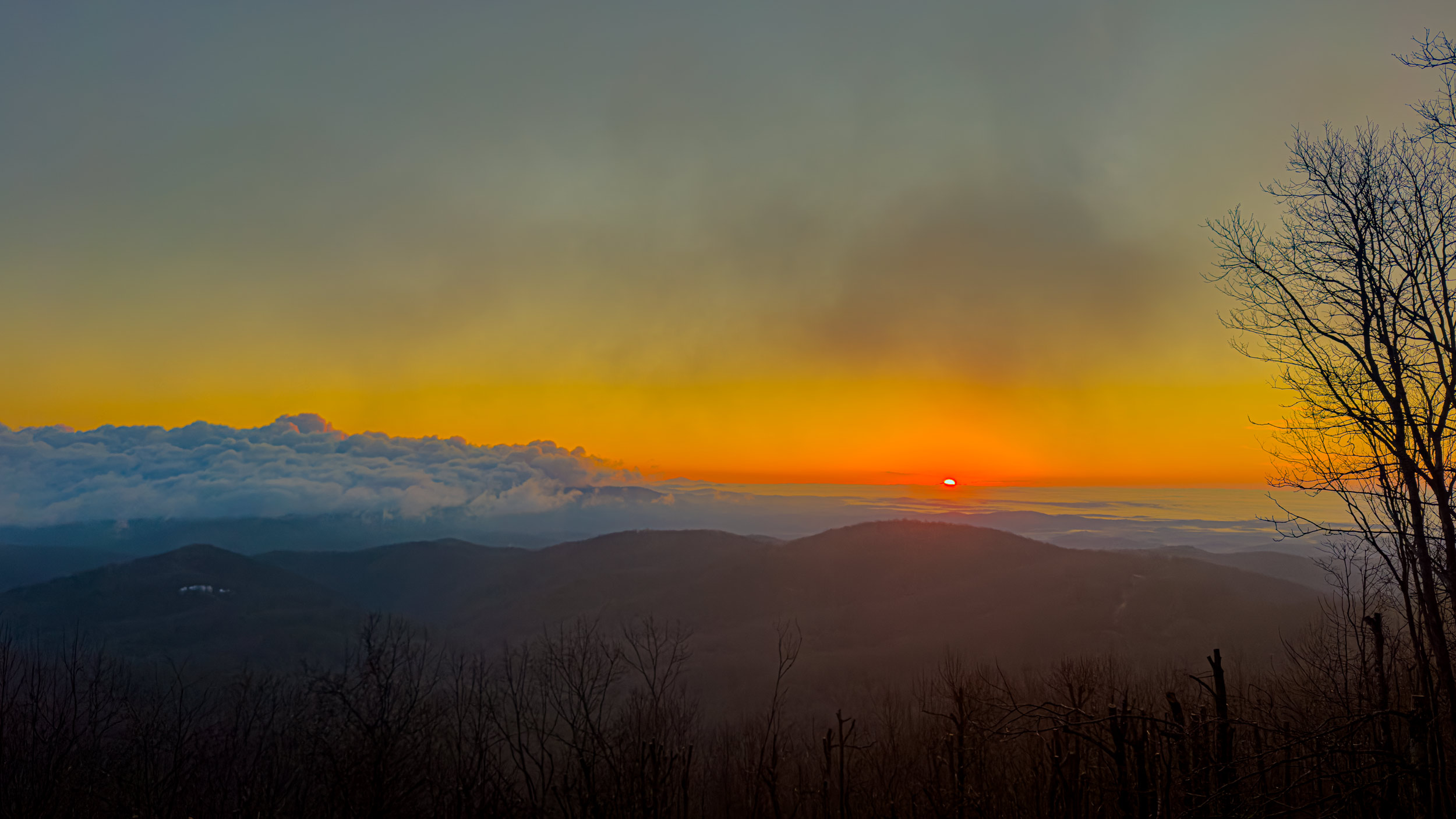
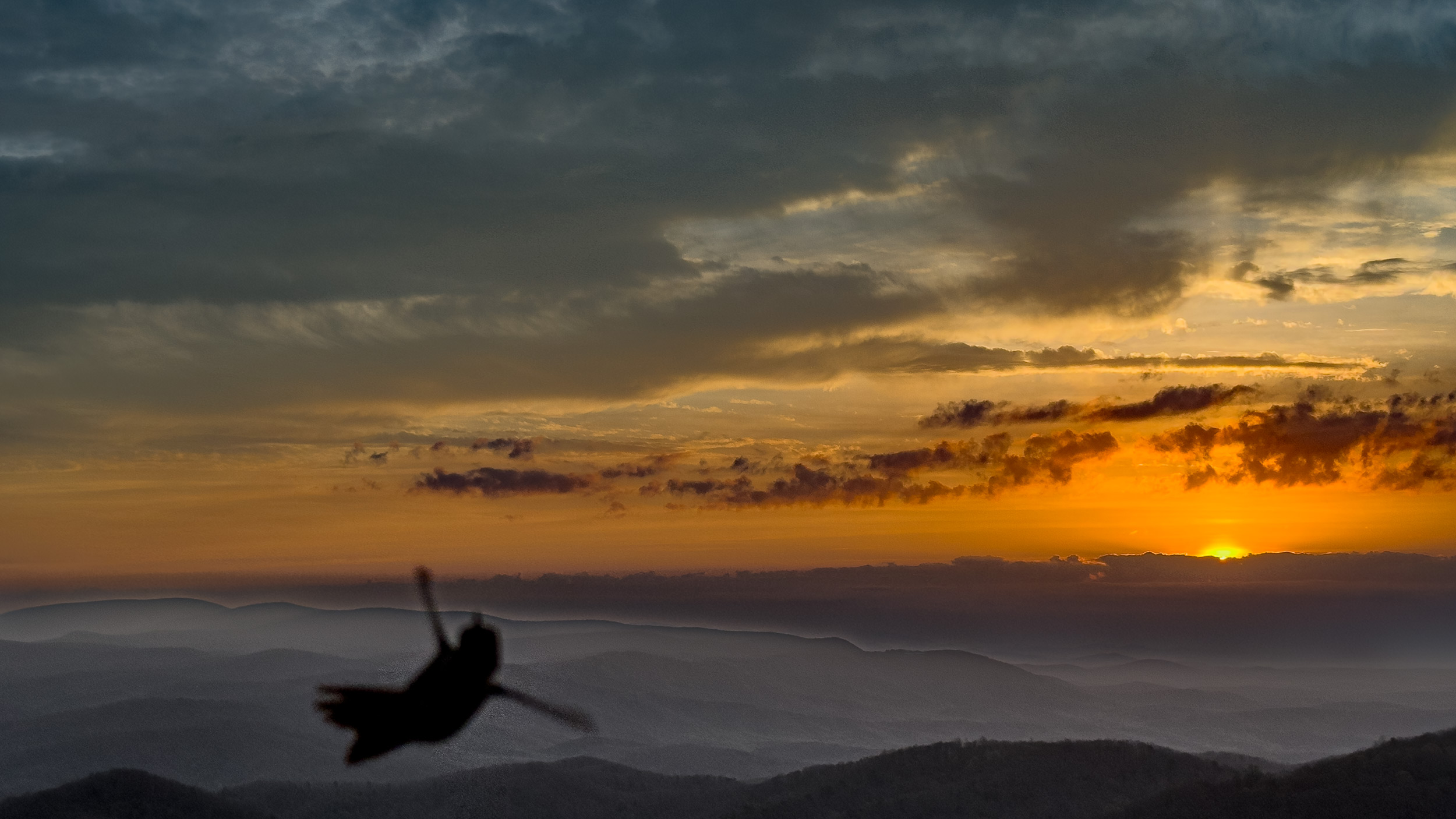
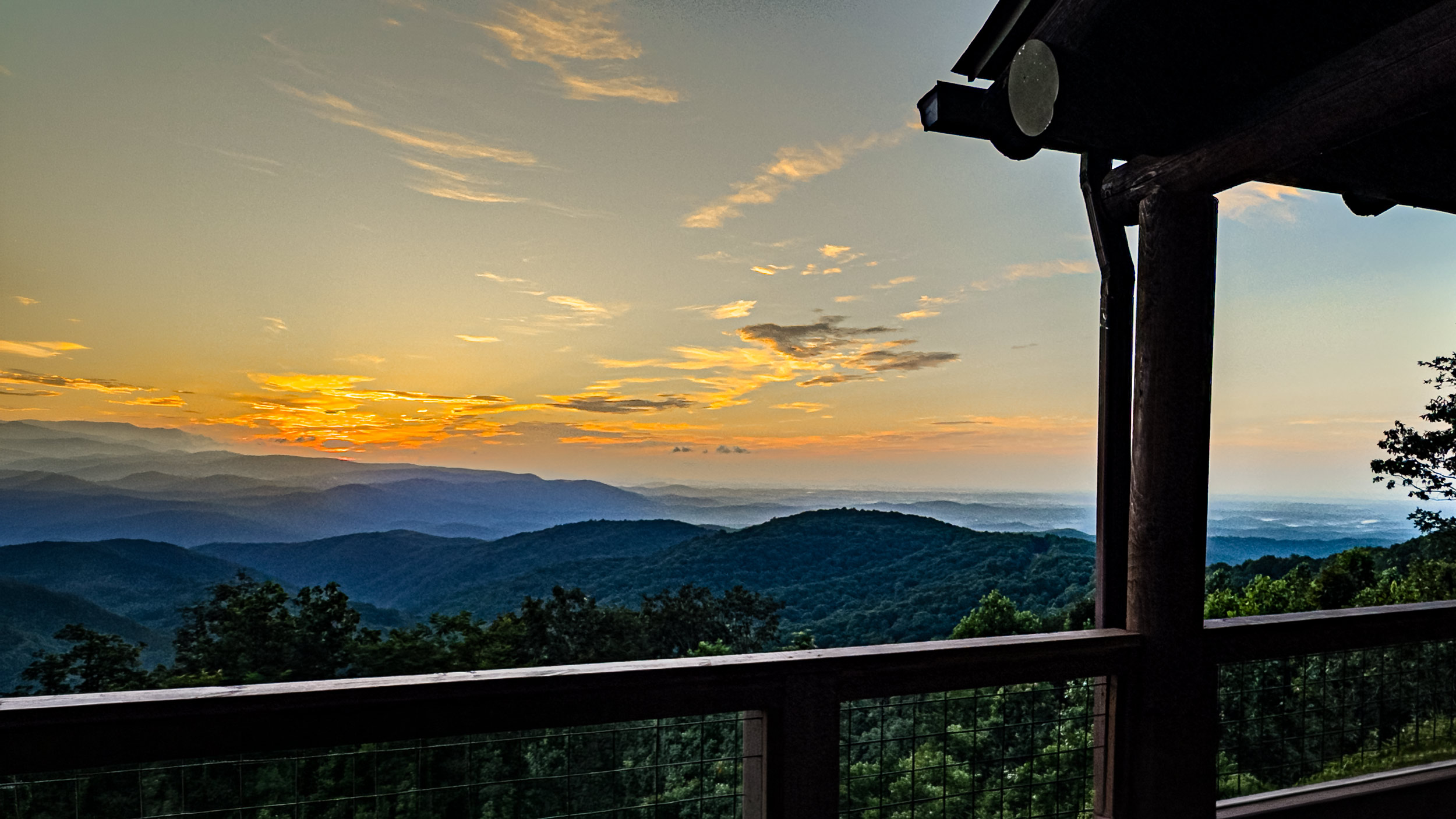
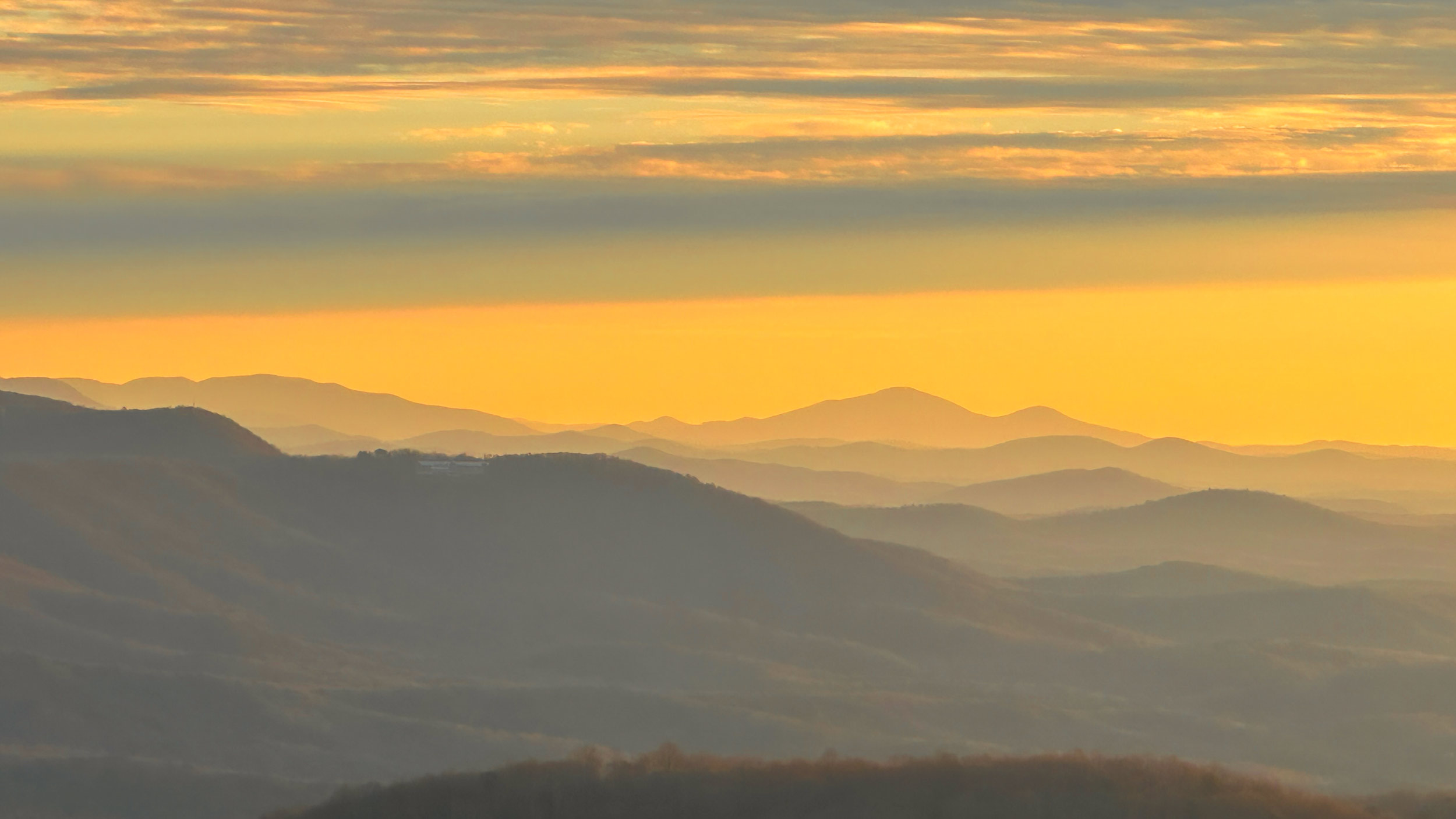
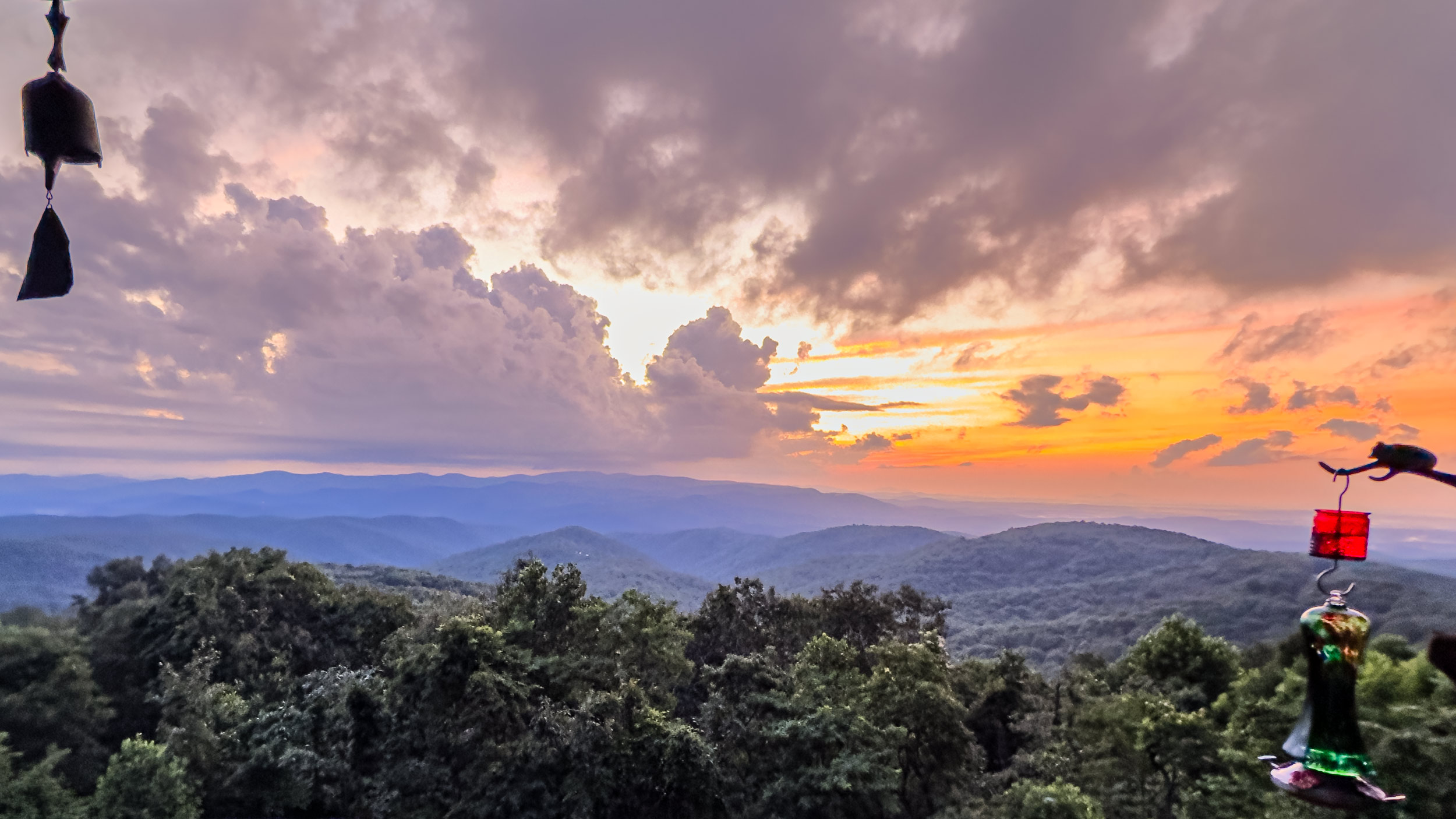
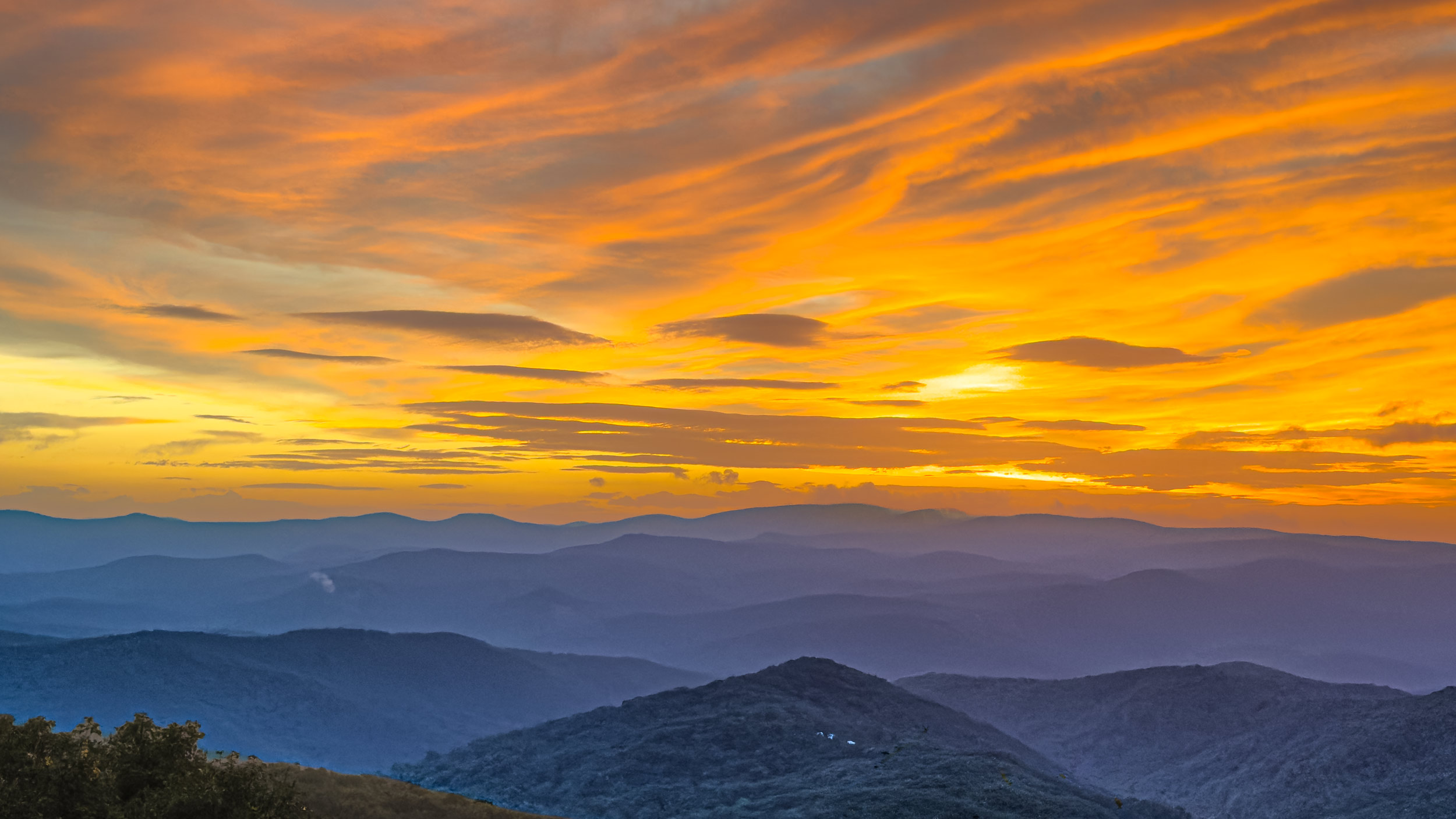
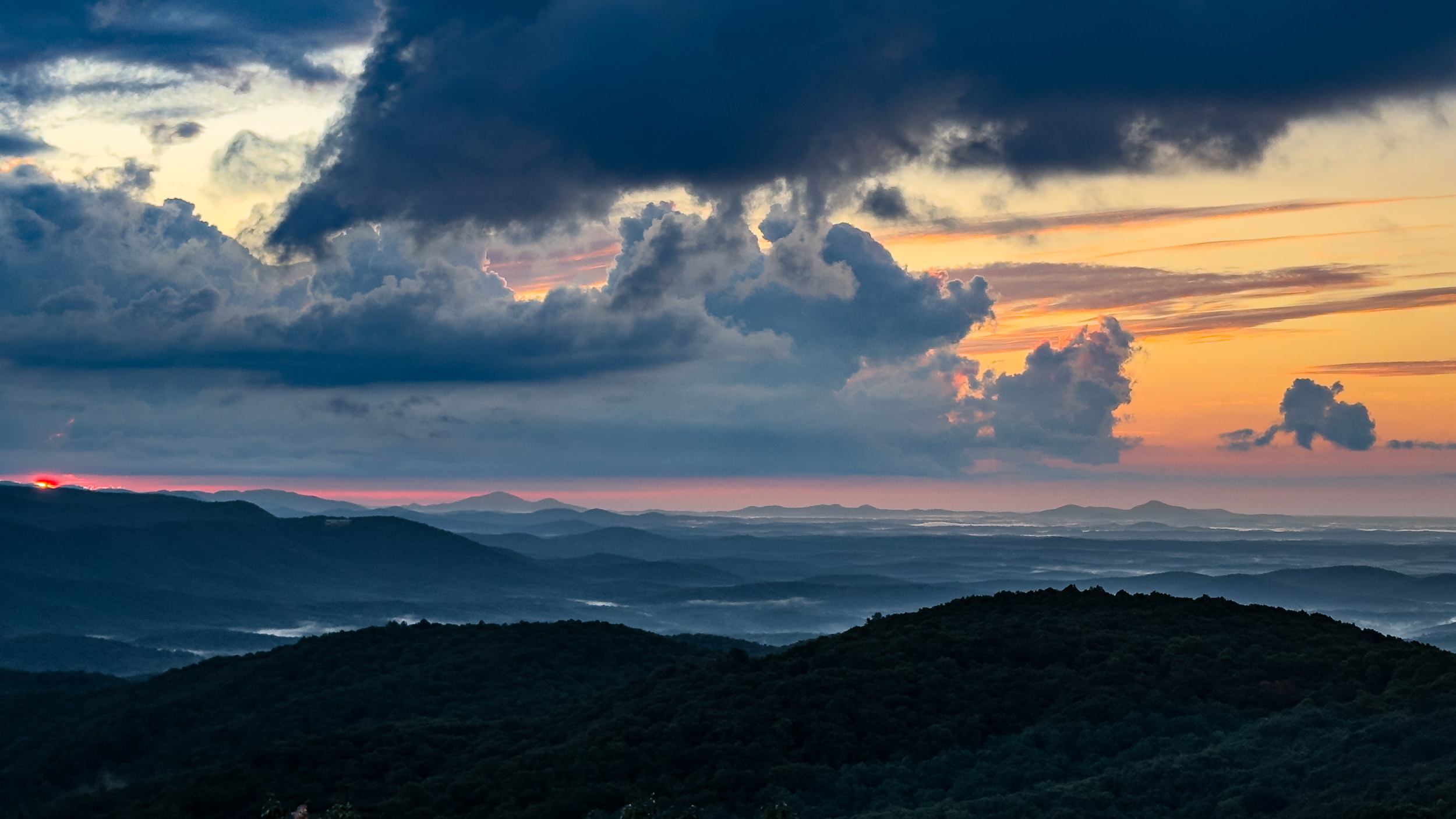
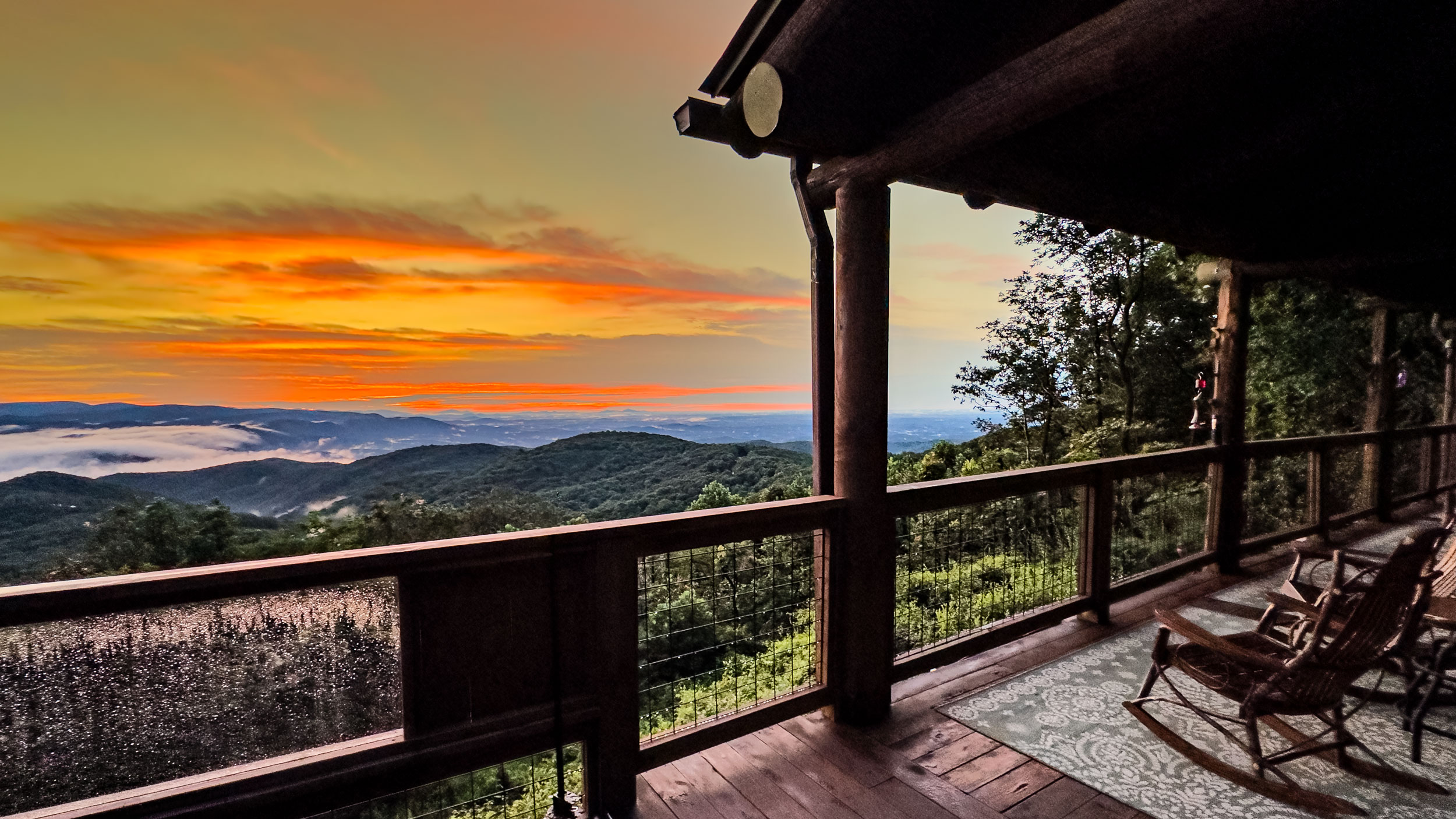
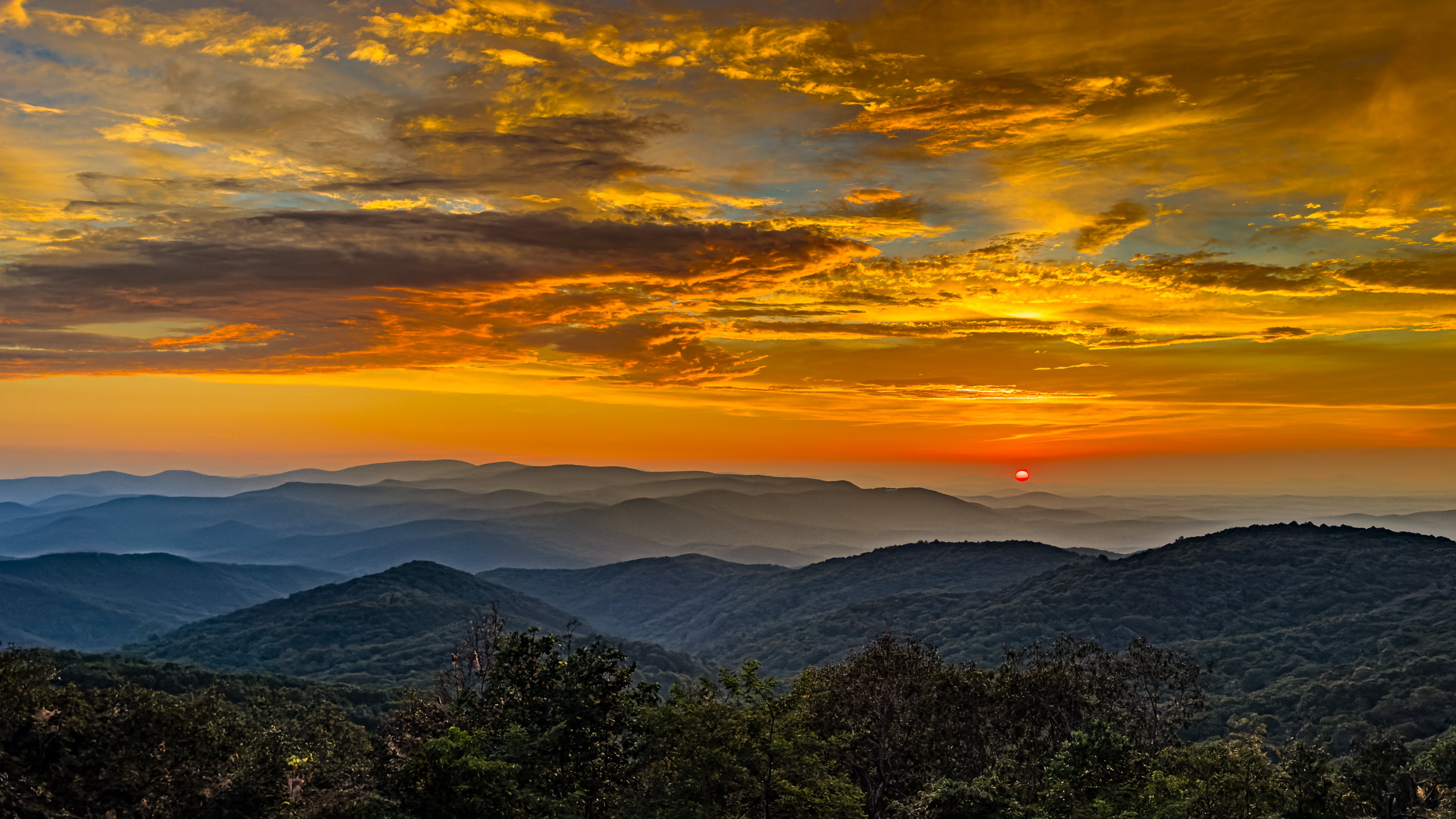
All images captured from our back deck at Blue Ridge Horizon, Burnt Mountain, Georgia.
Rooted in the Ridge: Our History
Early Years
Burnt Mountain—was originally part of the expansive Tate Mountain Estates, a lavish high-country resort created in 1929 by Colonel Sam Tate, CEO of the Georgia Marble Company. Built atop nearly 3,200 feet of elevation, the estate featured a grand lodge (Connahaynee Lodge), artificial lake, golf course, and equestrian facilities, welcoming affluent Atlantans seeking mountain escape.
Long before this land was carved into lots, it played a role in Appalachian Trail history. Sam Tate—best known locally as the president of the Georgia Marble Company—was instrumental in establishing the original southern terminus of the trail at Mount Oglethorpe, just south of us. Under his guidance, the Georgia Marble Company supplied stone for iconic structures such as the Lincoln Memorial, Jefferson Memorial, and even parts of the U.S. Capitol.
Tate developed Monument Road, which the Appalachian Trail followed northward. From there, it turned onto the old one-lane road that today borders our cabin. For about twenty years, the trail passed just a few feet from where we now sit. In 1958, the trailhead was relocated to Springer Mountain due to encroaching moonshiners, poultry farms, and development—but echoes of its original path still wind through the ridges of Burrell’s Mountain.
Indigenous Roots & “Burnt Mountain
Indigenous peoples lived and moved through this region for thousands of years. For the purposes of our timeline, we begin in 1000 A.D., when the land was shaped by the Cherokee and earlier Woodland cultures through practices that still echo in its forests today.
Before European settlement, this land was part of the ancestral territory of the Cherokee and, earlier, the Muscogee (Creek) peoples. While they didn’t believe in land ownership in the Western sense, they actively managed and moved through these mountains, using ridge lines for travel and high ground for seasonal camps and hunting grounds.
The name “Burnt Mountain” is believed to originate from their use of controlled burns—intentional fires set to clear underbrush, manage game movement, and most notably, to open the canopy for chestnut gathering. The American chestnut once dominated these slopes, and its nuts were a critical food source for people and wildlife alike. Burning the ridgelines encouraged chestnut regeneration, kept the forest floor open, and made collection easier.
This tradition of shaping the forest with fire was not destructive, but regenerative—a way to sustain balance between people, trees, and animals long before the first roads or cabins appeared.
The First Settlers on the Eastern Slope
In the late 1880s, families such as Dilbeck, Burlison, and Burrell began securing parcels along the eastern slopes of Burnt Mountain, laying the groundwork for what would later become Burnt Mountain Estates. These settlers—typically of Scotch-Irish descent migrating from North and South Carolina—arrived by ox-drawn wagons, cleared chestnut and pine forests by hand, and built rudimentary cabins near natural springs. They farmed small plots of land, raised livestock, operated gristmills, and established essential community institutions: one of the earliest post offices, country schools, and churches. Among them, Joseph McDuffy Burrell, who arrived in the early 1870s, married into the long-standing Burlison family and was gifted 80 acres near the summit—seeding the cluster of Burrell family cabins that once overlooked the ridge.
Sam Tate’s Mountain Vision
In 1929, Sam Tate—president of the Georgia Marble Company—brought his grand vision for the North Georgia mountains to life. With marble money and mountain ambition, he transformed the ridge into a destination resort known as Tate Mountain Estates, anchored by the luxurious Connahaynee Lodge, a marble-and-chestnut lodge with a golf course, artificial lake, and equestrian grounds. Tate developed Monument Road, carved from the ridge itself, and helped route the original Appalachian Trail past this very mountain. The effort brought weekend fox hunts, society balls, and marble-columned elegance to what had, until then, been a remote, rugged slope with only wagon tracks and chestnut trees.
Though the lodge burned in 1946, Sam Tate’s vision forever changed the landscape and story of Burrell’s Mountain.
The Subdivision Takes Shape
By the early 1980s, the landscapes of Burnt Mountain Estates began to shift from scattered family plots to a more cohesive community. In 1983, E. H. Fletcher acquired multiple parcels on Burnt Mountain Ridge Road—initiating the formal subdivision—with later involvement from Hal D. Fletcher and Taylor Fletcher, as tax records indicate. Dr. Ferrol A. Sams Jr., a respected physician and noted Georgia novelist, purchased the lot adjacent to ours—bringing a literary and professional dimension to the neighborhood’s character. Together, the Fletchers and Sams helped transform what was once informal, wooded acreage into a plotted estate, defining roads, lots, and a residential identity that persists today.
The Briar Patch
In 1991, Allen and Valerie Brown built a cabin high along the ridge of Burnt Mountain and named it The Briar Patch—a place where long views stretch from ridge to ridge, and the sky meets the treetops in all directions. The Browns designed their home to honor the land it stood on: compact and efficient, but rich with detail and care. With vaulted ceilings, exposed wood beams, and a wraparound deck that catches both sunrise and sunset, the cabin feels less like a structure and more like an extension of the mountain itself.
The name The Briar Patch was a nod to Joel Chandler Harris’s Br’er Rabbit stories, later made famous in Disney’s Song of the South. In the best-known tale, Br’er Rabbit begs Br’er Fox not to throw him into the briar patch—knowing all along that the tangled thicket is his home, the very place where he is safest and most at ease. For Allen and Valerie, the name seems especially fitting: tucked high into the woods of Burnt Mountain, their own Briar Patch was a place apart, surrounded by forest and mountain ridges—a place where they quite simply belonged.
Though modest in scale, the layout is timeless: an open great room anchored by a gorgeous German wood-burning stove, three bedrooms tucked beneath the rafters, and a porch perched above the slope like a watchtower. Every window seems to frame a different forest scene. The Browns planted native azaleas, trimmed back laurel and topped the trees to open views, and built a home that didn’t compete with its setting—it simply belonged.
Blue Ridge Horizon: Our Journey
When we got married, we dreamed that someday we would live in the mountains. Places like Bryson City, Waynesville, and Murphy, North Carolina, had always beckoned, but as we grew older, their remoteness gave us pause. We wanted the mountains, but we also wanted to remain close to our children and grandchildren, excellent healthcare, and the cultural attractions of Atlanta.
That’s why stumbling upon this cabin felt a little like fate. Here was a home high on a mountain ridge, yet only 20 minutes from downtown Dawsonville, less than 15 miles from a Piedmont hospital, and just over an hour from the Fabulous Fox Theatre in Atlanta. Then there was that extraordinary view. And somehow, all of it could be ours for about the price of a cookie-cutter house in the suburbs.
There was, however, a catch.
At nearly forty years old, the cabin needed considerable attention. The old railroad-tie retaining walls were slowly becoming one with the mountainside. The bathrooms and basement needed renovation, the backyard needed fencing for the dogs, and portions of the enormous deck would have to be rebuilt, along with nearly 170 feet of railing. Years of roof leaks had damaged some of the rafters. The water heater was original to the house. And the gardens and pathways, once carefully tended, had fallen into disrepair and would require plenty of patience and work to bring them back to life.
There was one other problem: the cabin didn’t have a fireplace. It had a wonderful old German-made wood stove anchoring the great room, but for Alyson, a mountain cabin simply had to have a fireplace. On that point, there was no negotiating.
So the old stove found a new home with the man affectionately known as the “Mayor of Burnt Mountain.” Only later did we discover that he had been a friend of Allen Brown, the cabin’s original owner—and that he still owns and regularly rides Allen’s old Harley-Davidson. Somehow, the stove had found its way back into the cabin’s extended family.
In its place, we built a large stone fireplace that rises through the great room. It provides the same wonderful warmth as the old stove, but adds something the cabin had always been missing: a true hearth—the kind of gathering place that makes a mountain cabin feel complete.
When we finally put pen to paper, we estimated that simply bringing the cabin back to the standard it deserved would cost upwards of $200,000.
But opportunities like this don’t come along twice. A cabin perched high on a mountain ridge, this close to Atlanta, with a view stretching across three states and nearly 160 degrees of horizon, was something we knew we might never find again. If we walked away, there probably wouldn’t be another one waiting around the corner.
So we jumped in with both feet.
Recent Years
From rustic retreat to mountain community:
After the lodge was lost, this land evolved—from a vast private estate to a series of estate lots, now collectively known as Burnt Mountain Estates. Originally, the twin peaks were called Burrell’s Mountain (east) and Burnt Mountain (west), but at some point they were officially unified under the single name “Burnt Mountain”, a change first noted on modern maps and community records (Burrell Top or Burrell Mountain and the western peak were both called Burnt Mountain).
Over the years, families including the Burrells, Spratlins, Fletchers, and others developed individual cabins. Our cabin was constructed at the very pinnacle of what was once Burrell’s Mountain by Allen and Valerie Brown in 1991, and Alyson and I purchased it in 2024, continuing the legacy of thoughtful stewardship and improvement.
Our Home in the Blue Ridge Mountains
Located atop Burnt Mountain in Jasper, Georgia
We’re proud to call this extraordinary place home—a quiet, secluded perch with sweeping views of the horizon to the north, east, and south. Though the western ridge hides the sunset, it gifts us gentle twilight skies and starlit evenings.
The map shows our location for friends and family who’ve been invited to visit. If you’re one of them, feel free to use it for directions and travel planning. Otherwise, we appreciate your understanding that this is a private residence.
Privacy Policy
Effective: 7/21/2026
At Blue Ridge Horizon, accessible at https://blueridgehorizon.com, your privacy is important to us. This Privacy Policy explains how we collect, use, and protect your information.
1. Information We Collect
We may collect:
Name, email address, phone number, comments and attachments (if you contact us and if you provide them)
Basic analytics data (via tools like Google Analytics)
A self-hosted, cookieless analytics system, to understand how visitors use our website and to improve our content. The analytics information is processed and stored on our own web server rather than being sent to an outside analytics provider.
We do not collect sensitive personal information (e.g., credit cards, government IDs).
2. How We Use Your Information
We use your information to:
Respond to your inquiries
Improve our website and content
We do not share your data with third parties, and we do not sell, rent, or trade user information.
3. Cookies
We use cookies for analytics and basic site functionality.
4. Third-Party Services
We may use:
Google Analytics (for site usage stats)
Contact forms (e.g., via DreamHost or Cloudflare routing)
These services may collect information according to their own policies.
5. Your Rights
You may request to:
See what data we’ve collected
Ask us to delete your contact info
Contact us at [email protected] with any questions or requests.
Terms & Conditions
Effective: 07/21/2026
Welcome to Blue Ridge Horizon! By accessing or using our website (https://blueridgehorizon.com), you agree to the following terms:
1. Use of Website
This website is intended for general informational purposes only. You may browse, share, and reference our content for personal or non-commercial use.
You may not:
Use this site for unlawful purposes
Attempt to interfere with its operation
Reproduce or reuse our content without permission
2. External Links
We may link to third-party websites. We are not responsible for their content, privacy practices, or availability.
3. No Warranty
All content is provided “as is” without warranties of any kind. We do our best to keep it accurate and current, but we cannot guarantee it.
4. Limitation of Liability
We are not liable for any direct or indirect damages resulting from your use of this website.
5. Changes to These Terms
We may update these terms at any time. Continued use of the site means you accept any changes.
For questions, email [email protected].