From a very young age, my parents instilled in me a strong work ethic. When my younger brother and I were about ten, we mowed and edged the lawns of a couple of elderly neighbors. By eleven or twelve, we were delivering Atlanta Journal newspapers to a large apartment complex a mile from the comfortable middle-class home where we grew up.
Over the years, I built greenhouses, slung pizzas, created balloon sculptures, and worked for a bank, an insurance company, and a consulting firm before eventually settling into a successful career with a division of a large integrated health system.
During those fifty years, I was fortunate enough to own companies, work for some terrific people, and make a difference in the lives of others. All in all, I can look back and smile at what I accomplished.
The Offices We Chase
In my younger days, I suppose I had an office of my own. I never gave it much thought; I was too busy working to worry about the view. I owned the company and, at one point, probably had a dozen or more people on the payroll.
When I transitioned into the corporate world, however, I essentially started over. Now in my thirties, I was entering the workforce at its lowest level—after having run a successful business for a dozen years, one whose name many Atlantans would have instantly recognized at the time.
Welcome to the corporate world. Welcome to the cubicle.
Newly married and raising my first child, I was grateful simply to have a job.
Over the years, I watched people farther up the corporate ladder fight and angle for the perfect office. I always found it a little humorous. People spent far too much time worrying about who had the corner office, who had the better view, and whose name appeared on which door.
What really mattered, I thought, was whether they—and their families—were happy.
I had my very own office.
Just before COVID locked everyone out of their offices and sent them home to kitchen tables, spare bedrooms, and basements, I finally had an office of my own. It was in the middle of the building and didn’t have a single window, but still—I had made it. Sort of.
During the COVID years, our “little” company—which had long operated more like a family than a branch of a huge hospital network—was sold to a venture capital firm.
I lasted a few months.
Then, one day, the company’s new Chief People Person (haha - that really was her title) asked me to come in for a sit-down meeting. That was the first and last time I met her. My office had been reassigned, and window or not, I no longer had an office—or a job.
-

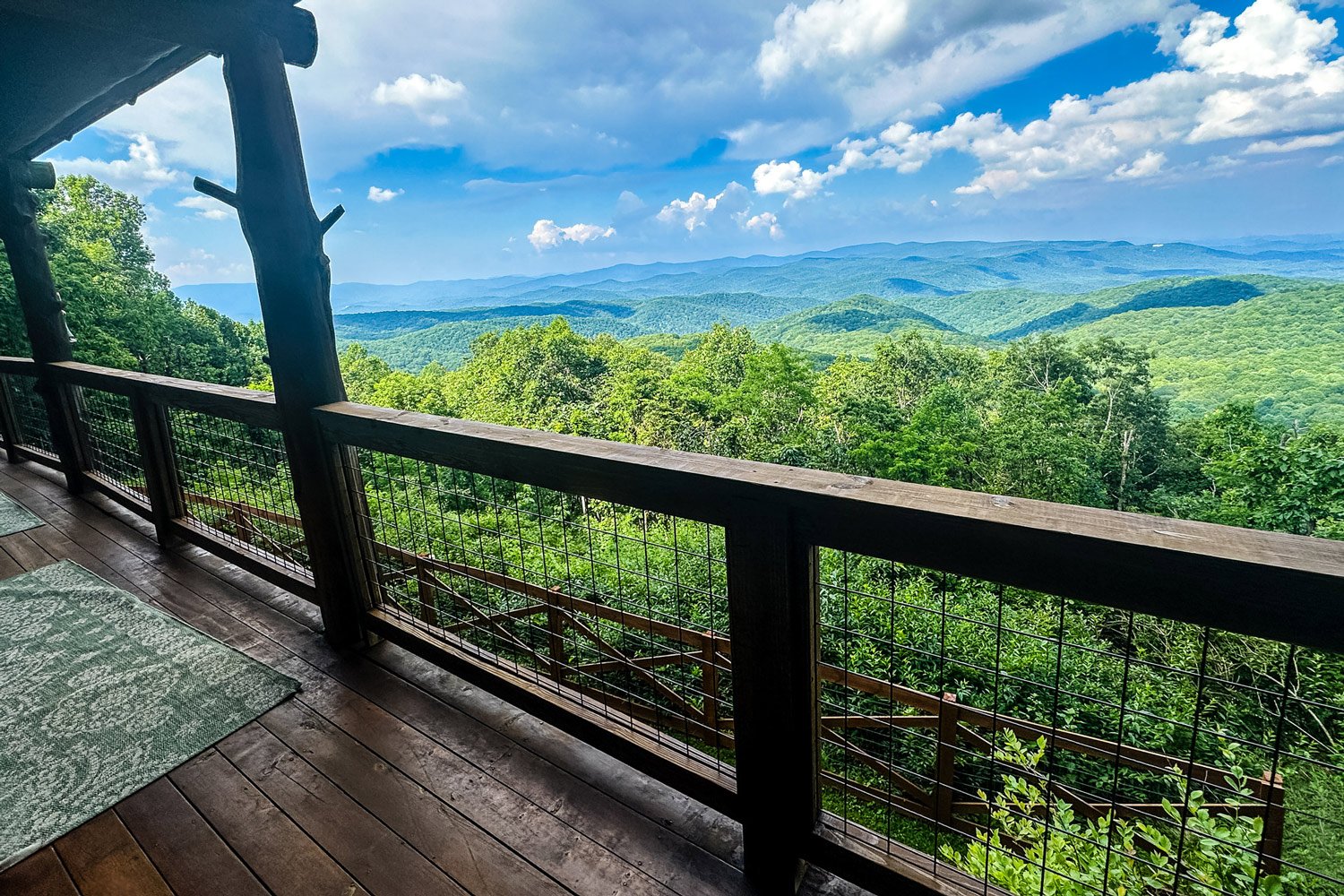
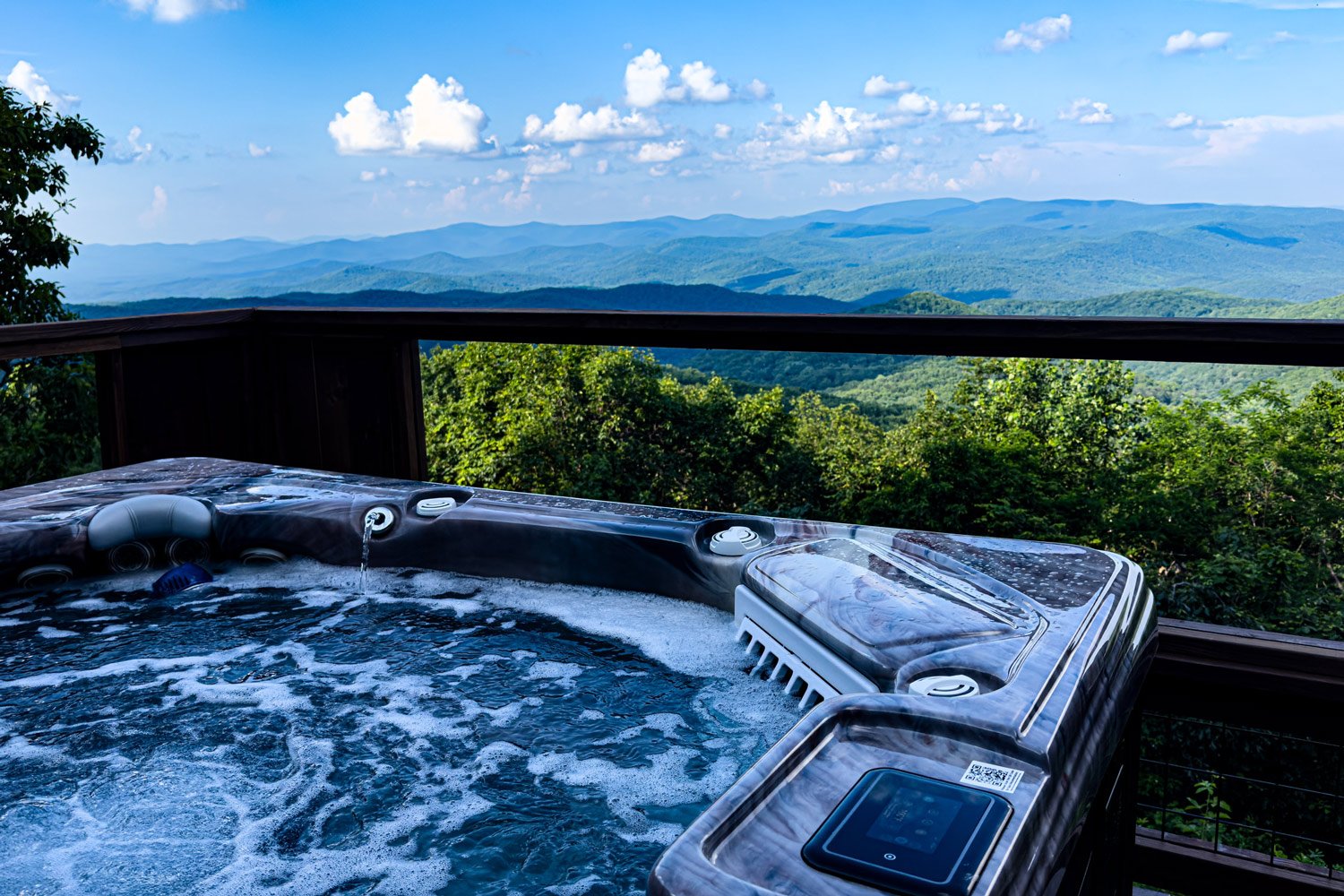
This is the view that brought us here. And that may be the beginning of the question.
-

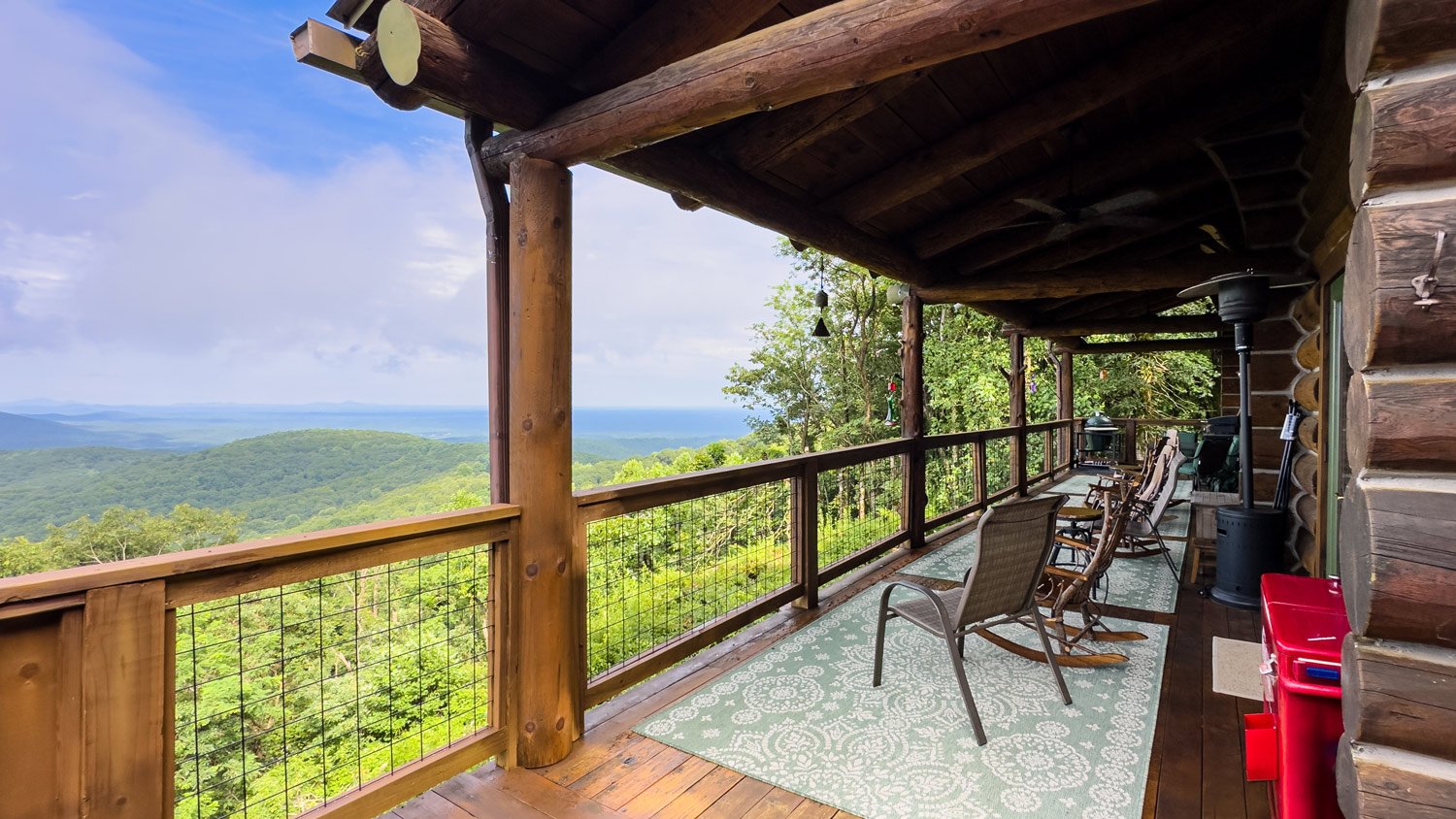
From our deck, the mountains gradually surrender to the farms and towns of North Georgia—the world we wanted to leave behind, yet never entirely left.
-

Our own comforts make the question personal: how do we enjoy this extraordinary place without helping to diminish what made it extraordinary?
An Office Without Walls
Fast forward a couple of years.
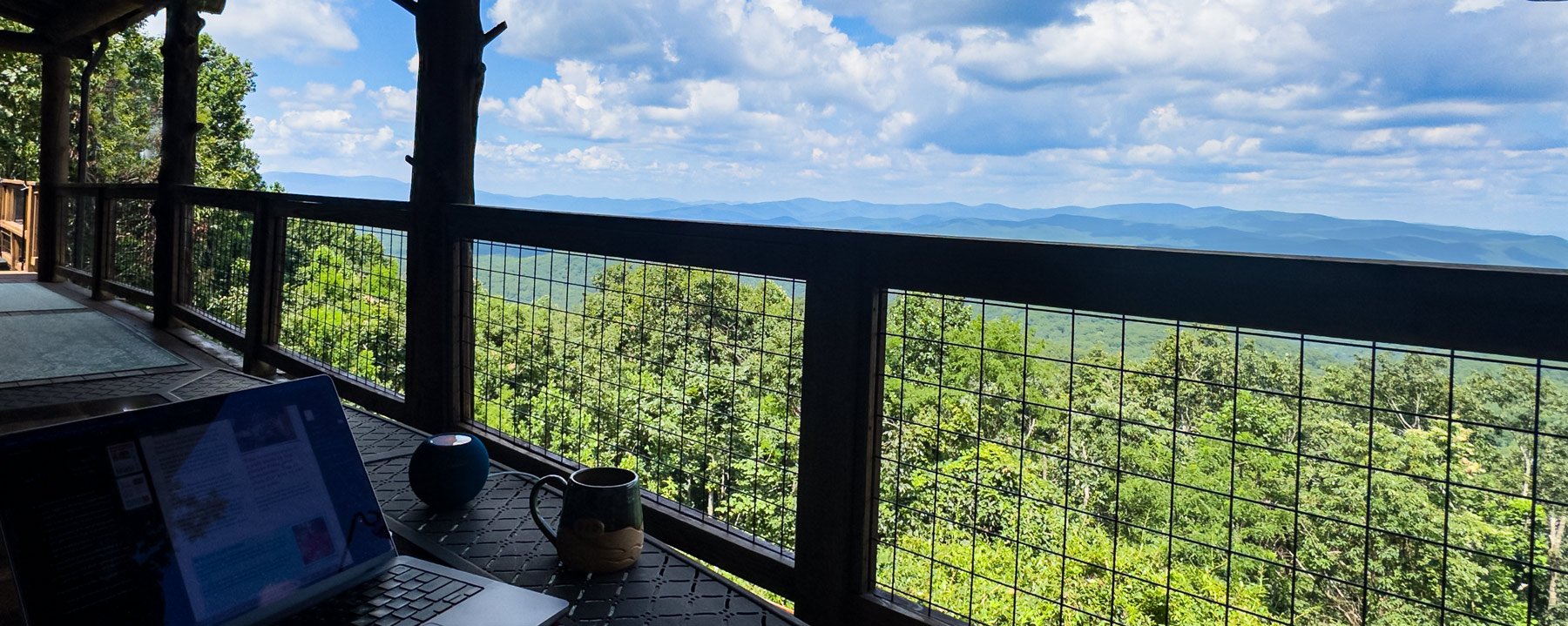
The computer you see is sitting on the desk I use when I want to work outside. My upstairs office is actually an outside porch - basically an office with windows on all three sides.
Walls? What walls?
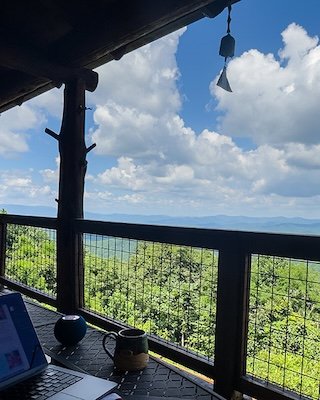 I don’t need walls for the pictures hanging in this office. From my chair, I can look into Tennessee and North Carolina. I can glance toward Springer Mountain, where northbound Appalachian Trail hikers set out with dreams of someday reaching Mount Katahdin. Farther to the right, I can see miles of beautiful North Georgia farmland stretching toward Braselton.
After all those years, I had finally landed the finest office of my life.
And that brings me to the Eagles’ “The Last Resort.”
We found paradise.
Now what?
The Dream We Inherited
From the time I was a child, I can remember my parents dreaming of retiring to the mountains.
They almost made it. When I was a teenager, they purchased a lot in the mountains not far from here, hoping to build a cabin someday. A few years later, they sold it.
Neither of them ever complained about letting it go. I am certain now that it wasn’t because their dream had faded. They had six children who came first: sports, music lessons, swim lessons, private school, college, and all the expenses that accompany a large family.
Their dream simply had to wait. Then, time ran out.
Alyson and I dreamed of retiring to the mountains as well. Over the years, we slowly moved farther north, but never quite made it into the mountains themselves.
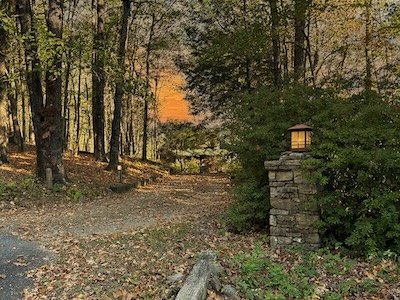 As we neared retirement, Alyson stumbled across this cabin, hidden in the woods at the very top of a mountain not far from Amicalola Falls. My late mother-in-law summed it up best. When she stepped onto the back deck, it took her a moment to catch her breath. Then she said, “We’re halfway to Heaven.”
We were bound and determined to make it work.
Looking across the miles of landscape from our back deck, we know how truly blessed we are. During spring, summer, and fall, we can identify only one building in the vast panorama before us: the lodge at Amicalola Falls. On clear afternoons, a second man-made landmark announces itself—the gold-covered steeple of Price Memorial Hall catches the sunlight and flashes brightly in the distance, pinpointing Dahlonega a little less than twenty miles east of us.
During winter, when the leaves have fallen, an enormous white house emerges on the mountain below us. It is highly visible and impossible to ignore. I have occasionally caught myself resenting its presence—without stopping to consider that someone farther down the mountain might look up at our cabin and feel much the same way.
For the year we have lived here, I haven’t spent much time considering what our arrival might mean.
Until this afternoon.
When the Song Sounded Different
I was sitting at my computer, working on a website for a client, when “The Last Resort” quietly began playing in the background.
Written by Don Henley and Glenn Frey, the song closes the Eagles’ 1976 album Hotel California. It follows the American search for paradise westward across the continent, showing how discovery leads to settlement, settlement leads to development, and development eventually destroys—or at least transforms—the qualities people came to find.
I stopped working and listened.
With these mountains stretching across the horizon in front of me, the song sounded different.
I began thinking about its meaning and about the extraordinary growth occurring in the mountain communities of western North Carolina, northern Georgia, and eastern Tennessee.
I began thinking about the people moving into those communities.
People like the couple in the large white house below us.
People like Alyson and me.
The Search for the Next Refuge
In the song, people keep moving westward in search of a final refuge from the world they have left behind.
Its central argument is not merely that wealthy developers destroy beautiful places. It is that people discover a place precisely because it is beautiful, quiet, and comparatively untouched—and that their collective desire to possess a piece of it begins changing the very qualities that attracted them.
The movement is less geographically tidy today, but psychologically it follows a familiar progression:
Escape the congestion, noise, and expense.
Find a small mountain town that still feels authentic.
Buy a house, cabin, or piece of acreage while it remains “affordable.”
Encourage friends to do the same.
Expect stores, restaurants, medical care, dependable internet, and enough familiar conveniences to make the transition comfortable.
Then discover, ten years later, that the quiet town has become another place from which people want to escape.
The irony is that newcomers like us sincerely love the place. We don’t arrive intending to ruin it.
But are we?
Beyond the Resort Towns
Clayton, Blue Ridge, Highlands, Asheville, and the Pigeon Forge–Gatlinburg corridor are the obvious examples. Their transformation is visible and well established.
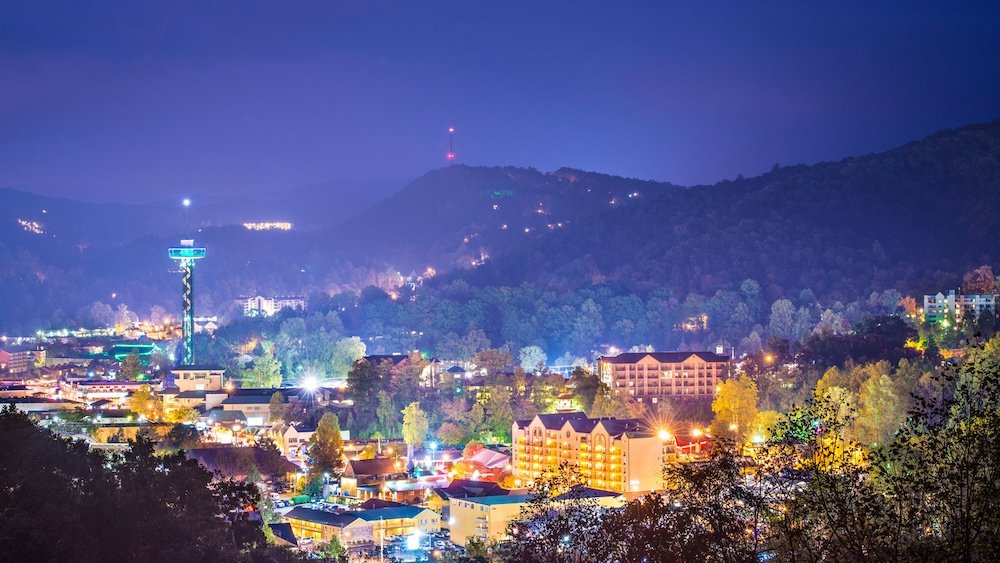 But once those markets become extraordinarily expensive, demand spills into the next tier: Blairsville, Dahlonega, Brevard, Cullowee and communities that once seemed too small or remote to attract sustained outside attention.
Then it spills into the places beyond those. Clyde, Marble, Townsend or Talking Rock.
Buyers priced out of Asheville look farther west. Buyers priced out of Highlands consider Franklin, Hayesville, or Murphy. Rabun County’s growth pushes west through Dawson, Lumpkin, Pickens, Gilmer, and Fannin counties.
Each town becomes the more affordable alternative to someplace that was itself once the affordable alternative.
The moment a community is widely advertised as an undiscovered and affordable escape, it begins ceasing to be either.
A Green Horizon Can Hide a Changing Place
Our mountains have one significant defense that many growing areas do not: enormous expanses of protected federal and state forest. Virtually all of the mountains in our view are protected from all development.

Those forests preserve watersheds, wildlife habitat, and the long green ridgelines that define the southern Appalachians. They also prevent much of the landscape from being subdivided or commercially developed.
But protected land cannot protect a community by itself.
Growth becomes concentrated on the private land that remains—in the valleys, on old farms, along back roads, and on the slopes bordering public forests. The national forest becomes the permanent green backdrop that makes the neighboring property even more desirable.
The effects may appear in the economy before they become obvious on the horizon.
A house priced according to the income of someone retiring from Atlanta, Charlotte, or Florida may be entirely beyond the reach of a teacher, deputy, restaurant worker, tradesman, or young family earning local wages.
An ordinary house becomes a second home. A cabin becomes a short-term rental. A family farm becomes a subdivision. A working town gradually becomes a destination.
The ridges may remain green while the community beneath them changes almost beyond recognition.
What Do We Owe This Place?
It would be easy—and hypocritical—for those of us who have already found our place in the mountains to complain about everyone arriving behind us.
We came for many of the same reasons they are coming. We wanted quiet, clean air, winding roads, dark skies, cool mornings, and a view that makes us stop whatever we are doing and simply stare.
We wanted paradise.
The answer cannot be to close the door after walking through it. Nor can it be to pretend that all growth is bad. Mountain communities need residents, businesses, tax revenue, medical services, and opportunities that allow young people to build lives here rather than leave.
The better question is what kind of growth we will support—and what kind of neighbors we will choose to become.
Can we accept some inconvenience rather than demand that the mountains reproduce the suburban lives we left behind?
Can we support locally owned businesses rather than insisting on the same familiar chains?
Can we preserve trees, slopes, streams, and ridgelines instead of treating every available acre as inventory?
Can we make room for the people who were here before us—and for their children and grandchildren to remain?
The song eventually ended, and I returned to work.
The mountains beyond my computer looked exactly as they had before: green, quiet, and apparently untouched.
But I no longer saw them in quite the same way.
Alyson and I found the paradise my parents dreamed about and we spent decades working toward. I am profoundly grateful for that.
But perhaps finding paradise is not the end of the story.
Perhaps it is the moment when responsibility begins.
We cannot prevent others from loving these mountains, nor should we want to. We can decide what kind of neighbors we will be, what kind of growth we will support, and what we will leave for those who come after us.
The question is not whether we deserved to find this place.
The question is what we will do now that we have.
-
Comments
{name}
{comment}
-
Categories
-
Features
All comments are reviewed before publication to ensure Blue Ridge Horizon remains respectful and free of spam. Your mail Address will not be published.