
Fifty years ago, I was a 14-year-old boy with a tumor I couldn’t pronounce—an angiofibroma. Rare then. Still rare today. At most, 50 boys in the United States are diagnosed with this tumor each year.
What’s changed isn’t the tumor. It’s everything else.
The Beginning
They didn’t find mine through a scan or a specialist referral.
They found it by accident.
My brother needed bi-weekly allergy shots, and one day I tagged along to the clinic at Emory. My mother stayed in the car. Dr. Olansky noticed something wasn’t right—my face had flattened slightly, and I was breathing only through my mouth.
She walked over and placed her hand firmly over my mouth.
I couldn’t breathe.
Instinctively, I bit her hand.
That moment likely saved my life.
Within minutes, my mother was back inside, and everything began to move very quickly.
Diagnosis in a Different Era
I saw our family ENT the following day; there was no time for delay. After a brief office visit, Dr. Staats spoke with my mom, and it was decided that an exploratory operation would be required—and soon.
I went to school as usual the next morning, only to be called to the principal’s office before lunch. We sat together while he prayed over me—he had been told how serious the situation was.
By early afternoon, I was lying in a hospital bed at Piedmont Hospital, too bewildered by the sudden turn of events to be afraid.
When I came to late Friday afternoon, I was told I had a rare tumor—and that it was too complex for the Piedmont physician to safely remove. He was already working to find a hospital that could.
It turned out that only a handful of hospitals in the United States could even attempt the surgery: Ochsner, Mayo, and Emory.
Because of my father’s connections from his years at Coca-Cola, I was admitted to Emory almost immediately. Otherwise, we would have faced a long drive to New Orleans or Minnesota—flying wasn’t an option due to pressure risks.
Sunday — CT Day
The CT scan—still relatively new technology at the time—was both a breakthrough and an ordeal.
I spent the entire day being moved in and out of the machine.
Scan.
“It’s going to be loud—please don’t move.”
Roll back into the hallway.
Wait.
Develop images.
Read them.
Back into the machine again.
Over and over.
Alone.
All day long.
The Decision
At the end of the day, the surgeon came to see me. It was the first time we had met.
I had already heard stories about him from the nurses—they thought the world of him in the operating room, but he was known to be demanding if things went wrong. That was fine with my parents. They wanted the best possible surgeon working near my brain.
What I wasn’t prepared for was the decision he asked me to make.
He gave me a choice—and said it had to be mine.
He could go through the roof of my mouth. It would leave no visible scars, but the operation would be more difficult, with less visibility and greater risk.
Or he could go through my face—an incision from my tear duct along the base of my nose, allowing the nose to be laid aside for better access.
It came down to a simple question:
Do you gamble with your life… or your vanity?
At 15, I chose my life.
-

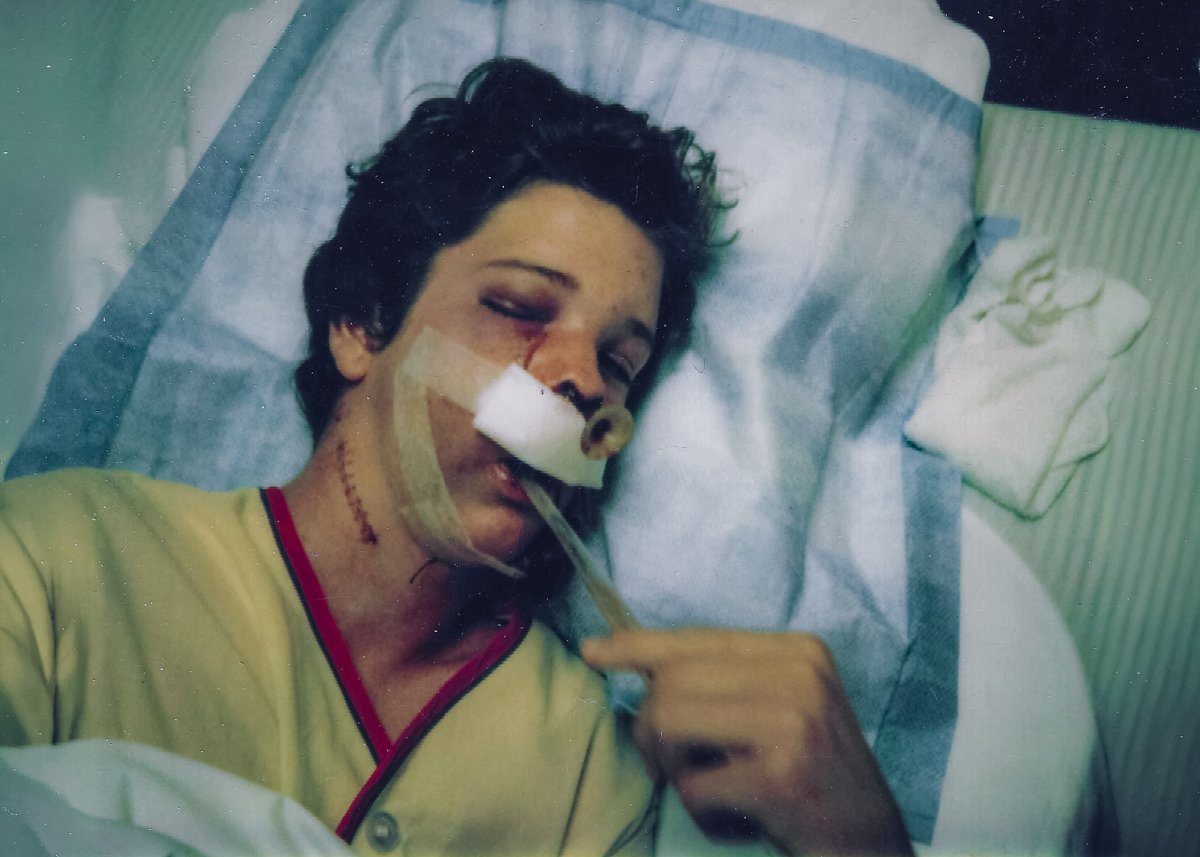
Me - a few days after the surgery. Note the bugle in my nose, the stitches were on both sides of my neck, and I was still drinking ginger ale through a straw.
-

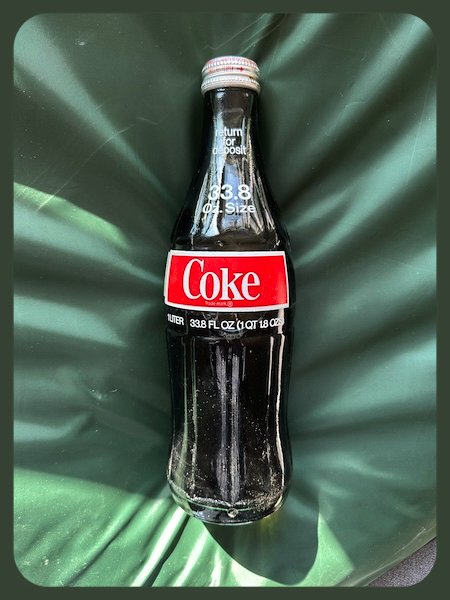
Fifty years later, I still treasure the Coke, and lesson in philosophy, from my father.
-

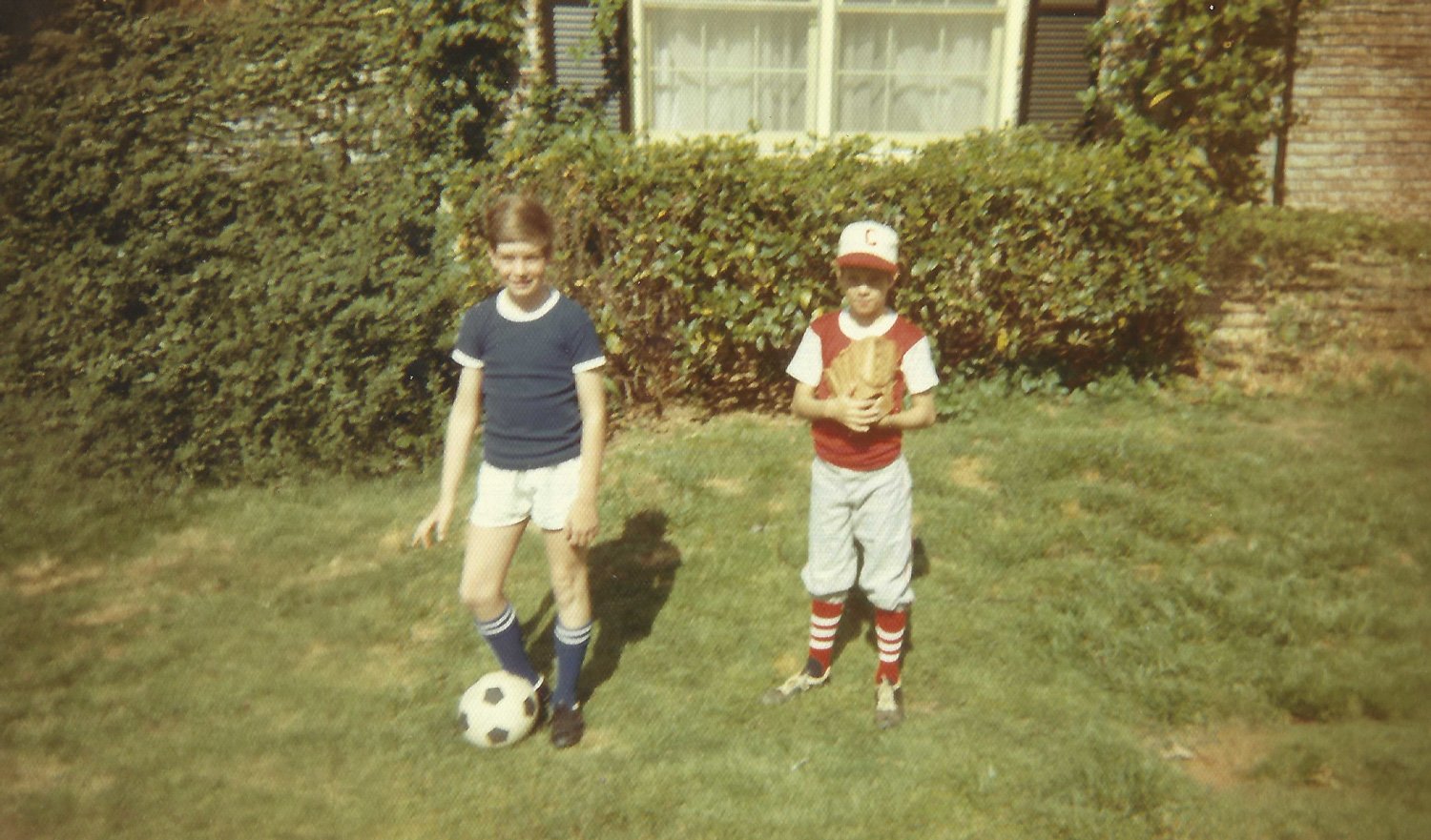
I'm on the left and my younger brother is on the right, a few years before my surgery.
The Operation and Aftermath
The surgery lasted eight hours. The surgeon had already been operating all day before mine even began.
Blood flow had to be controlled. Incisions were made in my neck. The tumor was removed.
And then came recovery.
Ten days in the hospital. Hours of gauze being packed and painfully removed.
For days, I lived on ginger ale and whatever I could manage through a straw. Eventually, soft food followed—but slowly, carefully, and with patience I didn’t yet have. I breathed through a rubber tube that extended for over a foot; eventually shortened to a couple of inches.
All I wanted was an ice-cold Coca-Cola.
There was nothing I wanted more than to walk out onto the veranda, rip the monitors off, toss the “bugle”—that hideous rubber tube in my nose—as far as I could, prop my feet up on a chair, and just sit back, watch the cars glide by, and enjoy my very own ice-cold Coca-Cola.
A couple of days before I was able to go home, Dad surprised me with two rare one-liter glass bottles of Coca-Cola. I drank one immediately.
I still have the other to this day—sealed, untouched, the Coke still inside.
An Important Life Lesson
Dad wasn’t finished, though. Looking back now, I’m constantly amazed at how wise he was. He could see how discouraged I had become over those ten days. My life, which had been rolling along beautifully, had been suddenly—and permanently—altered.
I had endured more pain than I thought possible, with more still to come. My future felt uncertain—there was a real chance the tumor could return within seven years, I wouldn’t be able to play sports again for at least a year, more than likely my dream of becoming an Eagle Scout had ended, and I might have to repeat my sophomore year of high school.
Worst of all, my face was disfigured—far worse than I had ever imagined. The “small scar” the doctor had mentioned before the operation was now a giant billboard, screaming: LOOK AT MY FACE!.
While Mom was home tending to my brothers and sisters, Dad and I spent some time in the park-like area between Emory University Hospital, where I was a patient, and Egleston Children’s Hospital next door. It was a beautiful April afternoon as he pushed my wheelchair beneath a large oak tree near a bubbling fountain.
We sat quietly, watching a dozen or so other patients—mostly young children in wheelchairs—enjoying the sunshine.
After a few minutes, Dad broke the silence.
“David—take a look around. What do you see?”
I paused.
“I see a lot of kids who aren’t going to get better.”
“And?”
I kept watching. The trees, the water, the stillness… and the children. Some looked a little sad. Most, though, were smiling. They were happy just to be outside.
Free from the hospital rooms, the nurses, the constant beeping of monitors, the cold, sterile walls, and televisions mounted far too high to comfortably watch.
They were simply… happy to be.
“They’re smiling, Dad…
They'd rather be anywhere than here. And, yet... they're happy to be here.
Happy to be outside right now."
He was quiet for a moment. Then, softly, he said:
“Keep this moment in mind as you go through life, David. It will get you through the rough times.”
And with that, he gave me a gentle hug, and we turned and rolled back inside.
The Long Road After
Recovery didn’t end when I left the hospital.
For seven years, I lived with the fear that the tumor might return.
It never did.
But the effects lingered:
- Additional surgery to repair my tear duct
- Another procedure years later to address excessive bleeding
- Occasional nosebleeds that continued into my 40s
- A permanent cavity in my nasal passage
- Intermittent headaches in the spring—likely tied to allergies
And the scars.
For years, I tried to hide them. Vitamin E. Time. Hope.
My doctor told me to wear them proudly.
That’s easier advice to give than to follow—especially when you’re young and entering the dating world.
But I never once questioned the decision I made.
I chose to live fully—and clearly.
Looking Back… and Forward
Years later, while at Appalachian State, I came across a medical text describing a case.
It was mine.
Not by name—but unmistakably mine.
The author noted how close I had come to a stroke… or worse. That a routine attempt to “clear” what appeared to be an allergy would have been fatal. That early CT imaging had made all the difference-the surgeon knew before the first incision had been made, exactly where in my brain he would be operating, and where to steer clear of.
I wasn’t just a patient.
I was part of the learning curve.
Fifty Years Later
A year ago, my youngest sister called me:
“David—you’re not going to believe this… I have a patient, the sweetest little kid… he has the same rare tumor you had.”
His father wanted to talk.
Of course, I said yes.
We exchanged texts over the summer. I told him I had walked the same path his son was now walking—and that I had lived a long, healthy life. With today’s advances, and in the hands of excellent doctors, his son’s outlook was even better.
Recently, Alyson and I met the boy and his family for lunch.
His experience couldn’t have been more different.
Diagnosed quickly with modern imaging.
Surgery scheduled—not rushed as an emergency.
A seven-hour procedure using advanced techniques—no facial incisions, everything done through the nose.
Blood flow controlled with a catheter-based balloon, not external incisions.
Home from the hospital in three days.
Back to being a kid within months.
Same tumor.
Different world.
The One Thing That Hasn’t Changed
He told me his biggest fear:
“What if it comes back?”
I understood that immediately.
Some things don’t change.
I told him what I know to be true:
That fear is normal.
But if it does come back, he’s in the best possible place. It will be caught early. Treated quickly. And what he’s already been through will be the hardest part.
What Has Changed
Fifty years ago, survival was the goal.
Today, it’s recovery.
Then, we endured.
Now, kids move forward.
Closing Thought
Medicine didn’t just save his life.
It gave him his childhood back.
And that may be the greatest advancement of all.
-
Comments
{name}
{comment}
-
Categories
-
Features
All comments are reviewed before publication to ensure Blue Ridge Horizon remains respectful and free of spam. Your mail Address will not be published.