
Breathing New Life into a Timeless Antique Masterpiece
Antique fans, like the captivating Westinghouse Gyro ceiling fan that once hung in my girlfriend’s parents’ antebellum breakfast room, have the power to stop people in their tracks. This remarkable fixture was part of a stunning Southern home built in the early 1900s—complete with high ceilings, leaded glass windows, and rich wood paneling. But the fan was the crown jewel: a true mechanical marvel with two twin motors mounted on a central stem. Each fan spun on its own axis while the entire head slowly rotated around the central pole.
Whenever we visited, I made a beeline to the breakfast room just to turn it on and watch the hypnotic dance of metal and air. Inevitably, someone would wander in, switch it off, and remind me how dangerous it might be—thanks to its exposed wiring or the possibility of a loose blade. I suspect I was the only one who ever dared to turn it on, but I never missed an opportunity.
When my in-laws eventually sold their home, I knew I couldn’t let that fan slip away. Despite my mother-in-law’s raised eyebrows and my wife’s disbelief, they let me take it—provided I replaced it with a safer modern fixture. I was thrilled and planned to hang it in our home right away.
-

Fully restored and proudly spinning once again—our antique Westinghouse Gyro fan, now the centerpiece of the cabin kitchen.
-

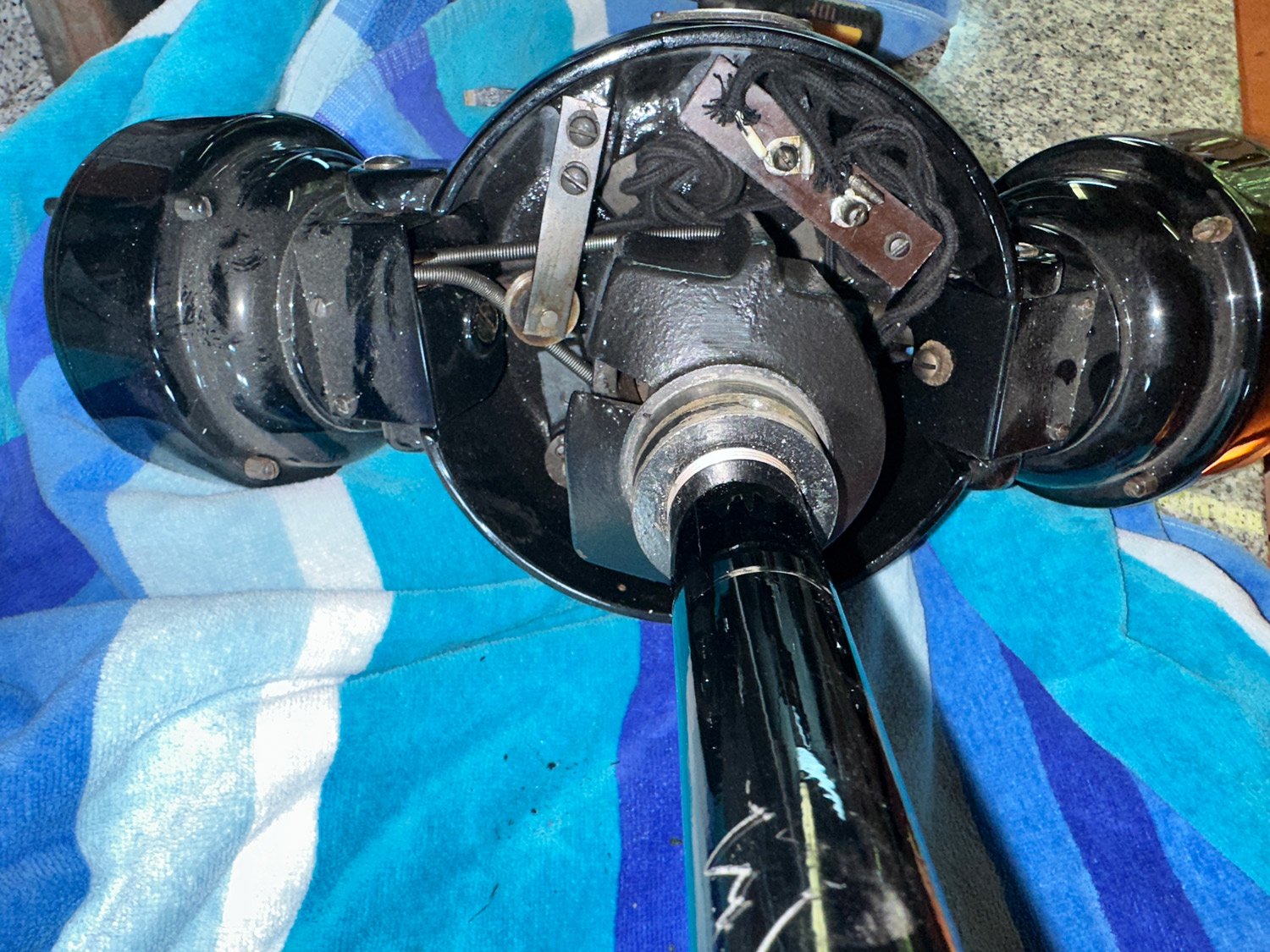
Inside the Gyro’s motor housing during restoration. Over a century old, yet built with remarkable precision.
-

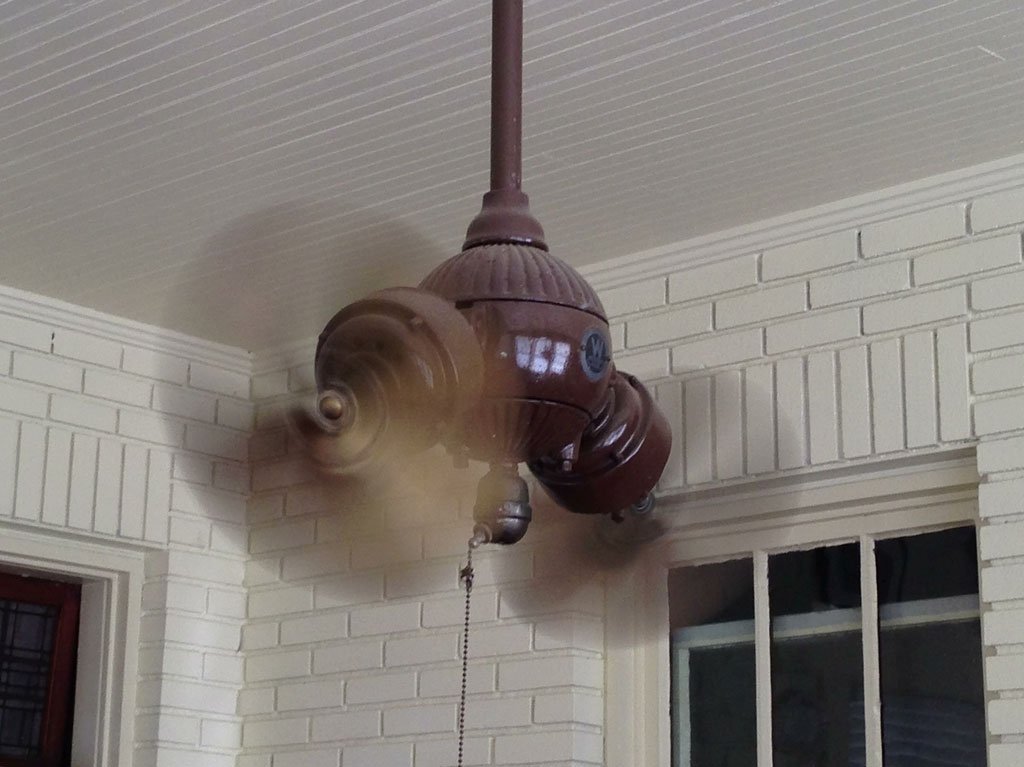
The old Gyro fan as it looked in the breakfast room of the 'Happiness Hotel' – the family home of Alyson's parents in Barnesville, Georgia.
-

Yes, the fan worked beautifully before I removed it. Truth be told, though, I don't think anyone but me ever turned it on.

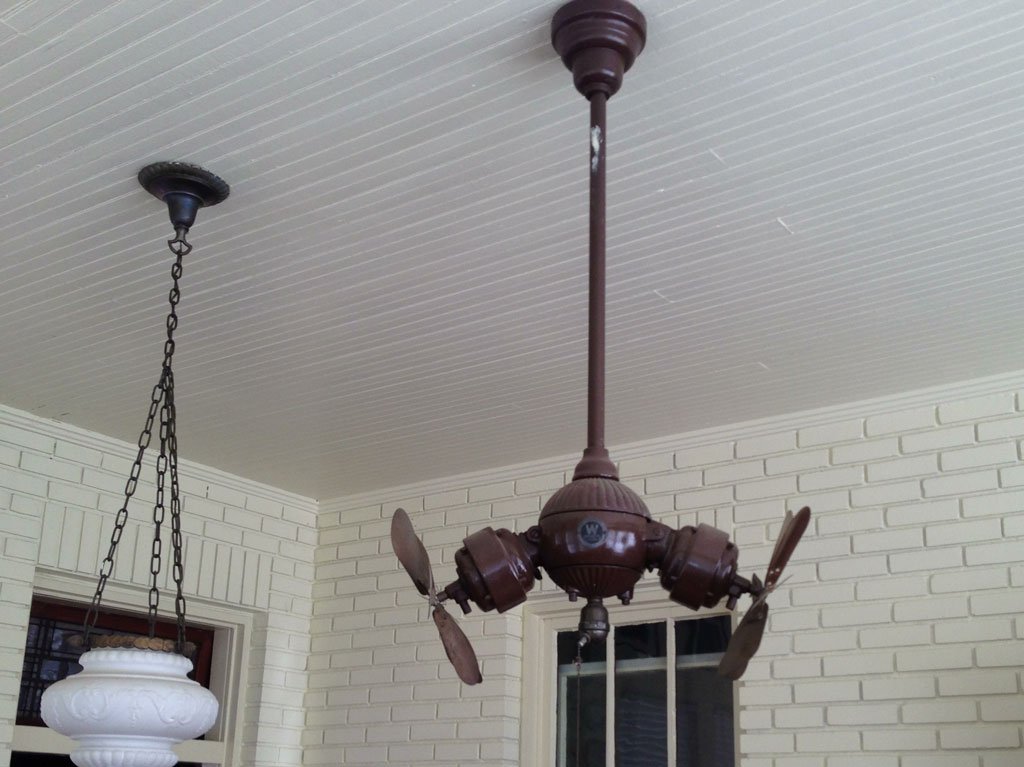
But the reality was far more complicated. The original finish had long been obscured by a thick coat of dull brown paint, and the wiring—frayed and exposed—would have failed any safety inspection. A complete restoration was the only path forward if I wanted my wife’s blessing to display it anywhere in the house.
The Intricate Process of Restoring a Classic
I joined an antique fan collectors group and quickly learned that only a handful of people in the country had the expertise to restore something like this. Most were backlogged for a year or two, and the cost often ran into the thousands.
Eventually, I connected with a legendary restorer in Clyde, North Carolina—someone who knew these fans inside and out. After discussing the project, he put me in touch with a team of artisans who took on the challenge of reviving the Westinghouse Gyro. Over the course of nine months, the fan was disassembled, repaired, and transformed with meticulous attention to detail.
Here’s what the restoration involved:
- The aged brown paint was carefully stripped down to bare metal, then primed and refinished with deep green and glossy black automotive-grade paint—colors historically accurate to Westinghouse’s original palette.
- Every nut, bolt, and washer was cleaned and polished, even the ones tucked out of sight.
- Both motors were fully rewound and rebuilt by hand—an incredibly time-consuming and delicate job.
- The broken spring mechanism that enabled the entire head to rotate was recreated from scratch.
- New blades were fabricated, nickel-plated, balanced, and reinstalled.
- The original identification tags were painstakingly stripped, smoothed, nickel-plated, and repainted.
Reassembly alone took nearly 40 hours at $135 an hour—and that doesn’t include the months of restoration work leading up to it. The result is a breathtaking, fully functional antique fan that looks like it just left the Westinghouse factory a century ago.
Our Foothills Home
The fan was born in another era—one of front porches and gas lamps, of early electricity and slow Southern evenings. With its twin cast-iron motors and artful brackets, it might have cooled a parlor where guests sat in linen and lace, sipping lemonade while ceiling blades stirred the heavy summer air.
After restoring it to working order, we hung the fan above the baby grand piano in our home nestled in the foothills of north Georgia. It looked beautiful there, a conversation piece in the piano room—but something about it felt just slightly out of place. This was a fan made not for polish and performance, but for patina and presence. It needed a home with history in its walls.
An Heirloom That Belongs Here
We found that home—Blue Ridge Horizon—in late 2024. An old log cabin perched atop a mountain, steeped in character and quiet. The moment we walked through the front door, we knew we were meant to buy it. And almost as quickly, we knew where the fan was destined to live.
There’s something poetic about how naturally it fits. You can picture a pioneer family preparing supper by lamplight, or perhaps even Teddy Roosevelt himself—sleeves rolled up, recounting a hunting tale—beneath the rhythmic whisper of twin motors. The fan hums with a kind of grace that only comes from age, casting a soft breeze across the knotty pine ceiling, as if it had always belonged here.
And when I flip the switch, those Edison bulbs—with their warm amber glow and delicate filaments—begin to shine. The light is soft, nostalgic, and welcoming. A second switch sets the twin fans in motion, and they spin to life in perfect balance, their gentle movement more poetry than machinery. Life is beautiful.
Assessing the Value of Restoring a Timeless Treasure
Was it worth it?
Absolutely. I didn’t restore this fan to flip it on eBay or make a profit—I did it because I love it. I love what it represents. And I hope it stays in our family for at least another hundred years. That said, I’ve been told it’s worth significantly more than I paid to restore it. Good to know… but not why I did it.
How Old Is It?
Westinghouse didn’t track manufacturing dates by serial number, but they used a clever method for their Gyro fans. Each set of blades includes a two-digit stamp that represents the year of manufacture. Mine has two: one blade set is stamped with “16,” the other with “17.” That places its manufacture right around the turn of the year—late 1916 or early 1917. Over a century old… and still spinning strong.
Proof That Some Things Are Worth Saving...
...a 90 second film.
-
Comments
{name}
{comment}
-
Categories
-
Features
All comments are reviewed before publication to ensure Blue Ridge Horizon remains respectful and free of spam. Your mail Address will not be published.